


How Much Does It Cost to Make an AI Writing Tool Like Jasper AI?
 Team Branex
The world of AI tools is exciting! It promises to revolutionize content creation. However, only a select few truly deliver on their promises, and Jasper AI is undoubtedly a leader among them.
It’s a great writing tool and is capable of delivering credible results.
While it may not be a comprehensive writing tool, Jasper AI is amazing at filling gaps in pre-written content, crafting engaging headlines and subheaders, and enhancing short-form content. With AI taking center stage, many entrepreneurs are looking to make due investments in apps like Jasper AI.
In this article, we are going to break down how much it costs to make an app like Jasper AI so you, as an entrepreneur, have a better insight.
So without further ado, let’s get into the details.
 Jasper AI is undoubtedly the frontrunner in the competitive landscape of AI writing tools, and its market presence and funding statistics certainly reinforce this leadership position.
According to a recent Crunchbase report, Jasper AI has secured an impressive total funding of $131 million since its launch in 2021.
And its success story doesn't end there.
As of February 2024, Jasper AI boasts a remarkable customer base of over 100,000 businesses, including notable names such as Amplitude and HubSpot.
With such rapid growth and adoption, it's no wonder that Jasper AI is projected to hit an astonishing ARR (Annual Run Rate) of $250 million by the close of 2024.
These figures alone showcase the tool's widespread appeal and the confidence businesses have in its capabilities. With such information, we believe it’s safe to say that Jasper AI is not just a passing fad but a key player in the AI landscape.
Fun Fact: Do you know that the AI content creation tools market size stands at a valuation of $840.3 million in 2024, and is estimated to reach $3007.6 million by 2034?
Jasper AI is undoubtedly the frontrunner in the competitive landscape of AI writing tools, and its market presence and funding statistics certainly reinforce this leadership position.
According to a recent Crunchbase report, Jasper AI has secured an impressive total funding of $131 million since its launch in 2021.
And its success story doesn't end there.
As of February 2024, Jasper AI boasts a remarkable customer base of over 100,000 businesses, including notable names such as Amplitude and HubSpot.
With such rapid growth and adoption, it's no wonder that Jasper AI is projected to hit an astonishing ARR (Annual Run Rate) of $250 million by the close of 2024.
These figures alone showcase the tool's widespread appeal and the confidence businesses have in its capabilities. With such information, we believe it’s safe to say that Jasper AI is not just a passing fad but a key player in the AI landscape.
Fun Fact: Do you know that the AI content creation tools market size stands at a valuation of $840.3 million in 2024, and is estimated to reach $3007.6 million by 2034?
 The average cost to develop an AI writing app such as Jasper AI depends on several factors. Based on a general estimate, an AI writing app can cost anywhere from $40,000 to $250,000 to develop, especially if it is designed to meet the same standards as Jasper AI.

 Building an app like Jasper AI demands a structured approach, giving customers an effective user experience.
Here's a step-by-step breakdown to guide businesses and entrepreneurs through the process of developing a user-friendly AI writing assistant tool.
Building an app like Jasper AI demands a structured approach, giving customers an effective user experience.
Here's a step-by-step breakdown to guide businesses and entrepreneurs through the process of developing a user-friendly AI writing assistant tool.
About Jasper AI
Jasper AI is undoubtedly the frontrunner in the competitive landscape of AI writing tools, and its market presence and funding statistics certainly reinforce this leadership position.
According to a recent Crunchbase report, Jasper AI has secured an impressive total funding of $131 million since its launch in 2021.
And its success story doesn't end there.
As of February 2024, Jasper AI boasts a remarkable customer base of over 100,000 businesses, including notable names such as Amplitude and HubSpot.
With such rapid growth and adoption, it's no wonder that Jasper AI is projected to hit an astonishing ARR (Annual Run Rate) of $250 million by the close of 2024.
These figures alone showcase the tool's widespread appeal and the confidence businesses have in its capabilities. With such information, we believe it’s safe to say that Jasper AI is not just a passing fad but a key player in the AI landscape.
Fun Fact: Do you know that the AI content creation tools market size stands at a valuation of $840.3 million in 2024, and is estimated to reach $3007.6 million by 2034?
How Much Does it Cost to Make an AI Writing App Like Jasper AI?
The average cost to develop an AI writing app such as Jasper AI depends on several factors. Based on a general estimate, an AI writing app can cost anywhere from $40,000 to $250,000 to develop, especially if it is designed to meet the same standards as Jasper AI.
Breakdown of the Jasper AI App
Platform
- Desktop
User Authentication and Profile:
- Email and password sign-up/login
- Social login (Apple, Google)
- User profile with basic information and preferences
- Security features (two-factor authentication, data encryption)
AI Writing Assistant:
- Natural language processing for text generation
- Ability to create and edit various types of content, including articles, blog posts, social media copy, and marketing materials
- Suggestion engine for writing improvement and tone adjustment
- Plagiarism checker
User Interface and Experience:
- Intuitive and user-friendly design
- Seamless navigation and content organization
- Customizable themes and color schemes
- Offline mode for accessing previously generated content
Content Templates and Frameworks:
- Pre-built content templates for common content types
- Ability to create custom content frameworks
- Option to collaborate and share content frameworks with other users
Integration with Other Apps:
- Integration with popular productivity and content creation apps (e.g., Google Workspace, Microsoft Office, Dropbox)
- Sharing capabilities to social media platforms and content management systems
Data Synchronization:
- Real-time synchronization of user data across devices
- Cloud backup and data recovery options
Admin and Management:
- Robust content and user management system for admins
- Analytics and reporting dashboard to track user behavior and app performance
- Content moderation tools for user-generated content
Technology Stack:
- Backend: Python (Django or Flask), AWS Lambda (for serverless functions)
- Database: PostgreSQL or MySQL for relational data, MongoDB for unstructured data
- AI Model: Transformers (Hugging Face) or similar NLP library
- Cloud Services: AWS or Google Cloud for hosting, storage, and machine learning
- Version Control: Git
Factors That Affect the Cost of Making an App Like Jasper AI
1. Feature Set & Complexity
Apps like Jasper AI rely on sophisticated features such as natural language processing, machine learning models, and content generation. Implementing these features requires specialized skills and can be more costly compared to simpler apps on the market. The range of platforms you plan to support also impacts costs. Do you want a desktop-only app or a mobile version as well? We asked a React native app development company and they suggested that developing native apps for multiple platforms can be more expensive than using cross-platform frameworks. The size and location of the development team matter too. Rates vary across countries, with developers from North America or Western Europe typically charging higher rates than those from Asia or Eastern Europe. Moreover, more complex apps may require a larger team with specialized roles, influencing overall costs.2. App Design & UI/UX
A polished and intuitive user interface is crucial for your app's success. Custom design elements, animations, and complex UI patterns can increase development expenses. Achieving a unique and appealing design often involves creating custom icons, illustrations, and animations, requiring skilled UI/UX designers and potentially increasing costs compared to using off-the-shelf components. Crafting a user experience includes designing effective information architecture, smooth navigation flows, and intuitive user interactions. This demands expertise in UX design and can contribute to overall expenses.3. Integration with Third-Party Services
Writing assistant apps often enhance functionality and user experience by integrating third-party services. Common integrations include social media logins, cloud storage for user data, payment gateways for in-app purchases, analytics tools, and marketing automation platforms. Each integration brings its costs and challenges, which can vary depending on usage volume and request frequency. Apps handling sensitive user data, such as payment information or personal details, must prioritize robust security features to ensure compliance with data privacy regulations like GDPR and CCPA, further contributing to overall costs.4. Server Infrastructure & Backend Development
The backend infrastructure and server costs are often overlooked but are an important aspect of the overall expense. Writing assistant apps require robust backend systems to handle data processing, user requests, and storage. It includes database management, server maintenance, and ensuring scalability to accommodate varying user demands. The choice of cloud service provider and their pricing plans can significantly impact expenses. Furthermore, the complexity of the backend architecture, the number of servers, and the usage of containerization or microservices can all influence costs.5. Data Storage & Security
Writing assistant apps process and store significant amounts of user data, including generated content, user preferences, and potentially sensitive information. Ensuring secure and compliant data storage can be costly, especially when adhering to data privacy regulations like GDPR or industry-specific standards like HIPAA. The choice of data storage solutions, such as cloud storage providers or on-premises servers, impacts costs. Encryption, data redundancy, and backup strategies also add to the overall expenses, ensuring data security and reliability.6. Ongoing Maintenance & Updates
Apps require ongoing maintenance and updates to remain functional and secure. It involves bug fixes, compatibility updates for new operating system versions, and addressing user feedback. Regular updates help maintain user satisfaction and app store rankings. The frequency of updates depends on various factors, including user feedback, the introduction of new features, and addressing security vulnerabilities. Each update incurs development, testing, and deployment costs, contributing to the overall expenses.7. AI Model Development & Training
When considering the development and training of AI models for the backend of such apps, it is important to take into account several key factors. These AI models can be intricate and often resource-intensive, resulting in varying implementation costs. Task complexity, encompassing text generation, language translation, or sentiment analysis tasks, significantly influences model architecture and the requisite training resources. More complex tasks typically necessitate larger datasets, more advanced algorithms, and greater computational power, all of which contribute to increased costs. The effectiveness of AI models is highly dependent on the quality of the data they are trained on. Acquiring or creating a substantial, diverse, and accurately labeled dataset can be an expensive undertaking. Ensuring data quality and its relevance to the task at hand is of utmost importance and often involves data cleaning, preprocessing, & annotation processes, each contributing to the overall costs. Moreover, the choice of machine learning framework (such as TensorFlow or PyTorch) can impact complexity and scalability, with more robust frameworks often requiring more extensive computational resources. Training large models on powerful hardware, including GPUs or TPUs, can expedite the training process but also lead to higher costs. Training AI models is an iterative process that involves multiple training runs and hyperparameter tuning sessions to optimize performance. This iterative nature consumes significant computational resources and time, driving up costs. Furthermore, deploying the trained model for real-time inference may require seamless integration with the app's backend system or the utilization of cloud-based inference services, both of which have associated costs. These factors collectively contribute to ongoing operational expenses.8. Testing & Quality Assurance
Entrepreneurs should also be mindful of the costs associated with testing and quality assurance when investing in a writing app. Rigorous testing conducted by engineers is imperative for ensuring the app's stability and reliability. Comprehensive test coverage includes addressing diverse devices, operating systems, and device configurations, each of which incurs corresponding expenses. By ensuring broad test coverage, the app's compatibility and performance across multiple platforms can be enhanced, thereby delivering a satisfying user experience.9. App Maintenance & Support
When investing in an AI writing tool app, it is important to allocate resources for ongoing maintenance and support. All apps are susceptible to bugs, and once launched, they may require regular maintenance and updates to address user-reported issues. The frequency of updates depends on factors such as new releases, the growth of the user base, and the complexity of the app's features. Moreover, if the dedicated development team introduces new features, ongoing improvements are necessary to maintain the app's competitiveness in the market. However, implementing these improvements comes at a cost. In terms of support, expenses may arise from creating and maintaining FAQs, user guides, and other relevant documentation. Support staff or outsourcing teams may also need to be factored into the overall support costs. Furthermore, maintaining the app's backend infrastructure, including servers, databases, and any relevant cloud services, incurs ongoing expenses to ensure smooth operations. Investing in an AI writing tool app requires careful consideration of different factors, including AI model development and training costs, testing and quality assurance expenses, as well as ongoing app maintenance and support costs. By thoroughly evaluating these aspects, entrepreneurs can make well-informed decisions and allocate resources effectively to ensure the success of their AI writing tool app ventures.The Process of Building an App Like Jasper
Building an app like Jasper AI demands a structured approach, giving customers an effective user experience.
Here's a step-by-step breakdown to guide businesses and entrepreneurs through the process of developing a user-friendly AI writing assistant tool.
Step 1: Ideation and Research
Initiate the process with a clear vision. Conduct brainstorming sessions to explore and define your unique selling propositions (USPs). Perform comprehensive market research to identify existing competitors and understand customer requirements. By grasping your target audience's needs, you can strategically streamline the development process, ensuring your app aligns with their expectations.Step 2: Planning and Designing
With a clear vision in mind, proceed to define the app's concept and create an initial wireframe. This wireframe serves as a blueprint, outlining the app's structure and functionality. Develop prototypes to experience the app's basic functionalities firsthand. Then, focus on crafting a user-centric design by carefully planning the user experience (UX) and user interface (UI) elements. It ensures your app is not only functional but also intuitive and easy to navigate.Step 3: Development and Coding
In this phase, your vision comes to life. Assemble a skilled team of app developers, in-house or offshore, to code the app, implement features, and introduce the functionalities outlined during the planning stage. The project manager plays a pivotal role in coordinating the development process, and ensuring the use of appropriate programming languages and requested frameworks. This stage also involves estimating the costs based on the app's complexity and the expertise required.Step 4: Testing
Place significant emphasis on the testing phase to guarantee the app's performance and reliability. Conduct thorough quality assurance (QA) tests to identify and address any bugs or usability issues. This critical step ensures your app delivers a seamless user experience across various devices and platforms. It also showcases the app's reliability and efficient customer support, reinforcing its overall quality.Step 5: App Launch & Continuous Improvement
The final step is the launch where the app is sent online for public use. The work doesn’t stop there as it must evolve to meet the changing user requirements and the growing technological advancements. There are several other aspects which are included in the cost of developing a tool like Jasper AI. It includes aspects like post-launch updates & maintenance. When it comes to developing an app such as Jasper AI, requires several investments such as time, resources & expertise. From ideation to continuous improvement, a successful AI-powered writing assistant only becomes a success if the app stays competitive and relevant in the market.Key Takeaways
- The cost of developing an AI writing app like Jasper AI can range from $40,000 to $250,000, depending on various factors.
- The features, complexity, and range of platforms supported influence the cost, with native apps for multiple platforms being more expensive.
- App design, UI/UX, and custom elements can increase expenses, while integration with third-party services adds to the overall cost.
- Server infrastructure, backend development, data storage, and security are crucial cost components, especially with sensitive user data involved.
- Ongoing maintenance, updates, and bug fixes are necessary to keep the app functional and secure, contributing to the overall expenses.
- AI model development and training costs vary based on task complexity, dataset quality, and the choice of machine learning framework.
- Testing and quality assurance are imperative for app stability and reliability, and they incur corresponding expenses.
- App maintenance and support, including backend infrastructure maintenance and user support, are ongoing costs that need to be factored in.


 JPMorgan is using software that figures out which of the documents are relevant to a case in a matter of seconds, something that used to take lawyers more than 360,000 Hours of hard work.
Before you start rushing to check if your current job is at risk, there is a tool for that as well. Ironically. Will Robots take my job, and will they help you figure out if you need to switch or
JPMorgan is using software that figures out which of the documents are relevant to a case in a matter of seconds, something that used to take lawyers more than 360,000 Hours of hard work.
Before you start rushing to check if your current job is at risk, there is a tool for that as well. Ironically. Will Robots take my job, and will they help you figure out if you need to switch or  In a federal report in the year 2017, it was concluded that more than half a million Americans are unemployed just because they won’t accept a job which is below their skill level. Figure out ways to help employees learn new skills. Develop a culture of lifelong learning.
 It’s necessary to exercise the Curiosity Quotient (CQ). To stay relevant, you must ask the right questions. If you keep a company of diversified people, they will generate new ideas and even contradict your opinions, which will help you to learn something new. It’s fantastic how great of an impact passionate curiosity combined with diverse, inclusive teams can have on the success of a leader, team, and business as a whole.

 The demographic is an indication that a gradual rise has been observed in the software industry over the past five years. Hence, it promises a more powerful future for the fields associated with software development. After all, AI is a by-product of the software field and is eventually going to overshadow other businesses from a perspective.
It proves that the job market for labor-intensive responsibilities will significantly result in decline significantly. But those that entail innovation and development will significantly emerge and grow exponentially with the inclusion of AI in the days to come.
The demographic is an indication that a gradual rise has been observed in the software industry over the past five years. Hence, it promises a more powerful future for the fields associated with software development. After all, AI is a by-product of the software field and is eventually going to overshadow other businesses from a perspective.
It proves that the job market for labor-intensive responsibilities will significantly result in decline significantly. But those that entail innovation and development will significantly emerge and grow exponentially with the inclusion of AI in the days to come.
 Here is another assessment that shows how AI skills are globally gaining an extra edge in various parts of the world. The United States is leading the list when it comes to AI skill penetration, whereas Argentina is lagging behind in the block for AI skill development.

 Previously, when we used to visit a website and search for a product, let’s say a smartphone… that smartphone might run around us for at least 2 weeks and would show up in website ads as we surf through the Internet. It would target market us on our social media profiles. And it will show up on random websites we are visiting on a daily basis.
However, now times have changed. We are living our lives in an era where the cognitive abilities of a machine are more entertaining than the ones which are programmed into the machine.
Systems are being developed that are capable of identifying why you left a website, how you left that site (exit pages), and whether you bought a product or totally skipped it. Based on your actions will enable marketers to make informed decisions about crafting an ad that would be highly relevant to you.
It ultimately saves us from getting bombarded with unwanted advertising altogether.
Previously, when we used to visit a website and search for a product, let’s say a smartphone… that smartphone might run around us for at least 2 weeks and would show up in website ads as we surf through the Internet. It would target market us on our social media profiles. And it will show up on random websites we are visiting on a daily basis.
However, now times have changed. We are living our lives in an era where the cognitive abilities of a machine are more entertaining than the ones which are programmed into the machine.
Systems are being developed that are capable of identifying why you left a website, how you left that site (exit pages), and whether you bought a product or totally skipped it. Based on your actions will enable marketers to make informed decisions about crafting an ad that would be highly relevant to you.
It ultimately saves us from getting bombarded with unwanted advertising altogether.
 Tough luck! It’s going to take some time to get there, and until then, you will have to write on your own.
But here’s how AI holds the true power to automate our content production. “WordSmith” is an AI assistant that greatly benefits writers. It is a collection of modules which allow writers to search for patterns in languages. An estimated 1.5 billion content pieces were created with the help of WordSmith last year.
Software applications like WordSmith are based on NLG (Natural Language Generation) which is an intelligent AI algorithm. On the other hand, the AI sub-field NLG (Natural Language Generation) is an algorithm which translates data into natural language based on the kind of data you feed into the system.
However, the solution is more sentence-based and may fail to create the perfect writing flow that a writer may end up creating, but it still turns out to be of great assistance. To produce as such, you ultimately require a senior writer who is skilled at writing.
Tough luck! It’s going to take some time to get there, and until then, you will have to write on your own.
But here’s how AI holds the true power to automate our content production. “WordSmith” is an AI assistant that greatly benefits writers. It is a collection of modules which allow writers to search for patterns in languages. An estimated 1.5 billion content pieces were created with the help of WordSmith last year.
Software applications like WordSmith are based on NLG (Natural Language Generation) which is an intelligent AI algorithm. On the other hand, the AI sub-field NLG (Natural Language Generation) is an algorithm which translates data into natural language based on the kind of data you feed into the system.
However, the solution is more sentence-based and may fail to create the perfect writing flow that a writer may end up creating, but it still turns out to be of great assistance. To produce as such, you ultimately require a senior writer who is skilled at writing.
 In fact, some sales representatives claim that more than 80% of their working hours are spent identifying which of the leads have the potential to become customers and which of them are just “mystery shoppers” and not serious buyers. Making phone calls, sending out emails, awaiting responses, and then replying to them, all at the same time, can often lead to burnt-out and frustrated sales reps.
As a result, they might not be able to put their best foot forward when pitching to a highly lucrative prospective client.
However, with AI, things can dramatically change for sales representatives all around. By using smart intelligent systems, first, sales representatives can avoid focusing on repetitive tasks. They will not have to go through the entire long process of monitoring, categorizing, and creating effective communication with leads. It will greatly help the sales representative as they can readily spend more of their time and energy on closing sales leads.
In fact, some sales representatives claim that more than 80% of their working hours are spent identifying which of the leads have the potential to become customers and which of them are just “mystery shoppers” and not serious buyers. Making phone calls, sending out emails, awaiting responses, and then replying to them, all at the same time, can often lead to burnt-out and frustrated sales reps.
As a result, they might not be able to put their best foot forward when pitching to a highly lucrative prospective client.
However, with AI, things can dramatically change for sales representatives all around. By using smart intelligent systems, first, sales representatives can avoid focusing on repetitive tasks. They will not have to go through the entire long process of monitoring, categorizing, and creating effective communication with leads. It will greatly help the sales representative as they can readily spend more of their time and energy on closing sales leads.
 Email marketing has come a long way. From physical mail segmentation to scheduled send-outs. Today, AI can help you automate everything using state-of-the-art marketing automation tools. Besides, there are several other automated emailing tools on the market, such as Constant Contact, MailChimp, SendGrid, HubSpot’s CRM, and others which can help anyone easily comb through the jargon of email data to reach useful conclusions.
Future AI applications will enable marketers to easily segment email information based on different areas of interest, demographics, regions, and other criteria. So, if a marketing specialist wants to target a specific individual, they are not going to spend hours analyzing information based on personal details, zip codes, or telephone numbers to target different users belonging to different market niches.
Instead, they will leverage the power of
Email marketing has come a long way. From physical mail segmentation to scheduled send-outs. Today, AI can help you automate everything using state-of-the-art marketing automation tools. Besides, there are several other automated emailing tools on the market, such as Constant Contact, MailChimp, SendGrid, HubSpot’s CRM, and others which can help anyone easily comb through the jargon of email data to reach useful conclusions.
Future AI applications will enable marketers to easily segment email information based on different areas of interest, demographics, regions, and other criteria. So, if a marketing specialist wants to target a specific individual, they are not going to spend hours analyzing information based on personal details, zip codes, or telephone numbers to target different users belonging to different market niches.
Instead, they will leverage the power of  What people want is a personalized experience, and if your website is failing to give them one. They will eventually switch to another alternative. Many AI-powered tools have emerged which you can integrate into your website in order to provide customers with a more personalized experience.
CNET Intelligent Cross-Sell is a platform that usually associates itself with consumer-electronic goods. CNET Intelligent Cross-Sell is a software platform that handles all cross-sells and upsells based on behavioral data and other attributes such as product profitability and score reviews to make the sales process and experience better for users.
According to eMarketers, 48% of marketers reported observing a sales uplift in websites that are more personalized than those which aren’t. With AI-powered personalization, you can train bots at the back end of your website, so they readily adapt to what you are searching for. They can collect information from the source the audience has reached to their platform and based on that, they can readily point the customer in the right direction.
With tools like Evergage, you can personalize your offers and even personalize search results with modules like Evergage SmartSearch to meet customer preferences. In short, it is a tool that fits best in the category of content marketing when it comes to website personalization.
What people want is a personalized experience, and if your website is failing to give them one. They will eventually switch to another alternative. Many AI-powered tools have emerged which you can integrate into your website in order to provide customers with a more personalized experience.
CNET Intelligent Cross-Sell is a platform that usually associates itself with consumer-electronic goods. CNET Intelligent Cross-Sell is a software platform that handles all cross-sells and upsells based on behavioral data and other attributes such as product profitability and score reviews to make the sales process and experience better for users.
According to eMarketers, 48% of marketers reported observing a sales uplift in websites that are more personalized than those which aren’t. With AI-powered personalization, you can train bots at the back end of your website, so they readily adapt to what you are searching for. They can collect information from the source the audience has reached to their platform and based on that, they can readily point the customer in the right direction.
With tools like Evergage, you can personalize your offers and even personalize search results with modules like Evergage SmartSearch to meet customer preferences. In short, it is a tool that fits best in the category of content marketing when it comes to website personalization.


 In nearly every aspect, AI rules over human marketing. AI is less expensive, more efficient, and can perform many time-consuming tasks quickly. However, humans can still deliver more value and a high level of personalization that robots can’t. There will always be a special place for human marketers, writers, and customer support representatives.
But regardless of the extremely high levels of human intelligence, robots are not far behind and are in fact learning fast enough. AI is going to rule lead generation in 2018 as it has the ability to give you a higher ROI for your hard-earned dollars than the average human. And that is pretty interesting.
In nearly every aspect, AI rules over human marketing. AI is less expensive, more efficient, and can perform many time-consuming tasks quickly. However, humans can still deliver more value and a high level of personalization that robots can’t. There will always be a special place for human marketers, writers, and customer support representatives.
But regardless of the extremely high levels of human intelligence, robots are not far behind and are in fact learning fast enough. AI is going to rule lead generation in 2018 as it has the ability to give you a higher ROI for your hard-earned dollars than the average human. And that is pretty interesting.
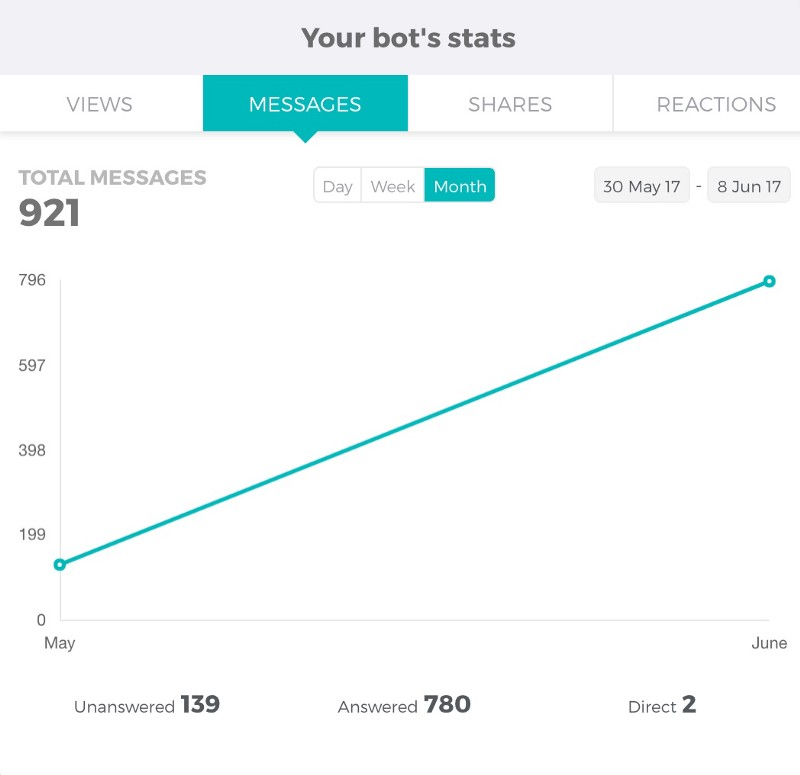
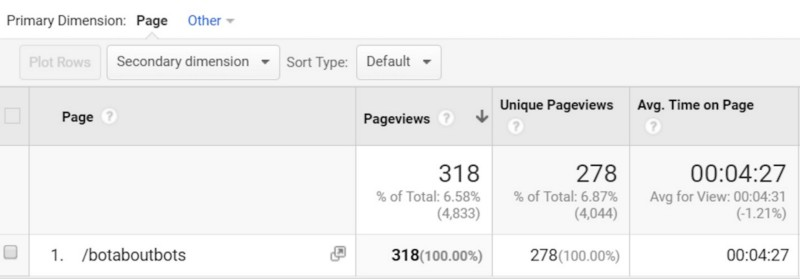 The customers spent an average of 4.27 minutes talking to a bot, and the company received more than 780 replies.
Let’s take another example of
The customers spent an average of 4.27 minutes talking to a bot, and the company received more than 780 replies.
Let’s take another example of  Chatbots can save money and time and will likely be an important part of customer support in the future.
