Blogs

Add the best talent on the market, an agile skilled management & seamless involvement.

Blog Main Image
Frame 1410094692
Mobile App Development

The Three App Types Explained: Native, Hybrid & Web Apps

branex-logo Team Branex
The Internet is vast, and smartphones sit at the center of this global app ecosystem. The number of smartphone users has now surpassed 6 billion, a significant portion of the world’s population. Whether it’s gaming, travel, shopping, lifestyle, education or healthcare, there’s a mobile app for just about everything. And that’s just the tip of the iceberg; these broader niches further break down into countless sub-niches in App Store & Google Play. However, not all apps are created the same. The technologies behind them can differ significantly. When designing apps, we often overlook the mechanics and the effort that goes into their development. It’s why we have put together this walkthrough. To our knowledge, there are three main app types (Native, Hybrid, and Web) each with its own development approach and programming skill set. And today, we’ll explore what these app types are, how they work, and their unique advantages and disadvantages. So, without further ado, let’s dive in.

A Quick Technical Comparison 

Feature Native Apps Hybrid Apps Web Apps (including PWAs)
Development Languages Platform-Specific (e.g., Swift/Objective-C for iOS, Java/Kotlin for Android) Web-Based (HTML5, CSS, JavaScript) within a Native Shell Standard Web Technologies (HTML5, CSS, JavaScript)
Codebase Multiple, Platform-Specific (separate codebases for iOS and Android) Single Codebase for all platforms Single Codebase for all browsers/devices
Execution Environment Runs directly on the device OS Runs within a WebView (embedded browser) encapsulated by a native container Runs within a web browser (e.g., Chrome, Safari)
Distribution App Stores (Apple App Store, Google Play Store) App Stores (requires submission and approval) URL/Web Browser (no app store required)
Access to Native APIs/Hardware Full, Direct Access to all device features (camera, GPS, sensors, etc.) Mediated Access via "bridges" or frameworks (e.g., Cordova, React Native) Limited Access via browser APIs (access is improving, especially with PWAs)
Offline Functionality Full (if designed to store data locally) Good (can leverage local storage within the native container) Limited (dependent on browser capabilities/caching, better with PWAs)
Push Notifications Full Support Full Support (via native container and push services) Limited Support (mainly via Progressive Web App (PWA) features)
Installation Required (downloaded from an App Store) Required (downloaded from an App Store) Not Required (accessed via URL) - Optional for PWAs (Add to Home Screen)
UI/UX Consistency Fully Native (adheres to platform-specific design guidelines like Material Design or Human Interface Guidelines) Near-Native (can feel slightly off, but frameworks aim to mimic native components) Browser-Dependent (generally feels like a website; less "native" UI/UX)

The Three Different App Types Explained

Native Apps 

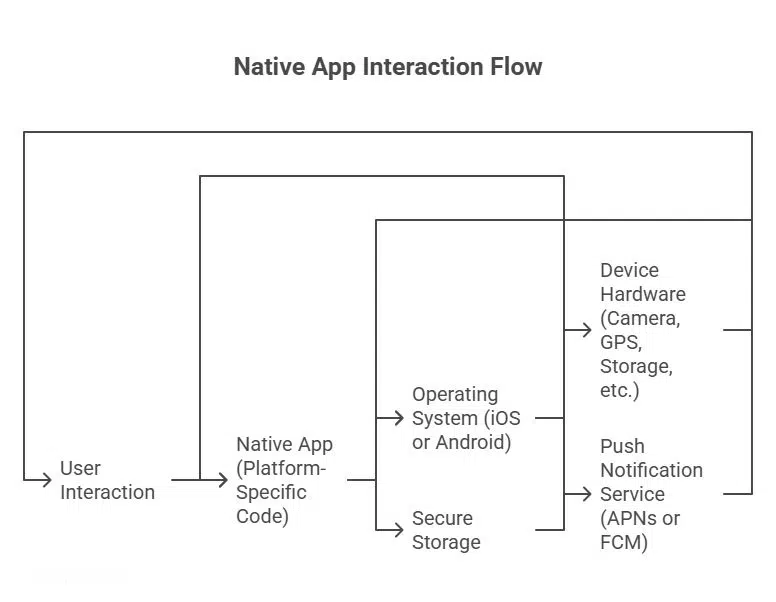
Native apps are device-specific mobile applications designed to run on a particular operating system. They offer optimized performance and a seamless user experience which is fully compatible with the operating system for which they are developed. Android apps are typically built using Java or Kotlin; whereas, iOS apps Development are designed & developed in Swift to support Apple devices. This specialization is why many businesses hire developers with expertise in platform-specific programming languages. Native apps are commonly used in industries where data security, platform-specific features, and robust infrastructure are key priorities. For example, the Facebook application was initially written in HTML5 and used a single codebase across iOS, Android App development, and the mobile web. However, iOS users experienced slower performance, prompting Facebook’s developers to create two separate codebases, one for iOS and another for Android. This approach optimized the app experience for Apple users while maintaining performance for Android users. Here’s a flow-chart illustration showing how native apps are deeply integrated with the device’s Operating System and hardware:

Advantages 

High Performance: Native apps are optimized for specific platforms which translates to faster load times, better animations and overall superior app performance. Full Access to Device Features: Native apps leverage all hardware & software functionalities such as camera, GPS, contacts, sensors, and notifications without compatibility issues. Enhanced User Experience: Native apps follow more stringent design principles (like Apple’s Human Interface Guidelines or Google’s Material Design) delivering better UX. Better Security: Native apps offer better built-in security features such as data encryption, biometric authentication and secure APIs making it more reliable. Offline Functionality: Native apps can function without the internet connection on the platform on which they operate delivering uninterrupted experience.

Disadvantages 

Higher Development Cost: It costs relatively more to code a native app for iOS and Android which includes the cost of development & maintenance. Longer Development Time: Since individual apps are built on different coding platforms, it takes relatively longer to code, test and deploy each app. Complex Maintenance: Maintenance and upgrades such as adding a new feature requires separate built-release for different platforms. Large Storage Requirements: Native apps typically require less storage space because of high-quality graphics and integrated resources. Limited Cross-Platform Reusability: Code written for one platform cannot be reused for another which limits scalability & efficiency.

Hybrid Apps 

Hybrid apps serve as a convergence point between web and native technologies. They are developed using the standard web languages such as HTML5, CSS, and JavaScript; however, they are encapsulated within a native build which makes them capable of running across multiple platforms. In hybrid apps, developers maintain a single codebase for both iOS and Android. Apps are designed on frameworks such as React Native, Flutter and Iconic with further advanced hybrid app development features. These frameworks act as bridges, allowing hybrid apps to leverage device-specific features such as camera & geolocation capabilities reserved for native applications. For example, both Instagram and Uber adopted hybrid frameworks during their early stage of development to establish consistency across platforms. The strategy gave them enough room to scale rapidly while maintaining a unified code base delivering better user experience. App launched in a hybrid environment run inside a WebView (an embedded browser component) which renders app’s content while bridging the communication between the web code & device’s native capabilities through APIs. These APIs help hybrid apps to access core device functionalities easily. Take a look at how the Power of Hybrid App Architecture is built for performance: Hybrid App Capabilities

Advantages 

Cross-Platform Compatibility: Hybrid apps come with a single codebase which works across both iOS and Android which takes the burden of development time off developer’s shoulders. Cost Efficiency: Since hybrid apps have a single codebase, it requires a relatively lower overall development and maintenance cost making them more cost-effective than native apps. Faster Time-to-Market: You don’t need to deploy apps across multiple platforms when it comes to hybrid app experiences which ultimately accelerates release schedules. Device Features: You can establish native bridges through APIs in hybrid apps which adds up to its additional functionalities such as camera, GPS and push notifications. Simplified Updates: You can continuously run updates applied to the shared codebase without having to go through launching separate updates for different platform releases.

Disadvantages 

Reduced Performance: Compared to native app experiences, hybrid apps may experience slower load time which translates to less smoother animations. Limited Advanced Functionality: They may not be well equipped to support high-performance or graphic-intensive features which may be difficult to implement. Dependency on Frameworks: Since hybrid apps heavily depend on frameworks, its performance & compatibility can get compromised because of the framework bugs. Inconsistent UX: Certain platform-specific interactions may not feel entirely native which will lead to potential gaps in user experience.

Web Apps

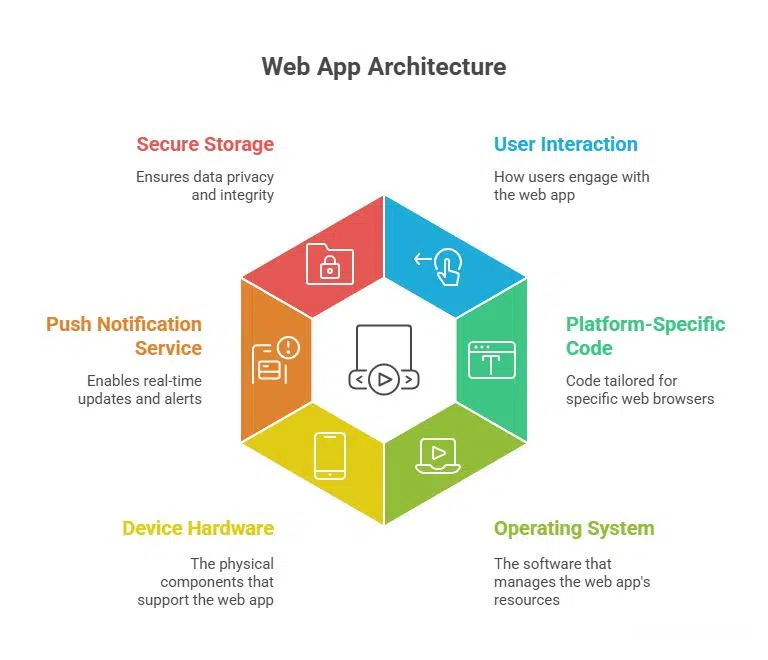
Web apps do not require installation from an app store. They entirely run within a web browser and are developed using standard web technologies such as HTML5, CSS and JavaScript. They can be accessed across any device as long as it’s powered by a compatible browser making them versatile and platform-independent. Web apps rely on browser APIs for functionalities such as geolocation tagging, camera access and offline storage. It can ultimately limit their capabilities to delivering native like experience & require relatively less maintenance. Updates can easily be deployed centrally without requiring users to download new versions of the app. Web apps are most suitable for businesses who want to push rapid updates in a cost efficient manner. It works better in environments with less demand on intensive hardware integration. PWA or progressive web apps are the modern evolution of web apps, and they offer additional capabilities such as push notification, offline functionality, home screen installations & more. A few decent examples of web apps are Google Docs, Trello, and Slack are web-based solutions which offer complete functionalities through a browser accessible from desktop, tablets & mobile devices without the need for specific platform installations whatsoever.

Advantages 

Platform Independence: Web apps can run on any device with a compatible browser (which means you don’t need separate versions). Low Development & Maintenance Costs: A single web application serves all users without platform specific adaptations. Faster Updates: You can easily launch updates and fixes in real-time by deploying it centrally with no user action required. Wide Accessibility: Users can use web apps via URL, with or without downloading or installing which makes it accessible for multiple devices. Scalability: Web apps are easily scalable to accommodate the growing user base or expanding the overall functionality for its users.

Disadvantages 

Limited Device Integration: Web apps cannot maximize the use of device hardware or native features because of their restricted functionality. Performance Limitations: They may run through a web browser which often leads to slower load time, if they are resource-intensive or complex in design. Security Vulnerabilities: Browser-based execution often exposes web apps to potential security risks like cross-site scripting (XSS) and phishing.

Which App Type Should You Choose? 

If you’re a business planning to build your next mobile app experience, then choosing the right type of app depends on your specific priorities. When price shouldn’t be a concern, then you want your app to be high-performance and stable. A native app in such scenarios can work most accurately. While, you may find plenty of freelancers out there, but if you are looking for a more well-rounded development experience, hire a dedicated software development team. It will help you build a stronger reputation by delivering a bug-free experience. However, if you’re limited in your budget and want a more quick experience designed, then hybrid & web apps are relatively suitable.

FAQs 

Do hybrid apps offer the same experience as native apps?  Not exactly. Native apps are optimized for specific operating systems (iOS or Android) to utilize maximum resources and follow stringent rendering processes leading to superior performance especially in terms of graphics. Hybrid apps run their core code inside a WebView which introduces a slight layer of abstraction leading to minor performance dips and choppy animations compared to what native experiences deliver. Why do businesses choose native apps if they are expensive to develop?  Businesses choose native apps because they deliver a more wholesome platform-specific experience to end-users. Certain industries like finance, healthcare or high-end gaming cannot compromise on performance and reliability. It’s why they invest in hardware specific software solutions such as native apps to make their one-time investment worthwhile. Besides, native apps are much more secure & have deep device integration which makes them a great asset for businesses. Will PWA (progressive web apps) replace Native apps entirely? While PWAs are rapidly growing within the ecosystem, they are quickly closing the gap for features like offline functionality and push notifications. But, they are still not going to fully replace native apps despite their cloud-based performance functionalities. Native apps will still take the lion’s share because certain industries will always require sophisticated background processing or apps capable of working seamlessly on the newest, cutting-edge hardware features like AR/VR. Although better positioned, PWAs will never meet the complexity that native & hybrid apps offer. If I launch a Hybrid App, can I easily switch to a Native App later? Yes, you can. But, it’s a significant undertaking. Hybrid frameworks (such as React Native) allow some code reuse, but if you decide to go fully native for performance, you will essentially have to rebuild the majority of the user interface and platform-specific logic. The initial hybrid investment buys you speed to market but it doesn’t eliminate the future cost of a native rebuild.
Frame 1410094693
Mobile App Development

How Branex Develops Your Custom Enterprise Mobile App Development?

branex-logo Team Branex
In today’s day and age, enterprises have become bigger, better and astoundingly more ambitious. Everyday, there’s plenty of opportunity and unbelievable potential moving into the enterprise realm day after day. According to Mordor Intelligence, the market capital for custom enterprise mobile applications stands approximately at 168.45 billion dollars for 2025. Future forecasts further reveal an expected growth of up to 303 billion by the end of 2030. Yet, the market is overly saturated, & many enterprises still experience a hurdle in developing enterprise mobility solutions to increase productivity & boost business operations. Branex removes the burden from your shoulders by bringing custom enterprise mobile app development services. We design your robust/high-quality mobile app solution with absolute coding precision. What makes our mobile app service a class-apart? Our mobile app team brings ample knowledge & experience in mobile app development tools and technologies to give you the app of your dreams. From integrating APIs to developing infrastructures, we can do everything on your behalf. We can add feature sets and functionalities within your enterprise app down to your requirements. Our teams can code exceptionally well and have previously done ample times for businesses of all sizes. Whether you’re looking for a native enterprise app solution for Android, iOS or you want a hybrid cross-platform solution, or simply a web app, we can design it all for you. We can also build PWAs to work on space-constraint devices.

What is Custom Enterprise Mobile App Development? 

Businesses, big or small, have consistently been experiencing a positive/negative setback. With COVID hitting hard and the great market dumps, it's no secret if your business isn’t online, it’s not visible to your target audience. But is going online enough? Not exactly. Times have changed and so have the solutions that sets your enterprise apart. Gone are the days when businesses would merge a few interactive features and name it a decent software. Enter 2025, custom enterprise mobile app development introduces personalized app experiences for customers and businesses of all sizes. A custom tailor made app that fits your business like it was meant to be. It’s the process of putting together a custom enterprise mobile app that directly engages with customers addressing their pain points & the business challenges which they are facing. The process includes planning, testing, and deployment ensuring the final product compliments the core internal strategies, inspires innovation and solidifies market presence.

How We Design & Develop Custom Enterprise Mobile Apps? 

At Branex, we are a team of talented mobile app developers bringing a cumulative experience of decades in building enterprise mobile app solutions. We have experience in planning the comprehensive enterprise application development lifecycle. Our teams will sit down with you to understand your project requirements and understand your enterprise end goals. Once we understand your requirements, we will create the outline and initiate a custom mobile application development process personalized as per your organizational culture. Our process for mobile app development includes: Strategy - We start with defining the why behind your app. To understand your requirements better, we study your business goals, understand your app user needs, study the ROI, & problems that you wish to solve. We then study your stakeholders (internal users, external users, business owners and end customers). Based on their behaviors, we decide which platform technology native (iOS/Android) or cross-platform will best serve the device type. We further assess what systems to integrate such as ERP/CRM/legacy, or data flows, etc. Requirement Planning - In the next phase, our project managers and key account executives work with your enterprise to gather functional requirements of the app. It will include what feature set you will want, what the app will do and how it will perform its functions. On the non-functional edge, we understand what security requirements your enterprise needs. What are the performance metrics you follow, and whether you wish to scale your app in the future. It assists us in defining scope, acquiring resources, setting budget & timeline. Design & Prototype - The design phase is where our mobile app developers start with the initial UI/UX design of your enterprise app. We start with putting together a wireframe and building initial mockups. We share them with your enterprise bodies to review and iterate. As our stakeholders, you provide us with your valuable feedback to refine solutions before we move with the heavy development stages. We also suggest the architect for backend, databases, servers, cloud instances, and device management integrations. Development - Our mobile app developers build the app’s front-end (mobile UI), and integrate backend services. We also configure relevant APIs and add any third-party integrations of existing enterprise systems with our custom enterprise mobile app solution. Our security teams will then add device management setups (MDM/EMM) and establish security layers by adding authentication and encryptions. At Branex, we follow agile methodology for developing enterprise mobility solutions which heavily depends on iterative releases & continuous feedback. Testing & QA - To check whether the app’s functionalities and feature sets are working optimally, our quality assurance engineers run multiple functional tests to test the app features. We also run performance tests to identify and eliminate any performance bottlenecks occurring in the software application. We understand how poor performance can lead to poor user experience and therefore, we run tests across different devices and platforms. Our enterprise specific tests follow complete compliance/regulation checks & device management compatibility. Launch & Support - Once the development phase is complete, we move the custom enterprise mobile app to the next rollout stage which is training users to adapt. During this stage, we sharply monitor the adoption and track performance using analytics. Our teams also study crash reports & collect user feedback to better understand what end-users need. As the user base grows, or business processes change, we scale the backend and add necessary integrations. We also launch new features, bug fixes, security patches and OS updates.
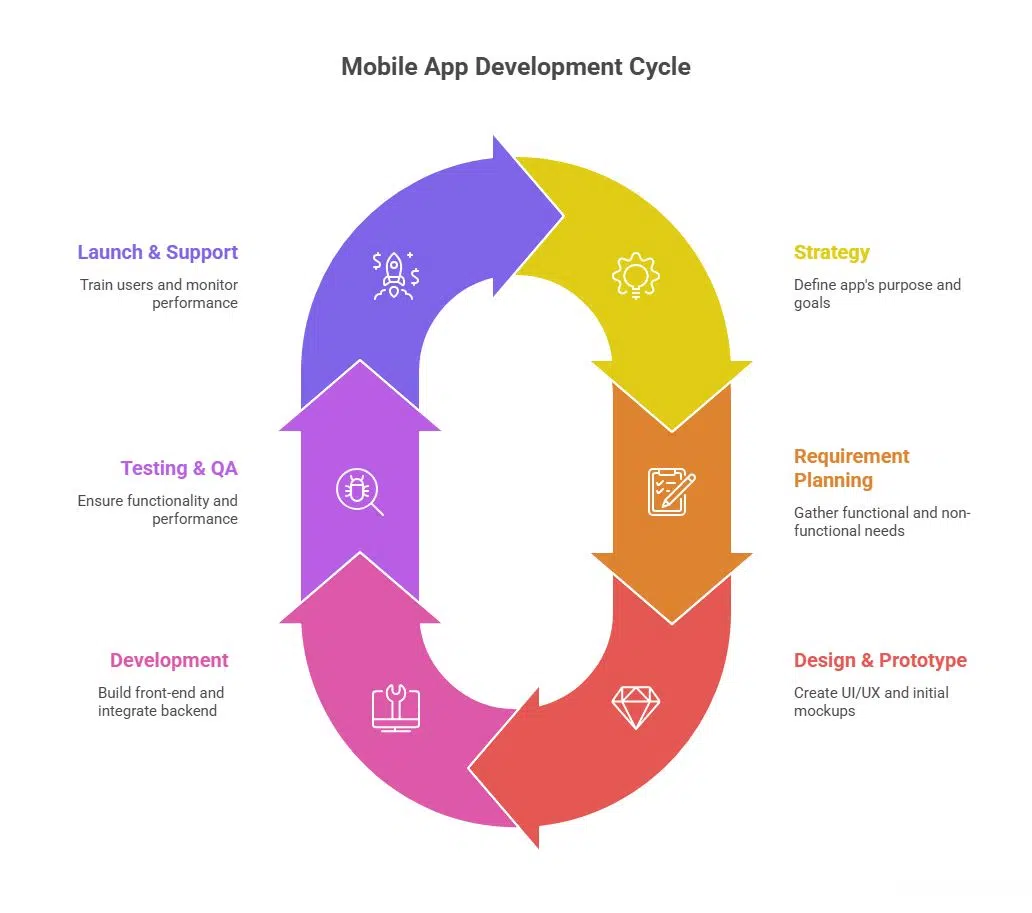
Why Custom Enterprise Mobile App Development Better than Traditional Development Practices? 

Traditional mobile app development practices offer a one-size-fits all approach. As an enterprise, you want to establish a digital presence that distinguishes your business from the rest of the market. A custom enterprise mobile app development offers a tailored app development approach, one that meets your unique organizational requirements. To explain it more clearly, here’s what custom enterprise mobile app development has to offer:
  • Ownership - You own the enterprise solution. Every feature, every document, every patent.
  • Better Control - Every pixel, every code, you take the reins on developing your solution, your way.
  • Transparent Cost - You have complete exposure to where your dollars are going, which means no hidden charges.

How Custom Enterprise Mobile App Development Benefits Your Business? 

Since enterprise mobile apps are designed to serve specific businesses, here’s how they can benefit any enterprise looking to invest in a mobility solution. Better User Experience - Custom mobile apps aren’t just tools, they are aesthetically appealing and can offer a remarkable experience. With a user-friendly design and an intuitive interface which keeps customers coming back, Apps like Slack, Amazon, Uber, & others. These are some great examples of enterprise app solutions which offer enhanced customer experience. Improve Productivity - Custom mobile apps often improve productivity by centralizing your system data, automating mundane tasks and managing your workflow overall. This way, a streamlined enterprise app reduces management burden and increases your overall productivity levels which (more or less) is directly proportional to your business growth. Data Driven Decision Making - When you invest in an enterprise custom mobile app, you get insights in numbers. Most enterprise apps have analytic tools to track data/collect real-time insights from users. They also have robust feature sets to study customer behavior which gives them a chance to make smarter decisions especially for bringing more business. Brand Building - Your app is the face of your brand. When you hire custom mobile app developers, you get a team of professionals who are skilled in solidifying your brand identity. Your app is more than just a useful mobility solution, it’s a great way to market your product or service directly to your customers. You can also run campaigns, promotions and do much more.

Our Approach to Custom Enterprise App Development 

When you come to Branex with your custom enterprise app development requirements, we instantly become your partner and provide you with the solution that you’ve always been looking for. Our teams strive not just for operational excellence in all your projects, but we aspire to provide you with the best 1% talent from around the world to build you, your next generation mobile app. We promise to always deliver no matter how tough or complex your subject matter is. It’s what we are ingrained and in-built to do and here are a few ways how we do it: Dedicated Teams - We know how much you urge to work with a team of professionals who can specifically work with you. It’s why our dedicated teams are available to take that relentless burden off your shoulder. Our autonomous dedicated team will work in sprints with you to turn your vision into a winning reality meeting all of your business objectives as per strategy. IT Staff Augmentation - If you can’t afford to work with a dedicated team, it’s alright! You can always have a team of your own, an entire club of mobile developers working as an extension of your in-house IT team. Our IT staff augmentation staff enables you to manage tasks in bulk when it comes to mobile applications. You take the lead, while we develop your app. Software Outsourcing - Don’t want to hire people to do the job? Want to outsource your software development to a team of specialists who can build your digital solution, brick-by-brick? Outsource your software development to a company of specialists like Branex to provide periodical development of your custom enterprise mobile app just the way you want.

Branex - Your Ultimate Stop Shop for Building Your Custom Enterprise Mobile App 

We boast a track record of experience and a portfolio that speaks volumes of our success. Branex has served companies across different industries and we have significant experience in almost every business vertical. That’s why, when you come to us, we assure you that you’re getting into business with a mobile app development company who knows what they are doing. You can count on us with the immense technical knowledge we possess, our expertise in mobile technologies, trends, systems, platforms and tools. Our mobile development experts can work with any framework or language your project requires. We can take care of all front-end & back-end projects and we know our way around cloud platforms, APIs and server-side technologies. Whether you want us to code in Java, C++, Python, R, Swift, Go Lang, Kotlin, or any other platform language of your choice, we can do it. We are skilled in working with multiple frameworks including but not limited to Laravel, Django, CodeIgniter, Ruby on Rails, etc.

FAQs 

How Much Does it Cost to Develop a Mobile App?  There is no precise cost mentioned anywhere to build a mobile app. It normally lies between $5,000 to $50,000+ or more based on your distinct app needs. Besides, the cost of mobile app development varies depending on factors such as app requirements, app complexity, architecture, design, visuals, and testing frameworks. Marketing also plays a significant factor in determining an app’s overall costs. How Long Does it Take to Build a Mobile Application? When it comes to determining the time to build a mobile app, it normally lies between a few months to several years based on the app’s complexity & functionality. Simple apps take 1-3 months, on the contrary, complex apps take anywhere from 4-9 months or so. We recommend you to connect with a reliable app development company & get an estimate for your project. Which is the Best Company for Mobile Application Development? When seeking the best mobile app development company, Branex stands out as a reliable choice. With a team of skilled mobile app developers and a strong track record, Branex excels in delivering high-quality solutions. What are the Benefits of Outsourcing Mobile App Development? No doubt, Outsourcing mobile app development has several advantages. You can access to a large talent pool who are versatile in their field. They are skillful to deliver apps that are carefully-made & have a know-how of launching app faster in markets. Our premium services keep businesses of all domains in mind, so that anyone can avail it. Is it Worth Hiring a Mobile App Development Agency? Yes, hiring a mobile app development company is worth it. Their expertise ensures a well-crafted app, efficient development process, and access to a skilled team of mobile app developers. You’ll receive a tailored solution that aligns with your goals, ultimately saving time and costs while delivering a high-quality app. What Kind of Technologies and Tools do Mobile App Development Companies Typically Use? Application development companies employ diverse technologies and tools for creating top-notch, user-friendly mobile apps. At Branex, we use top tools to create exceptional mobile apps. Our developers work with Java, Swift, Objective-C, and JavaScript for seamless development across Android, iOS, and cross-platform apps. Testing is done using Appium and Selenium, with deployment automation through Jenkins. To track app performance and user behavior, we integrate tools like Google Analytics and Firebase. What Industries Do You Cater? At Branex, we cater to a wide variety of industries. Some of the top industries we have extensive experience across include healthcare, finance, education, retail, logistics, and many more. Our development team understands the unique needs of each industry, hence, they create customized apps that solve specific problems and add value to your business. No matter what your niche is, we will help you out in achieving your business goals. What is the Difference Between Native and Cross-Platform Development? Both the technologies have certain pros and cons. Native development can function online due to its effortless integration with the operating system. Besides, they are easy to build and less time taking, but they got failed when you want to launch on multiple platforms at a time. At that time, cross-platform apps wins, since, they use a single code-base to launch apps simultaneously. Plus, they are cost-effective, too. Does Branex Offer NDAs for App Development Projects? We can understand how challenging it is to protect your app idea. Thereby, at Branex, we sign an NDA to protect your intellectual property and assure confidentiality. Set back and invest in our app development services right now and see how we can help you with a revenue-generating product. Does Branex Offer Ongoing App Maintenance Services? Our services do not stop at the launching stage. We provide consistent ongoing maintenance services that includes bug fixes, regular updates, and feature improvements. Our veteran experts take all the necessary measures to keep your app secure and upto date.
How to Create a User-Friendly Mobile Application
Guide Mobile App Development

How To Create A User-Friendly Mobile Application in Easy Steps

branex-logo Team Branex
Everyone knows where digitalization is going. It is going in the right direction and taking over more businesses worldwide as we speak. Numerous leading publications indicate that the global digital transformation market will grow to around USD 1,009.8 billion by 2025. Though the market does seem to be oversaturated, users still desire to see innovative products. Companies must develop their platform if they also think of starting businesses online. They should make it as functional and user-friendly as possible. Hence, they should also check the tips to make a user-friendly mobile application from ground zero.

What is a User-friendly Mobile Application?

User-friendly Mobile Application Those who want to create a successful business must first have a good look at both recognition and reputation. They should achieve and take care of the former, and improve the latter among a wider audience.  Marketing helps advertise a business. If the business has an app/software, it will help them sell and interact with buyers at any time of the day. It is true that people pick up and check their phones on average around 2600 times a day. This is why a mobile application comes in quite handy. They are a viable solution for not just existing companies but for startups too. Creating an app is a complicated task. It requires a lot of preparation, perseverance, and development.

1. What does the creation of user-friendly mobile apps entail?

The creation of user-friendly applications and software is a unique combination of market analysis, market research, observing current trends, determining users’ issues, and other factors. Any digital product development company would do this with proper diligence and care.  Hence any detail present in the user interface can either prompt a user to take the needed action or push the user away.  This is the very reason most entrepreneurs hire entire tech teams comprising the following roles:
  • Business Analysts.
  • User Interface (UI), User Experience (UX), and Software Designers.
  • App and Software Developers.
  • Quality Assurance (QA) professionals.
Moreover, the support of various specialists from various areas can help contribute to the completion of the analysis of various factors. That can help in the creation of a furthering strategy where the app’s release can become a reality on a promising footing.

2. Is in-house app development gaining momentum?

Helpful app development platforms and software programs are present. They are able to do a lot of work. This is why a lot of small and medium-sized businesses (SMBs) are now developing mobile apps through in-house teams. This trend has made it easy for both startups and entrepreneurs to make their apps without the need to learn extensive coding. As a consequence, more companies are hence embracing mobile application development for either customer use, internal purposes, or both. Though app development can initially be a daunting and challenging task, it can still be quite a rewarding experience.

Factors to Identify Before Developing a Mobile App

Factors to Identify Before Developing a Mobile App Developing a mobile application can sound quite straightforward but planning a tactical digital solution is complex. There are various factors associated with the process and they should be considered before any company endeavors to embark on developing such an app:

1. Defining and Understanding the target audience

A good understanding of the target audience and persona is a must. Understanding the target users' objectives, behaviors, preferences, and platforms and devices they use is helpful. This is where the app’s marketing can begin. The App should be customized as per the audience’s needs to help the audience enjoy the app. This is where the app development company also considers the kind of app that can serve users in the best possible way. Regardless of whether it is a native app, a hybrid one, or a web app; product discovery and market research helps a lot. This is where developing detailed user personas and carrying out market research work quite well. This helps identify the kind of app the audience needs. This tactic also helps companies create products that resonate well with their intended audiences and users. The app will certainly provide them with a top-notch user experience (UX) on numerous devices and screen sizes.

2. Researching competitors and competition

Conducting research helps ensure the idea’s readiness in the market. No company wants to end up making the same app as the competition or an app with almost 60% of the features same as that of others. App cloning can at times result in lawsuits and hefty penalties. No company wants to make their efforts redundant.  They should also analyze Apple’s App Store, and Google’s Play Store to understand the landscape and the competition. App development companies must also ensure that their app’s strategy is unique to them, their company, and their employees too. It should not be copied from others.  Companies developing apps specific to them should check out the competition. This can help them understand how their app will perform against others. They should examine the following factors to find areas needing improvement:
  • App’s functionality.
  • User Interface (UI) Design.
  • Users’ Reviews.
This is where the usage of App Store Optimization (ASO) research tools comes in handy. They help in analyzing the following to help identify gaps in the market for the app to be made:
  • Competitor Rankings.
  • Functionality.
  • User Reviews.
Not only would this help with the app and inform the app’s idea but also would help how competitors use app descriptions, keywords, and screenshots to attract users.

3. Choosing the operating system

Two primary operating systems exist in the market namely: Android and iOS. For either of the two, companies should ask themselves if they want to make an app for either of those two operating systems. Or do they want to develop a native app? Decisions regarding software compatibility can directly affect an app’s functionality and the overall performance of an app. Professionals providing mobile application development services in the Dallas metro area explain that a cross-platform framework is an easy-to-set-up app for sustained success. Why? Because more users can access it. A cross-platform app is a hybrid app that works on both Android and iOS. Those who are unable to decide should review their app’s development objective and audience’s preferences. Here are some options to consider:
  • Those who want to work on developing Android apps can use either Java or Kotlin with Android App Studio.
  • Working on developing iOS apps requires the use of either Objective-C or Swift programming languages with an Xcode development environment on Mac PCs or Macbooks
  • Working on cross-platform app development is also lucrative. It requires the usage of frameworks like Flutter or React Native for creating apps on both platforms.

4. Incubating the app’s idea

Taking the actionable steps of app development can be put on hold. Companies must consider whether or not their app can solve an existing problem. If it can, they should think about how it can help them.  But if their app is specific to their company, they must consider how the digital solution tactic can help the company achieve its objectives. Pausing to reflect at this stage enables companies to think about their app futures through a road map. They can also prioritize priorities for it too ensuring they and their team agree on the topmost objectives.

5. Planning the app’s design and security

The app’s design is the key to its success. It must have a user-friendly interface. Users will be inclined to download it provided that it is really a user-friendly app. A wireframing mockup tool (Figma or Sketch) can help visualize the app’s interface and flow. Best practices for mobile application design should be followed. Various screen sizes and devices should be considered when developing the app. Moreover, push notifications and social media integrations are features that should also be thought of early in the process.

Tips For Creating a User-friendly Mobile Application

Tips for Creating a User-friendly Mobile Application Now that you have understood what should be considered before making an app and what is considered as necessary prerequisites, it is now time to explore the steps required to create a user-friendly mobile application in the best possible steps:

1. Making the app a useful one

The mobile application in development should be helpful to users, first and foremost. It should be helpful to them in realistic ways, especially in terms of saving their time and money, and hence making their lives easy. One of the best places to start is incorporating the value proposition in the elevator pitch. If the business has addressed an important feature people face then the app can be tested in a focus group having friends and family first then the public and the target audience eventually.

2. Understanding the target users

Understanding users is a must. Developers usually skip due to impatience and lack of time. The result becomes a problem and that is why they take time to understand them. They need to have people involved in testing the app before they go live. The people who will test them should not be involved in the product development process in any way possible.

3. Ensuring onboarding is easy

Users no longer need to register in an app. It is now a thing of the past. This created very high bounce rates. Now companies have decided to remove all barriers and allow users to onboard themselves easily. If the app wants their personal or debit/credit card details, it can do so later on.

4. Using best practices of mobile app development

There are many apps present. Only a handful of them are successful. Hence it is wise to follow the footsteps of the apps that are successful. It doesn’t imply that apps need to copy one another, they should avoid repeating the mistakes of apps that flopped. This is true in terms of app design as the app has to be functional. Then the mobile app development cost can be considered.

5. Avoiding unnecessary redirects

A very good and user-friendly app should have everything a user needs. Meaning they should not have to excessively navigate through the app to solve their issue. Thus linking and directing users to external pages from the app is a very bad habit that should be avoided.

6. Designing Users’ touch points in the app

App developers must consider certain situations when users want to use the app and be ready accordingly. Push notifications are a worthwhile tool from a technical viewpoint. App developers should experiment with them. When these notifications are applied correctly, push notifications can attract people back into the app at the right when they need it the most.

7. Add integrations whenever possible

Integrating payment systems, chatbots, file-sharing options, social media options, and the like requires tools people are familiar with (PayPal, ChatGPT, etc.). App developers can integrate them into the app at a fraction of the cost. This makes it easier for both users and developers alike, especially when the latter works together with top-notch systems people love using.

8. Ensuring both aesthetics and functionality go hand in hand

Both the app’s design and function contribute to a top-notch user experience (UX). Making the product look good counts a lot. It is tested when the app is launched via either the Apple App Store, Google Play Store, or both. Good-looking apps are downloaded more than average-looking ones.

9. Making a safe environment for users

No user wants their data to be compromised. Data privacy is important and is tested when the apps are launched via app stores.

10. Don’t stop listening to users in making the app grow

The advancement of technology is exponential. New operating systems make new possibilities for mobile apps to avert past errors. Screen sizes of smartphones change constantly and they require adjusting the product’s layout. User behavior changes too. What worked well yesterday may annoy users tomorrow.

Over to You

Making a user-friendly mobile application is indeed fun. It however still requires diligent and accurate research to be conducted to ensure the app is user-friendly and also, unique and free of features competing apps have. Apps need to be original, authentic, pleasant, and functional at the same time. This is how they can also be user-friendly whilst maintaining their uniqueness.
Mobile App Development

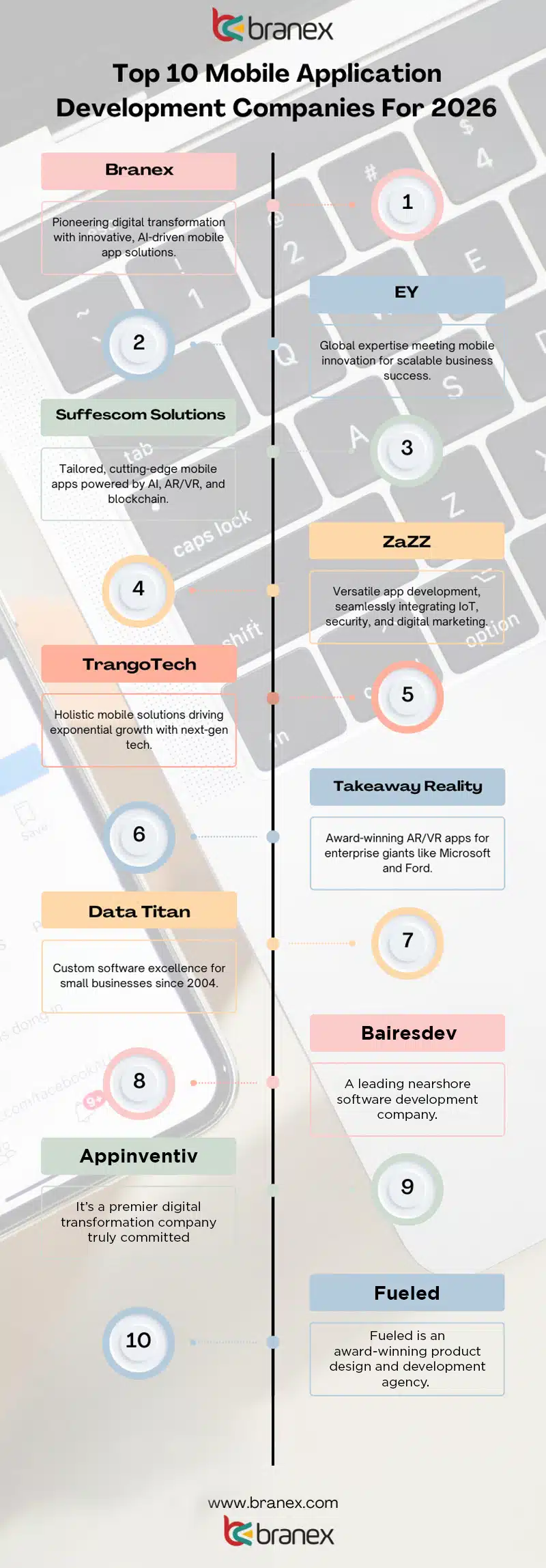
Top 10 Mobile Application Development Companies For 2026

branex-logo Team Branex
The mobile app market is projected to reach $755 billion by 2027. Many businesses are finding it challenging to afford mobile application development companies that deliver solutions that result in developing subpar app solutions.  The challenge remains: How can one find a mobile application development company that focuses on building quality, innovative, and scalable apps without breaking the bank?  Today, hundreds of businesses are wasting millions of dollars to create app experiences that are not on-point. They often deliver app solutions which have a really buggy experience.  To save you time, we have compiled a list of the top 10 mobile application development companies in 2026. Here are a few big names which can create real-world impact.

Top 10 Mobile Application Development Companies For 2026

1. Branex 

Branex Mobile Application Development Branex is a digital product development agency that goes beyond conventional software development, delivering cutting-edge solutions that redefine business growth. With a strong focus on innovation, Branex specializes in mobile app development, software engineering, AI-driven solutions, and digital marketing.  Whether you're a startup looking for a sleek, user-friendly app or an enterprise needing scalable digital solutions, Branex brings a strategic approach to technology. Their expert team ensures seamless development, integrating emerging technologies like AI, AR/VR, and blockchain to craft future-ready applications. Recognized for excellence, Branex helps businesses accelerate their digital journey while maintaining quality, security, and an exceptional user experience.

2. EY

EY Mobile Application Development EY is a network of well-structured member firms that exist as independent legal entities working in collaborative partnerships. They house around 400,000 employees across 700 offices. They are available in more than 150 countries and more. Ernst & Young (EY) is a multinational firm offering services to a range of clients.  EY is among the Big Four accounting firms along with Deloitte, KPMG, and PwC. Although its main business model is tax, audit, assurance, and consulting, EY has also stepped into mobile application development & software development. EY uses knowledge, skill & experience to assist clients navigate the changing world. They are focused on people and innovation to launch products & services ensuring quality standards are well met. 

3. Suffescom Solutions

Suffescom Mobile Application Development Suffescom Solutions is a company that specializes in custom mobile app development and introduces a variety of services, including native, cross-platform, and progressive web app development. The company focuses on creating user-friendly, innovative applications that are personalized to clients' specific business requirements.  Whether you're looking to create a mobile app in banking, healthcare, e-commerce, or any other field, Suffescom Solutions has app developers bringing the right experts for emerging technologies to deliver future-oriented solutions. The company utilizes the latest technologies, such as AI, AR/VR, blockchain, and other advanced applications. Platforms like DesignRush and Clutch will recognize them for their quality solutions. 

4. ZaZZ

ZAZZ Mobile Application Development ZaZZ software development company holds significant expertise in creating mobile and web apps for businesses, big or small. Their team of experienced developers are experts in designing mobile app solutions for Android & iOS. They are also skilled in using frameworks like React, Angular.js, Django, PHP, and more. ZaZZ also has experts who can integrate IoT into fintech platform-level solutions to improve financial transactions. They are not limited to software or mobile app development; they also offer digital marketing services such as SEO, SMO, and PPC.  ZaZZ is also fully equipped to use agile development methodologies and user-first methodologies to create apps based on user-friendly development processes. ZaZZ also adds security measures, including biometric authentication and encrypted data transmission, to protect user information.

5. TrangoTech

Trangotech Mobile Application Development TrangoTech is a dynamic digital powerhouse that delivers cutting-edge holistic software solutions and innovative next-gen products. The company is known for creating & deploying mobile apps for a diverse market, both local and international. TrangoTech has a mission to propel organizations toward exponential growth. The company comprises 200 developers bringing at least 8 years of experience in a variety of industries.  Whether you're a large corporation looking for mobile developers, experts in AI/AR/VR solutions, or someone capable of deploying digital marketing strategies, Trangotech offers everything to meet your business requirements. 

6. Takeaway Reality

Takeaway Mobile Application Development Takeaway Reality is a professional mobile app development company that claims to serve clients across continents. Their clientele is strong; they have worked for names like Microsoft, Peugeot, Best Buy, Citroen, Ford, and many other bigger names in the market. Their industry is well recognized, and they are nominated for many awards, including HTC and Lenovo for the best enterprise solutions of 2024. We understand AR/VR technologies have become the new norm. They always take a white-glove approach, merging consulting with development to design impactful digital solutions. They have a responsive team ready to innovate the best design solutions. 

7. Data Titan

DataTitan Mobile Application Development Founded back in 2004, Data Titan has a history of technology advocates for small businesses. The company is located in Glendale and is skilled in offering custom design, architecture, engineering, mobile apps, programming of custom software, and web applications for small businesses. They are a technology-focused consulting firm for pre-and-post-release software systems.  Data Titan services are custom software application development, mobile application development, prototyping, master scope documentation & architecture, technical writing, technical consulting, project management, SaaS development, cloud application development, and more. 

8.Fueled

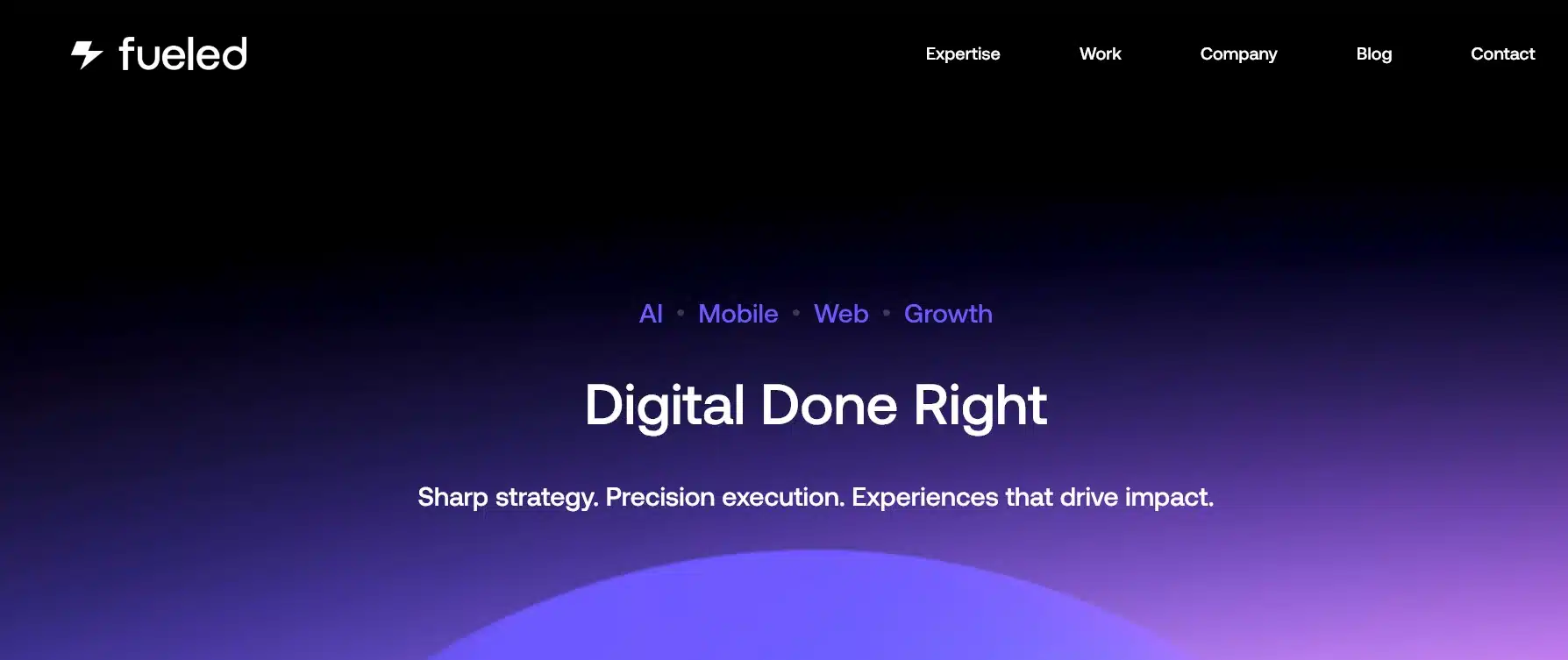
Fueled is an award-winning product design and development agency very popular and known for its iconic and user-centric mobile experiences for visionary brands. They come forward with a strategic insight with exceptional design and technical craftsmanship building products for renowned brand names like Verizon, Rolls-Royce, and Barstool Sports. The approach they follow is deep rooted in research and behavioral psychology. In fact, they don’t just shoot in the air, market-analysis is implemented to ensure the perfect product-market fit is observed. Fueled is based in New York and London, where it specializes in building native iOS and Android development focusing on UI/UX, animations and high-performance code. 

9. Appinventiv

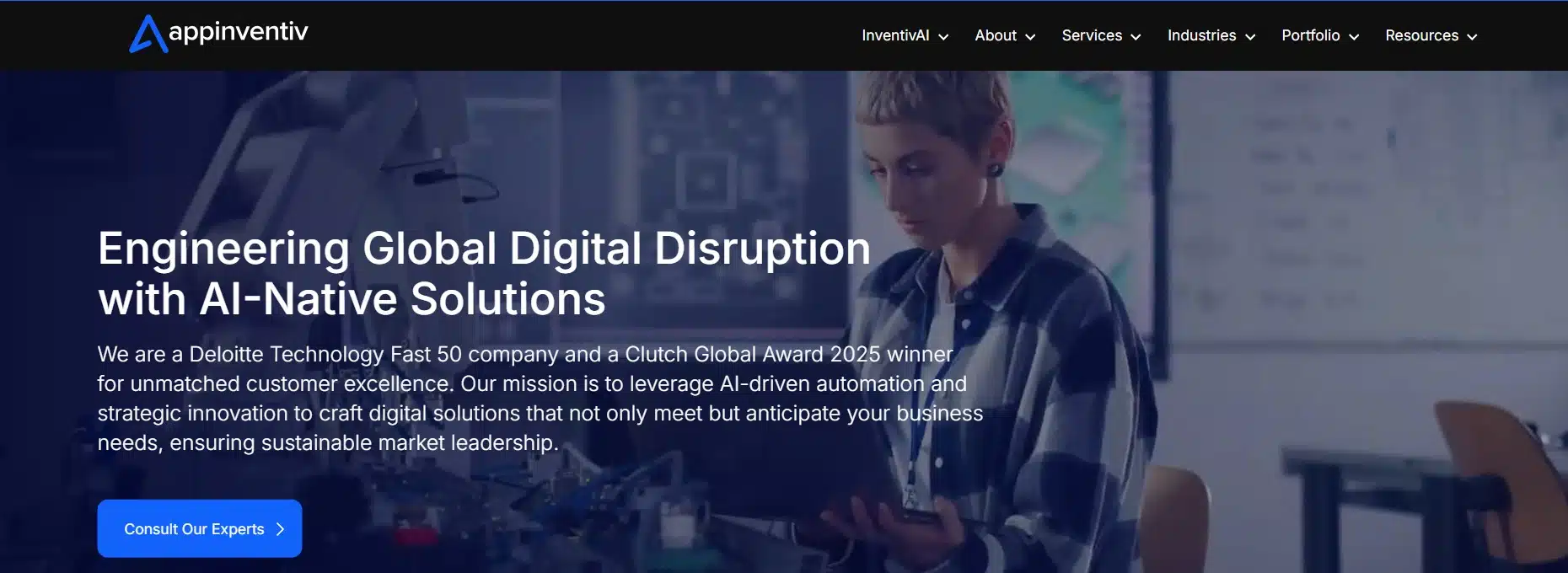
Another interesting name in the market is Appinventiv. It’s a premier digital transformation company truly committed to turning entrepreneurial visions into powerful & market-leading mobile products. They have a very strong portfolio presenting mobile app solutions in interactive media, healthcare, retail and on-demand solutions. Appinventic also carries a proven track record of building mobile apps to drive engagement. The revenue-generating software solutions they create is backed by a proven strategy followed by agile development and post-launch support. If there’s one thing the app is known for, it’s how it appears on platforms like Clutch & GoodFirms. Appinventiv has earned its name in the global industry and offers a full spectrum of products including IoT, wearable tech, enterprise-grade AR/VR applications & AI integrations.

10. Bairesdev

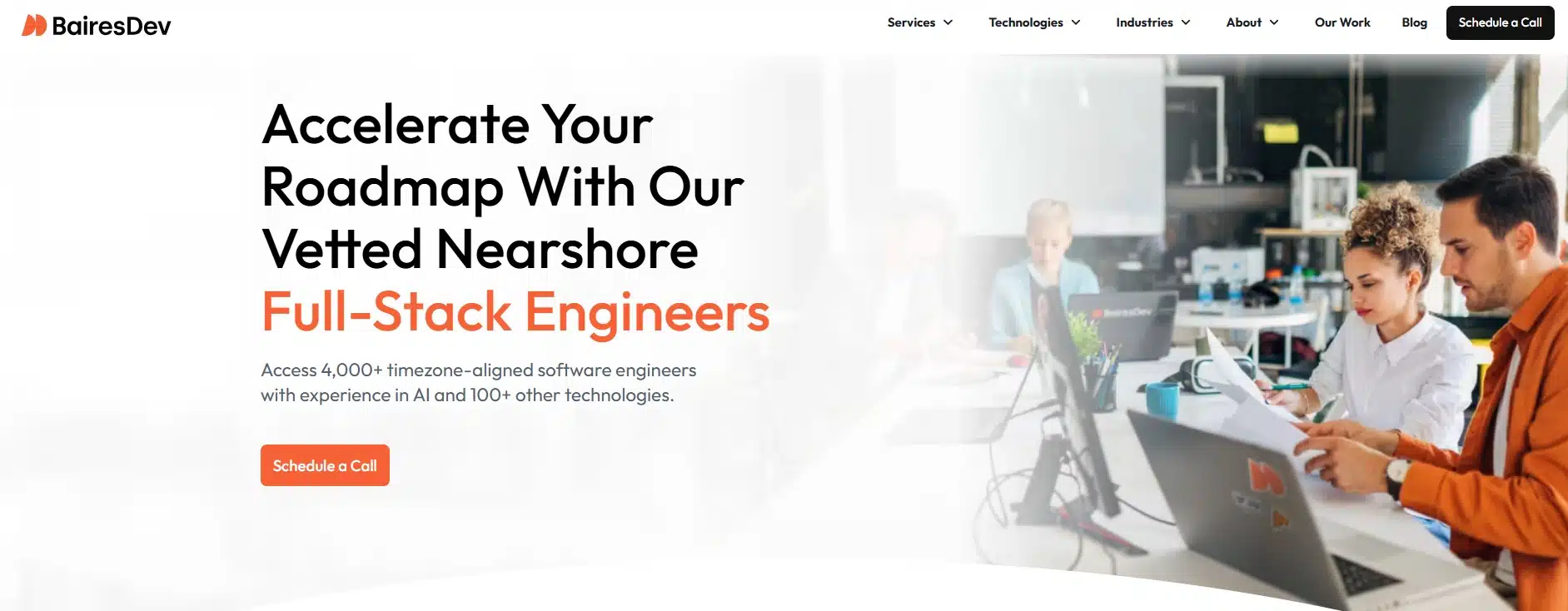
  Bairesdev is a leading nearshore software development company. They are very well known for sourcing top-tier talent from Latin America to build scalable mobile applications for Fortune 500 companies. They follow a proven vetting process which makes sure they only engage with the top 1% of tech talent from around the world. Their focus is on mobile engineering across native & cross-platform frameworks. Bairesdev specializes in complex project execution and has a highly dedicated development team, one that provides mobile apps in various industries including but not limited to fintech, healthcare, e-commerce, and logistics. The model they follow easily integrates solutions with existing client teams to drive maximum innovation and provide accelerated time to market. If you haven’t explored options yet, and you’re not sure who to hire for mobile app development, Bairesdev is your one-stop-shop destination for mobile needs.

Comparative Ratings of Mobile App Development Companies (2026)

Here’s a comparative ratings table that we have created based on our research and findings for different mobile app development companies standing at the top. 
Company Expertise & Tech Stack (1-10) Innovation & Future-Readiness (1-10) Client Focus & Scalability (1-10) Affordability & Value (1-10) Overall Score
🏆 Branex 9.5 - Full-cycle product dev, AI, AR/VR, Blockchain, Digital Marketing. 10 - Explicitly "future-ready," cutting-edge focus. 9.5 - Strategic approach for startups to enterprises. 8.5 - Promised as "affordable" with high quality. 9.4
bairesdev 9.0 - Top 1% talent, nearshore model, complex project focus. 8.5 - Strong on scalable engineering for high-growth. 9.0 - Dedicated teams, integrates with client workflows. 7.5 - Premium talent likely commands premium rates. 8.5
appinventiv 9.0 - Digital transformation, IoT, wearable tech, strong portfolio. 9.0 - Proven in interactive media, on-demand solutions. 9.0 - Collaborative strategy & post-launch support. 8.0 - Recognized on review platforms, suggests good value. 8.8
EY 8.5 - Vast resources, "Big Four" credibility, multi-disciplinary. 8.0 - Focus on innovation but not core tech dev house. 8.5 - Enterprise-grade, global scale, quality standards. 5.0 - Typically high-cost, consulting-led engagements. 7.5
fueled 9.5 - Award-winning design, iconic apps, performance focus. 9.0 - Deep research, behavioral psychology, market fit. 8.5 - For visionary brands seeking premium product feel. 6.5 - High-end design and craft implies higher cost. 8.4
Suffescom Solutions 8.0 - Custom native/cross-platform, AI/AR/VR/Blockchain. 8.5 - "Future-oriented," uses latest tech. 8.0 - Personalized to business requirements. 8.5 - Recognized for quality, likely competitive pricing. 8.3
ZaZZ 8.0 - Web/mobile, IoT for fintech, digital marketing services. 7.5 - Agile, user-first, strong on security. 8.0 - For businesses big or small. 8.5 - Broad service range may offer bundled value. 8.0
TrangoTech 8.0 - "Holistic solutions," AI/AR/VR, digital marketing. 8.0 - "Next-gen products," dynamic. 8.5 - Mission to propel growth, diverse industry experience. 8.0 - Caters to diverse market, suggests flexibility. 8.1
Takeaway Reality 8.5 - Strong enterprise clientele (Microsoft, Ford), AR/VR. 8.5 - "White-glove" consulting & development. 8.0 - Serves continents, responsive team. 7.0 - Enterprise client list suggests higher budget projects. 8.0
Data Titan 7.5 - Custom software, architecture, consulting for SMBs. 7.0 - Tech-focused, established since 2004. 8.5 - Advocates for small businesses specifically. 9.0 - SMB focus indicates strong affordability. 8.0

Selection Criteria for a Mobile App Development Company

Choosing the right partner is critical to your project's success, effective budgeting and setting up a timeline. You can check this based on a proven framework to evaluate potential companies. 

Phase # 1 - Define Your Goals 

Before you reach out to any of the firms mentioned, clarify the following first. 
  • What is your project scope and whether you are looking for an MVP or a full-scale product? 
  • What are your expectations on the core features of your mobile app solution? 
  • Who will be your target audience? Who are the specific users (b2c, b2b, or internal)? 
  • What platform do you need to build your mobile app (native iOS/Android or Cross Platform? 
  • Do you want a PWA app or a traditional downloadable solution? 
  • What is your budget range? Do you carry realistic investment with contingency (10-20%)? 
  • What is the ideal launch date for your app and what key milestones to achieve? 
  • What defines your app success (downloads, user engagement, revenue, etc.)? 
Once you have organized the answers for the following questions, it will become easier for you to sort out which mobile app development company in 2026 is best for development. 

Phase # 2 - Evaluation Criteria for Companies

This is an equally important phase because it will decide what you’re actually looking for in your next mobile app development firm. You can ask a series of questions based on your requirements. 

1. Technical Expertise & Experience

What to Look For Questions to Ask
Relevant Portfolio: Case studies in your industry (e.g., fintech, healthcare, e-commerce). “Can you show us 2-3 projects similar in complexity to ours?”
Tech Stack Proficiency: Expertise in required technologies (e.g., Kotlin, Swift, React Native, Flutter, backend Node.js/Firebase). “What is your recommended tech stack for our project and why?”
Full-Cycle Capability: Design (UI/UX), development, QA, deployment, and post-launch support. “Do you handle all phases in-house, or do you outsource any part?”
Modern Practices: Agile/Scrum, DevOps, CI/CD pipelines, and security protocols. “How do you ensure code quality and security during development?”

2. Company Reliability & Process

What to Look For Questions to Ask
Communication & Transparency: Clear project management tools (Jira, Trello) and regular update schedules. “What is your communication process and frequency?”
Project Management: Dedicated Project Manager/Account Manager. “Who will be our primary point of contact?”
Team Structure: Access to senior developers vs. junior-heavy teams. “Can we meet the proposed lead developer/tech lead?”
Cultural Fit: Do they understand your vision and work style? “How do you handle changes in project scope or priorities?”

3. Business Health & Reviews

What to Look For Questions to Ask
Client References & Testimonials: Speak directly to past clients. “Can you provide 2-3 references from the last 12 months?”
Third-Party Reviews: Check Clutch, GoodFirms, G2, and Google Reviews. Look for patterns in feedback (e.g., “great design but missed deadlines”).
Company Stability: Years in business, team size, financial health. Avoid companies with high employee turnover or unclear ownership.
Legal & IP Security: Clear contract outlining IP ownership, NDAs, and data protection. “Will we own 100% of the source code and assets upon payment?”

4. Cost Structure & Value

What to Look For Questions to Ask
Pricing Model: Fixed-price vs. Time & Materials. Understand pros/cons for your project. “Which pricing model do you recommend for our scope and why?”
Detailed Proposal: Breakdown of costs per phase (Design, Development, Testing, etc.). “What is included in the estimated cost, and what would be extra?”
Hidden Costs: Ongoing maintenance, app store fees, third-party service costs. “What are the expected annual maintenance and hosting costs post-launch?”
Value for Money: The cheapest option often costs more in delays and rework. “How do you balance speed, quality, and cost?”

5. Post-Launch & Long-Term Partnership

What to Look For Questions to Ask
Support & Maintenance: Bug-fixing SLAs, update policies, and hourly rates for future work. “What is your standard post-launch support package?”
Scalability Plans: Ability to handle future features, user growth, and platform expansion. “How would you architect the app to scale for 10x users?”
Knowledge Transfer: Documentation and training provided. “Will you provide full documentation and handover sessions?”

Phase # 3 - A Few Red Flags to Avoid 

While, the above mentioned questions will definitely help you organize and find the right mobile app development company for your mobile app in 2026, here are a few red flags which you might want to address in order to sort out which companies aren’t the ones best for hire. 
  • If the mobile app firm is showing unwillingness to provide past references. 
  • If they send vague proposals your way without any clear deliverables, timelines or cost. 
  • If they lack technical leadership or have over-reliance on junior developers. 
  • If there’s no clear communication process or resistance to preferred methodologies. 
  • If the pricing sounds too good to be true or they have really short deadlines. 
  • If they pressurize you to sign a contract before due diligence. 
These are all clear red flags showing that the company you’re interviewing has some question marks. They are either hiding behind curtains or they are not willing to be transparent about it. 

Quick Decision Matrix

Here’s a comprehensive chart showcasing a quick decision matrix based on which you can decide. 
Criteria High Priority Medium Priority Low Priority
Technical Match ✅ Core tech expertise & portfolio fit
Process & Communication ✅ Clear, transparent, and responsive
Budget & Timeline ✅ Realistic and well-defined
Company Stability ✅ Proven track record & good reviews
Cultural Fit ✅ Easy to work with, understands vision
Location/Time Zone ⚠️ Unless real-time collaboration is critical

Selection Recommendation:

Simply, create a scoring spreadsheet based on the above criteria and guidelines. Shortlist 3 to 5 companies and rate each criterion further setting up a final round of interviews. It will help you decide 1-2 mobile app development companies which will appear on top. Trust the data, not just the sales pitch. The right partner will act with transparency.

Summary

There you go, here are the top 10 mobile application development companies of 2026. Whether you're looking to build your next mobile application, software application, ERP-based solution, or just about anything else, our staff is well-equipped to provide you with the best digital experts ready to solve your problems. Want to hire the right digital experts? Reach out to our experienced professionals at Branex at any time. Let us help you offer the best digital experience, all at an affordable price. 

FAQs 

Which mobile app development company is best for startups?

The best company for startups is one that understands MVPs, works fast, stays flexible on budget, and offers strategic guidance, not just coding. Startup-friendly firms help validate ideas, scale gradually, and avoid overbuilding early on.

How much does it cost to build a mobile app in 2026?

In 2026, mobile app development typically ranges from $15,000 to $150,000+, depending on app complexity, features, platforms, and the development team’s location. MVPs cost less, while AI-driven or enterprise apps cost more. What services do mobile app development companies typically offer? Most companies provide end-to-end services including app strategy, UI/UX design, Android & iOS development, backend development, testing, deployment, and ongoing maintenance.

How do I choose the right mobile app development company for my business?

Look for proven experience in your industry, transparent pricing, strong communication, real client reviews, and a portfolio that matches your goals, not just flashy designs. What technologies are trending in mobile app development in 2026? Key trends include AI-powered apps, cross-platform frameworks (Flutter, React Native), super apps, AR/VR integration, cloud-native development, and enhanced app security.

Do these companies build apps for both Android and iOS?

Yes. Most top companies develop apps for both platforms, either natively or using cross-platform frameworks to reduce cost and time-to-market.

Can these companies handle UI/UX design and app marketing too?

Many leading firms offer UI/UX design, branding, and even app store optimization (ASO), helping apps look good, feel intuitive, and get discovered post-launch. What’s the difference between offshore vs. in-house mobile app development? In-house teams offer more control but higher costs, while offshore development is more budget-friendly and scalable—ideal for startups and fast-moving businesses when managed well.

How long does it take to build a mobile app with a top development company?

On average, a mobile app takes 3 to 6 months, depending on features, complexity, feedback cycles, and testing requirements.

Are there any industry-specific specialists among these companies?

Yes. Many companies specialize in sectors like healthcare, fintech, eCommerce, education, logistics, and SaaS, bringing deeper compliance knowledge and industry-specific solutions.  
Cross-Platform vs Native Mobile App
Guide Mobile App Development

Cross-Platform vs. Native Mobile App: Which is the Best Framework in 2024?

branex-logo Team Branex
In just over a decade, smartphones have become more than just tools for establishing effective communication. They have become a ready choice of entertainment, one that’s predominantly used for its support for applications, including both cross-platform and native mobile app. Whether you’re looking to entertain yourself by playing a game, or you simply want to purchase stuff off an eCommerce app solution. You want to keep track of the weather conditions within your city or anywhere around the world. Smartphones have introduced us to a myriad of digital applications designed to deliver the best user experience. However, when we talk about mobile app development, there are different operating systems in the market such as iOS and Android. Which of them is actually worthwhile? That totally depends on the type of phone technology you prefer. Now, there are two ways of developing mobile applications:
  • Native mobile app development that focuses on one particular operating system.
  • Cross-platform app development, one that targets multiple operating systems. 
Are you wondering which mobile app solution is the best option for you? Unsure which solution you should choose? In this article, we are going to shed light on both development solutions. We will talk about the benefits & implications, the type of technologies used to create these solutions, and the type of users who can access them.

How to Choose Between Native & Cross Platform App Development? 

Native and Cross Platform Mobile App A fundamental difference between native and cross-platform app development has its roots in the type of operating system you need to develop the mobile app for. Native mobile app development gives you a chance to build mobile app development for a particular operating system - for instance Android or iOS. There are plenty of advantages of having native mobile app development such as optimizing app performance, leveraging platform-specific features, and providing a consistent user experience across many devices. On the contrary, native apps also tend to be more reliable because fewer components are involved in their development process. The cost of development ultimately becomes flexible. Cross-platform app development allows users to build apps that target several operating systems at the same time. As the name suggests, cross-platform allows developers to build apps that can run on different operating systems, including iOS, Android, and any other available. Such apps are built on cross-platform frameworks which use a platform-specific SDK from a single API. It enables the app to work across both platforms, iOS and Android at the same time. 

What Makes Native Mobile Apps Are Favorable Choice? 

Native Mobile App A native mobile application is coded in programming languages such as Java or Kotlin Java is one of the first programming languages used to create Android app solutions for the Play Store market. Later on, in 2017, Google released support for Kotlin-powered applications. And today many Android apps in the market are supported by Kotlin. One of the best things about Kotlin is its support for object-oriented and functional programming. While Java is limited to object-oriented programming alone. Kotlin supports both object-oriented and functional programming, offering greater flexibility compared to Java, which is primarily object-oriented. At the same time, Java focuses on classes and objects for structuring programs. Kotlin includes robust functional programming features like higher-order functions, lambda expressions, and immutability. This dual paradigm approach in Kotlin allows developers to choose the best tool for the task. This approach enhances code readability and maintainability and enables more concise and expressive code. Consequently, Kotlin can handle a wider variety of programming tasks more efficiently than Java. Some renowned examples of natively developed mobile applications are:
  • Google Maps
  • Pinterest
  • Spotify
  • WhatsApp

Pros and Cons of Native Mobile App Development 

Pros and Cons of Native Mobile App Development 

Advantages

When you are aware of the benefits of a particular mobile app type, it becomes easier for you to understand its capabilities and create a mobile app solution that offers a seamless user experience.  Let’s explore the main benefits of native app development & see why it’s worth considering for your next mobile app project. Here are a few advantages of investing your budget in a native mobile app: 
  • Performance: Native apps are optimized for the specific platform, resulting in faster performance and smoother user experiences. They can fully utilize the device's processing power and native APIs.
  • User Experience: Native apps provide a superior user experience by adhering to the specific platform’s design guidelines and UI/UX standards, leading to more intuitive and responsive interfaces.
  • Access to Device Features: Native apps can easily access and integrate with the device's features such as the camera, GPS, microphone, accelerometer, and more, offering richer functionality.
  • Security: Native apps can leverage the platform’s built-in security features, providing better protection against vulnerabilities and ensuring more secure transactions and data handling.
  • Offline Functionality: Native apps can offer better offline capabilities, allowing users to access and interact with the app without an internet connection.
  • Scalability: Native apps are generally more scalable, as they can efficiently handle growing user bases and increasing feature sets with fewer performance issues.
  • Push Notifications: Native apps have more reliable and immediate access to push notifications, ensuring timely communication with users.
  • Development Tools: Native app development benefits from the use of robust and sophisticated development tools, such as Xcode for iOS and Android Studio for Android, which offer extensive debugging, testing, and performance optimization features.
  • Community and Support: There is strong community support and extensive documentation available for native development, making it easier to find solutions and best practices.
  • Monetization: Native apps often have more straightforward integration with app store monetization options, such as in-app purchases and subscriptions. And they can take advantage of platform-specific promotional opportunities.

Disadvantages

Just like there is a list of benefits of having a native mobile app. There are a few downsides as well to creating one from the business standpoint. 
  • Higher Development Costs: Native apps are developed on multiple platforms (iOS and Android) which requires maintaining separate codebases which eventually leads to increased development costs. You may want to hire React Native app developers from different teams with different skill sets for each platform, which adds up to the final cost of the overall app development. 
  • Longer Development Time: Since native apps need to be developed separately for each platform. The overall development timeline can be longer compared to cross-platform or web apps.
  • Maintenance and Updates: The update and maintenance of native apps for different platforms can be complex and time-consuming. This is because implementing changes on each version of the app is implemented separately leading to greater app development time for each version of the app. 
  • Resource Intensive: Native development requires specialized knowledge in different programming languages and tools (e.g., Swift/Objective-C for iOS and Kotlin/Java for Android), which can be harder to find and more expensive to hire.
  • App Store Approval Process: The app store approval process for native apps can be time-consuming. Submitting apps to app stores involves an approval process that can be time-consuming and may result in delays or rejections, eventually resulting in extending release schedules.
  • Market Reach: Developing separate apps for different platforms can limit market reach initially, especially for businesses with constrained budgets or timelines. They may need to prioritize one platform over another.
  • User Acquisition Costs: Marketing and promoting native apps on each individual & multiple platforms can be costly, requiring separate strategies and potentially doubling the effort needed to attract and retain users on each individual platform.
  • Version Compatibility: A native app is compatible with different versions of the operating systems & devices which can initially become challenging. It requires additional testing and potential adjustments to maintain a smoother functionality of the app. 
  • Risk of Platform Dependency: Relying heavily on a specific platform’s ecosystem can be risky, as changes in platform policies, market trends, or user preferences can magnanimously impact a native app's success and its overall business strategy.

What Makes Cross-Platform Apps a Popular Option? 

Cross Platform Mobile App A cross-platform app, on the other hand, is created from a single codebase.  The goal of cross-platform app development is to target different operating systems and launch an app that works through cross-platform frameworks, which use platform-specific SDKs (Android SDKs & iOS SDKs) from a single unified API. It enables you to access platforms from different SDKs & libraries.  Private organizations usually invest in such frameworks; for instance, here are a few brand names that leverage cross-platform as a popular option for their respective business. 
  • React Native by Meta - The platform uses JavaScript as a programming language. 
  • Flutter by Google - It uses Dart as a programming language. 
  • .Net MAUI by Microsoft (formerly Xamarin) - It uses C# and XAML as a programming language. 
A good thing about cross-platform mobile apps is that they're compiled to use native UI elements. It makes the app look, feel, and appear the same as a native mobile app. However, this app can easily work across a multitude of platforms. It provides an abstraction to the underlying platform SDKs.  Some of the well-known app examples of cross-platform are: 
  • Instagram, Skype, Walmart, and Airbnb (React Native)
  • Google Ads, My BMW App, eBay Motors, and the New York Times (Flutter)
  • The World Bank, Fox Sports, Alaska Airlines, and BBC Good Food (Xamarin)

How Cross-Platform Apps Work Across Multiple Platforms? 

Cross Platform Apps Work Multiple Platforms There are different tools and frameworks which are commonly used for cross-platform development. These tools are, namely, React Native which uses JavaScript and React to build native-like apps.  Another reliable tool is Flutter, developed by Google which uses the Dart language for fast & expressive UI; Xamarin, backed by Microsoft, allows developers to code in #C and .NET. Similarly, Ionic technology allows developers to code using programming languages such as HTML, CSS, and JavaScript All these tools allow developers to write the code once and then deploy it on multiple platforms. 

Pros and Cons of Cross-Platform App Development 

Pros and Cons of Cross Platform Mobile App Development

Advantages 

  • Cost Effectiveness - Cross-platform apps are run on a single codebase for multiple platforms reducing the overall development cost compared to developing separate apps for iOS and Android. 
  • Faster Development - a leading benefit of having a cross-platform app is its shared codebase which accelerates the development process. It allows for quicker deployment across multiple platforms. 
  • Consistency - Also, cross-platform apps offer uniform user experience across iOS and Android which contributes to maintaining brand consistency and establishing effective user familiarity. 
  • Easy to Maintain - Because it is powered by a single codebase, updating and maintaining a cross-platform app becomes relatively simpler and less time-consuming, an added benefit which you don’t receive in native mobile apps. 
  • Greater Audience Reach - Since cross-platform solutions allow the app to operate across multiple platforms. It maximizes the app’s potential user base and increases its overall market reach.
  • Resource Efficiency - An app with a single code database not only performs well across multiple platforms. But also reduces the need for a specialized skill set and streamlining project management. 
  • Reusable Code - The code is also reusable across all platforms which eventually minimizes the chance of code redundancy and increases the overall functionality of the cross-platform app. 

Disadvantages

While there are benefits to investing in cross-platform development. It also has its fair share of disadvantages from a business standpoint. 
  • Performance Problems: Cross-platform apps may not offer you the same level of performance as native apps, particularly for apps that are graphic intensive or highly complex applications. 
  • Limited Access to Platform-Specific Features: Many cross-platform apps have advanced features and unique APIs for different platforms, potentially leading to a less polished user experience. 
  • User Experience Compromises: Giving your website a truly native appearance can be a bit of a challenge, especially with cross-platform apps. You can have an app that’s less polished offering the best user experience. 
  • Higher Initial Complexity: Cross-platform apps have layers of complexity in terms of tools, libraries, and integrations which require specialized knowledge. 
  • Dependency on Framework Updates: Businesses often rely on cross-platform framework developers to keep tools up to date with the latest platform changes, which cause delays if updates are not timely. 
  • Debugging Challenges: With cross-platform apps, identifying and fixing platform-specific bugs can be more difficult because of the abstraction layers used in cross-platform frameworks. 
  • Potential for Larger App Sizes: Cross-platform apps might have larger file sizes due to the inclusion of additional libraries and abstraction layers, which can affect download and install rates.
  • Security Concerns: Ensuring security across multiple platforms can be more complex, as vulnerabilities in the framework or platform-specific implementations need to be addressed. 

How Much Does it Cost to Build a Mobile App?

Cost of Mobile App Development When it comes to native mobile apps, the cost of mobile app development depends on several factors. A few basic ones such as features, device type, and OS support. 
  • Simple Native App - An app with basic functionality like logins and a clean interface can cost anywhere from $30,000-50,000. At an estimate, it can take up to 11 weeks to complete. 
  • Complex Native App - An app with a complex set of features typically offers a more engaging experience. It costs around $100,000-250,000 to develop from start to end. 
  • Advanced Apps - Advanced Apps are the best available; they offer a myriad of advanced features and interesting capabilities, generally where the aim is to become a service or platform. Such an app can go up to $250,000 due to its complexity and the rich feature options it includes. 

Cross Platform or Native - Which One Should Enterprise Choose?

Cross Platform vs Native App Since, it's pretty clear now that both native and cross-platform app development have their own set of pros and cons, which one is the best enterprise mobile app solution for your business?  If you want to pick the right one, here are a few key considerations: 

1. How Much Time Do You Need to Market? 

Ask yourself, when you’re investing in a mobile app, how much time will you need to put it out in the market and gain enough traction so it starts generating revenue?  With native mobile app solutions, the relative time to market is eventually greater compared to what you have to pay for a cross-platform mobile app service.  Let’s say, if you want to go live with your app instantly, then a cross-platform app is your best option as it allows you to collect user feedback, deploy the app quickly & start obtaining results. 

2. Test Whether Your Cross-Platform App Will Function Properly or Not? 

Without proper testing processes, your enterprise mobile app will not function properly. As is the case with native apps, you can have different app versions working on a variety of operating systems.  Cross-platform apps, compared to native apps, are easier to test because quality assurance engineers only have to test a single codebase. With native apps, you can’t rely on a single SQA but you will have to make due investments in a proper native app testing company, as they will have the time & resources. The only downside is overpromising third-party SQA engineers who lack resources and simply want to quickly ship the product without following the necessary quality checks. 

3. How Much is the App Development Budget? 

It’s settled that cross-platform is a much more cost-effective option compared to native mobile app development. With native apps, you have to deploy two standalone apps especially when you’re targeting both operating systems and this will eventually require more developers, more resources & ultimately investing more money. So assuming that you’re an enterprise, we are sure that you’re not tight on budget. However, having to pay an entire team to develop two separate versions of the same app doesn’t sound like it’s a wise choice. Cross-platform app development will eventually be the best solution.  That’s because, 
  • You only have to communicate your requirements to a single developer. 
  • A single codebase will be quite suitable for implementing active maintenance. 
  • You will get a more flexible mobile app solution that will work marvelously across all platforms. 

4. Checking for App Performance 

So how do you want your mobile app to perform?  That will also influence the choice of whether you are looking for cross-platform or native mobile app development. Mobile applications often have high computing requirements because of the number of dynamic elements you introduce within the mobile app. With native apps, you can have an experience and an app solution that delivers excellent performance & a reasonable user experience. Mobile apps such as games often require more computing power; however, if you are an enterprise then you may be looking for a mobile app that streamlines your processes.  When it comes to performance, it all comes down to what is the end goal of making due investment in a mobile app. Whether you want to reach a wider audience or want to quickly market your app. An SQA team will ensure that your app offers greater performance overall. 

5. How Secure Do You Want Your Mobile App To Become? 

While the app’s performance and testing are essential for enterprise solutions, it’s important to emphasize the app’s security as well. Your app’s security is paramount because your app stores and manages large amounts of data. When dealing with massive data, adding security can often become complex. In such cases, a native app is better as developers can tighten security measures and integrate it with the OS environment. Also, with native apps, encryption becomes a whole lot easier compared to cross-platform mobile apps. If you want to prioritize maintenance and want to come across a mobile app that’s easily maintainable and has a shared codebase, then cross-platform is one such solution. 

In Conclusion 

Choosing whether you want to invest in native app development or cross-platform app development, totally depends on your specific requirements.  Cross apps are not as costly as native apps and are relatively quicker to develop, offering broader market reach with a single codebase. Though there might be compromises on performance and relevant features, it can help you achieve your strategic goals proficiently.  While a native app takes more cost to build and a rather diversified team of developers. It offers better customizability, greater app performance, and meeting all security requirements.  Weigh the trade-offs; see which one works best in your case.  At Branex, we offer custom mobile app development services as well as native app development for all our customers. Want to achieve the best outcome? Contact our experts and discuss your project. 
Augmented Reality App Development Cost
AR/VR Mobile App Development

Augmented Reality App Development Cost 2024 – [Complete Breakdown]

branex-logo Team Branex
Augmented Reality (AR) apps are transforming the way we experience the world around us, and with the massive growth of AR users in the USA (expected to reach over 1.7 billion by 2024), it's no wonder businesses are jumping on board. Imagine trying on that new shade of lipstick virtually before you buy it, or seeing how those sleek new couches would look right there in your living room – all from your phone! But here's the real question - how much does it ACTUALLY cost to create an augmented reality (AR) app?  Well, you don’t have to worry about future AR innovators.  In this article, we are going to break down the costs, complexities, and cool features that go into building your very own piece of AR magic, helping you estimate the best budget. 

What is an AR App and Why Should You Care?

Augmented Reality App Forget everything you think you know about interactive experiences –  Augmented Reality (AR) apps are here to revolutionize the way you do business.  Just think for a moment, a potential customer walks into your store, holds up their phone, and sees a 3D model of your latest product displayed right there on the shelf.   They can change the color, and size, or even see how it would look in their own home, all without ever leaving the store. That's how powerful AR apps can become eventually. AR apps are software programs that use your phone's camera to overlay digital content in the real world.  It creates an interactive experience that allows users to engage with your brand in a whole new way. Why do we believe it’s necessary to invest your budget in an AR app?  Here are just a few reasons why you should consider Augmented Reality (AR) apps for your business in the USA. 
  • Boost Sales and Conversions: AR apps let customers visualize products before they buy, leading to more informed purchasing decisions and increased sales.
  • Enhance Customer Experience: AR apps create a fun and interactive way for customers to learn about your products, leading to greater brand loyalty.
  • Stand Out from the Competition: Be an early adopter of AR technology and wow your customers with a cutting-edge shopping experience.
  • Improve Training and Efficiency: Use AR apps to train employees on complex procedures or visualize maintenance tasks, leading to increased productivity and reduced costs.
AR apps are no longer a futuristic fantasy – they're a powerful marketing and sales tool within your reach. So let’s dive in and explore the associated cost of building such AR apps.  

What is the Average Cost of Developing an AR App? 

Augmented Reality App Development So, how much does this AR app magic cost?  That's a fantastic question, and the truth is it depends. Just like building a house, the final price tag depends on the size, features, and all the fancy features you want to include. Here's the general range to set your expectations - developing an AR app in the USA can cost anywhere from $10,000 to $200,000. Don’t worry! We will break down this range into sections.  For now, just remember the cooler the features, the more complex the app will be, and the better the price tags will be accordingly. So without further ado, let’s read all that we know. 

1. The Cost of AR App Development Based on Complexity 

The cost of an AR app will depend largely on its complexity. An AR app development project is pretty much similar to building stuff with Legos. A simple design takes less time to snap together than a complex spaceship.  Similarly, a basic AR app with a single overlay might take a few hours to develop, while a feature-rich game with custom characters and interactions will require months. More complex apps mean more developer hours, which translates to higher costs. Here's a breakdown of Augmented Reality app development costs based on complexity levels:
AR App Complexity Estimated Cost Range (USD) Features
Simple $10,000 - $50,000 * Single core function * Pre-built AR tools & templates
Intermediate $50,000 - $200,000 * Multiple features * Object recognition * 3D animations * User interaction
Complex $250,000 - $800,000+ * Groundbreaking features * Custom algorithms * Cutting-edge technology * Extensive development

2. The Cost of AR App Development Based on Region 

The cost of an AR app also differs based on which region you reside in. The average hourly rate for AR developers varies greatly across the globe. Regions with a high cost of living often have higher developer rates. For example, hiring an Augmented Reality developer in North America or Western Europe will likely cost more compared to someone in Southeast Asia or Eastern Europe. Here's a ballpark range of how much the price varies on the region for hiring AR developers:
  • North America: $150 per hour and upwards 
  • Western Europe: $70 - $100 per hour 
  • Eastern Europe: $25 - $30 per hour
  • Southeast Asia (including India): $15 - $30 per hour
As we can see, there’s a potential difference of $120 or more per hour between North America and Southeast Asia. Here’s a breakdown of the cost based on the region level: 
Region Average Hourly Rate (USD) Estimated Total Project Cost (USD) Factors Affecting Cost
North America $150+ $100,000 - $500,000+ High developer rates, complex projects common
Western Europe $70 - $100 $50,000 - $300,000 High developer rates, a mix of project complexity
Eastern Europe $25 - $50 $25,000 - $150,000 Lower developer rates, potential communication challenges
Southeast Asia (including India) $15 - $30 $15,000 - $100,000 Lowest developer rates, project complexity may be limited
South America $65 - $150 $40,000 - $200,000 Varied developer rates, project complexity mix
Australia & New Zealand $60 - $100 $40,000 - $250,000 High living cost, skilled developer pool
Central Asia $30 - $60 $20,000 - $100,000 Emerging AR development market, potential talent limitations

3. The Cost of AR App Development Based on Category 

Just as much as the location and the complexity of the app play a role in cost estimation, so does the fact of what you want to achieve with your augmented reality app solution.  To develop an augmented reality app, you will need to consider the goals you want to achieve with your application. Here's a breakdown of estimated costs for different Augmented Reality (AR) app categories:
Category Description Estimated Cost Range (USD) Key Cost Drivers
Simple AR Filters Fun and basic filters for social media or entertainment (e.g., animal ears, silly hats) $5,000 - $20,000 Limited development time, basic 3D models/textures
Product Visualization Allows users to virtually place furniture, clothes, or other products in their environment $20,000 - $50,000 Object scanning/modeling, integration with e-commerce platforms
Educational Apps Interactive learning experiences with AR elements (e.g., exploring the solar system, or dissecting a frog) $30,000 - $100,000 Educational content creation, potentially complex AR interactions
AR Games Simple to moderately complex AR games with basic characters and environments $50,000 - $200,000 Game design, character animation, potential multiplayer functionality
Complex AR Games Highly immersive AR games with intricate characters, environments, and advanced features (e.g., location-based experiences) $200,000+ Extensive development time, high-quality 3D assets, potentially using real-time data integration
AR Business/Industrial Apps Apps for maintenance, training, or data visualization in professional settings $50,000 - $500,000+ Specialized features, potential integration with existing enterprise systems

Augmented Reality (AR) App Development Cost Formula 

While there's no single perfect formula to pinpoint the exact cost of your AR app. Here's a comprehensive breakdown to help you estimate the development cost:
Total Cost = (Development Time * Hourly Rate) + Additional Costs

Here's a Breakdown of Each Variable:

  1. Development Time: This refers to the total number of hours required to develop your AR app. It encompasses various stages like:
    • Planning & Design: User interface (UI) / User experience (UX) design, storyboarding, and feature planning.
    • Development: Coding the app functionalities, integrating AR frameworks and SDKs, 3D modeling, and animation (if applicable).
    • Testing & Refinement: Bug testing, performance optimization, ensuring AR functionality works seamlessly.
  2. Hourly Rate: This depends on the region and experience level of your development team. You can use the ranges provided in the previous section (AR Developer Hourly Rates and Project Costs by Region) as a reference.
  3. Additional Costs: These can include:
    • Project Management: Costs associated with coordinating the development process, especially for outsourced projects.
    • Content Creation: Development of high-quality 3D models, textures, animations, or any other visual elements.
    • Backend Development: If your app requires server-side functionality or data storage, factor in backend development costs.
    • API Integrations: Costs associated with integrating with third-party APIs for features like social media sharing or location services.
    • Quality Assurance (QA) Testing: Thorough testing across various devices and scenarios for a smooth user experience.
    • App Store Fees: Submission fees for publishing your app on the Apple App Store or Google Play Store.

Here's an Example of How to Use the Formula:

Imagine you're building a simple AR product visualization app in North America. You estimate the development time to be 300 hours, and based on the region, you target an average hourly rate of $175. Development Cost = (300 hours * $175/hour) = $52,500 Additional Costs (estimated):
  • Project Management: $5,000
  • Content Creation (3D models): $10,000
Total Estimated Cost:    $52,500 (Development Cost) + $5,000 (Project Management) + $10,000 (Content Creation) = $67,500.  Now, this is just a ballpark figure, and the actual app development cost can swing depending on how fancy your app gets. To get a more solid estimate, chat with some experienced AR app developers in the planning stage. They can eyeball your project and give you a better idea of how much time and people you'll need. Always remember, stuff happens! Factor in some extra cash for unexpected bumps in the road or if you decide to add some cool new features along the way.

How Long Does it Take to Build an AR App? 

How Long to Build an AR App The time required to build an AR app totally depends on two factors; how complex the AR app is and what is your team’s expertise. Each AR app differs from one another based on two factors, the complexity of the app and the required team expertise.  Here’s a price breakdown
  • Simple AR Apps (2-3 months): Imagine a basic filter app that adds silly hats or lets you virtually place furniture in your room. These can be built relatively quickly by a small team using pre-built tools and templates.
  • Moderately Complex AR Apps (4-6 months): These apps have more features and functionality, like educational experiences with 3D object interaction or basic AR games. Development time increases as features become more intricate.
  • Complex AR Apps (6 months+): These are highly immersive games with intricate characters, environments, and real-time data integration. Think location-based games or industrial training apps. Expect a longer development timeline due to the advanced features and potential custom app development required.

Factors Associated with How Long It Takes to Build an AR App 

Factors to Build an AR App  When it comes to how long it takes to create an AR app, here are a few important factors that need to be addressed. Since each app is unique, it requires its own specific time to cook up and add those extra special ingredients.  Let’s explore some of the relevant factors that affect the design time of your AR app development. 

1. App’s Complexity

While complexity is definitely a key factor in AR app development timelines, let's not get discouraged! There's a whole spectrum of AR experiences you can create, and some can be built surprisingly fast. Imagine wanting a fun filter app that lets users virtually try on sunglasses or add fantastical creatures to their living room. These "light" experiences, with simpler features and pre-built elements, can be whipped up in as little as 4-6 weeks by a skilled team.  

2. Technical Expertise & Skillset 

The technical expertise and skillset of your chosen dedicated development team significantly influence the timeline for your AR app. Having a team with a proven track record in AR development possesses the knowledge and problem-solving skills to navigate complex technical challenges efficiently.  They've likely encountered similar hurdles before, allowing them to implement solutions quickly and avoid delays. Experienced teams have established development processes optimized for AR projects. It includes familiarity with relevant tools, frameworks, and best practices, leading to a smoother and more efficient development workflow.

3. UI/UX Design and Assets

Think of your app's design as the bridge between the real world and the AR experience. Crafting a user-friendly interface (UI) and intuitive user experience (UX) is of significance. But it also takes time. Developing high-quality 3D models, animations, and other visual assets all contribute to the overall development time. For instance, an app with a simple user interface & pre-made assets is relatively easier and quicker to build compared to an app with a custom UI/UX design, unique animations, and complex 3D models.

4. Features & Functionalities

The more features you pack into your AR app, the more time it takes to build. Simple features like basic object placement might be quick. However, complex features like real-time data processing, intricate interactions, or location-based experiences require significantly more development hours. Let’s say, if you’re aiming to have more complex features such as real-time data processing (such as real-time AR game live updates), intricate interactions with virtual objects in complex ways, or location-based experiences to interact with the user’s physical location, it requires more development hours to implement complex codes & important functionalities. 

5. Testing and Quality Assurance (QA)

You wouldn't want your users to encounter glitches in the AR world, would you? Similarly, a simple app may require rather less time for quality assurance, compared to a more complex app project, especially one that’s bug-free and offers a smoother user experience. The more complex your testing needs become, the longer this stage can take so it somewhat depends on the app development team sequentially.  

Key Takeaways:

  • The cost of developing an AR app can vary depending on the complexity of the app, the region where the app is being developed, and the category of the app.
  • Simple AR apps can cost anywhere from $10,000 to $50,000, while complex AR apps can cost upwards of $800,000.
  • The time it takes to develop an AR app can also vary depending on the complexity of the app. Simple AR apps can be developed in a few months, while complex AR apps can take a year or more to develop.

Why Choose Branex for Your Next Augmented Reality App? 

Branex is your one-stop brand solution for pioneering the next generation of user experiences with Augmented Reality App Development Services. We transform your vision into reality, by seamlessly blending the physical and digital worlds. Our team of AR specialists leverages cutting-edge technology to craft customized solutions that overlay rich digital information onto your real environment. Branex empowers you to unlock the true potential of AR, enhancing everything from training procedures to product visualization. 

Choose Branex to bridge the physical and digital divide and bring your augmented reality vision to life.

How Much Does It Cost to Make a Mobile App
Mobile App Mobile App Development

How Much Does It Cost To Make a Mobile App in 2024?

branex-logo Team Branex
There's a mobile app for that!  We're all acquainted with this statement. Today, mobile apps have taken center stage in the digital spectrum. Thousands of mobile apps fill the market, particularly on both the Play Store and the App Store. According to a recent cost estimate, the total number of apps exceeds 6 million combining both the Google Play Store as well as the Apple Store. Yet, there’s still a lot of opportunity for businesses to develop impressive app solutions which hold the potential to revolutionize the industry. So whether you’re a Baby Boomer, Millennial, or Gen Zer, an app is something we are all familiar with and we all understand the need for one, as it becomes more of a business necessity. In this guide, we are going to explore some of the important mobile app cost factors. Let us explore how mobile app costs can differ based on multiple comparisons. And how one should select the right mobile app development firm for their business.  So without further ado, let's explore everything we know so far. 

Some Important Facts - Why Should You Choose a Mobile App? 

But before we get into how much a mobile app is going to cost. Here are a few important facts about mobile app development and why businesses should consider investing in it.  
  1. 89% of smartphone users shop on their devices weekly. This captures the massive mobile commerce opportunity an app offers.
  2. App users spend 5x more time and make 3x more purchases compared to mobile website users. Apps drive deeper engagement and potentially higher revenue.
  3. 79% of smartphone users will make a purchase using a mobile app in 2023. Customers are increasingly comfortable buying through apps, making yours a relevant touchpoint.
  4. The average user has 30 apps installed on their phone, with 9 used daily. A well-designed app can become one of those trusted daily companions.
  5. Mobile app revenue is expected to reach $613 billion globally by 2025. Investing now positions you to capture a share of this growing market.
Now that we have established that the market embraces mobile applications. You may wonder how it all matters at the enterprise level. To help you understand its significance, here are a few data-backed statistics to confirm and demonstrate why mobile apps offer greater value in the present growing app market. 
  • App-based startups have over 800% higher IPOs than non-app-based startups.
  • A study by IDC found that enterprise mobility solutions can increase employee productivity by up to 30%. 
Such aspects indicate how a mobile app can truly become beneficial, not only for small business-level companies but also for enterprise-level corporations and beyond. 

Factors Influencing Mobile App Development Cost

There are two main stages impacting the cost of mobile app development:

1.  Technical Expertise:

  • Programming Fundamentals: A developer's grasp of core programming concepts (variables, functions, loops) affects development speed and efficiency. Strong fundamentals typically translate to cleaner code and fewer bugs, reducing development time and overall cost.
  • Mobile-Specific Languages: Proficiency in languages relevant to the target platform (Java/Kotlin for Android, Swift/Flutter/React Native for iOS) is crucial. Developers with this expertise can work faster and avoid compatibility issues, minimizing development costs.

2. Planning & Design Complexity:

  • App Functionality: Complex functionalities with extensive features require more development time, pushing the cost upwards. Simpler apps with basic features are faster and cheaper to develop.
  • Platform Selection: Developing for both iOS and Android doubles the workload, significantly increasing the cost. Choosing a single platform (based on the target audience) is a more cost-effective approach.
  • User Interface Design: A complex, feature-rich UI design necessitates more design hours, impacting the cost. A well-planned, intuitive UI can be achieved efficiently, reducing design expenses.
  • By carefully considering these factors, you can make informed decisions that optimize both the functionality of your app and the development cost.

The Formula for Calculating Mobile App Development Cost 

At Branex, we recognize the significance of providing clear estimates for your mobile app project expenses.  Here's a structured approach to help you gauge the approximate cost of your mobile application.

1. Total Development Time (TDT):

This encompasses all phases of app development, such as planning, design, coding, testing, and deployment.

2. Hourly Rate (HR):

This denotes the cost incurred per hour by the development team you engage, which can fluctuate based on factors like location and expertise.

3. Complexity Factor (CF):

This is a variable multiplier that reflects the intricacy of your app's features:
  • Basic Features: CF = 1.0
  • Moderate Features: CF = 1.5
  • Advanced Features: CF = 2.0
  • Extensive Features: CF = 2.5

4. Platform Factor (PF):

This factor indicates the number of platforms your app targets:
  • Single Platform: PF = 1.0
  • Dual Platform: PF = 1.2
  • Multi-Platform: PF = 1.5

5. Design Cost (DC):

This includes the expenses associated with crafting your app's user interface (UI) & user experience (UX), influenced by the desired design complexity.

6. Estimation Formula:

Estimated Cost = TDT * HR * CF * PF + DC
For example, let's consider a scenario where you're developing a moderately complex app (CF = 1.5) for both iOS and Android platforms (PF = 1.2). Your projected development time is 1,000 hours, with a budgeted hourly rate of $50 (HR = $50). Moreover, the design cost is estimated at $10,000 (DC). Plugging these values into the formula:
Estimated Cost = 1,000 hours * $50/hour * 1.5 * 1.2 + $10,000 = $120,000.
This gives you an estimated cost of $120,000 for your mobile app project.

Estimated Development Costs of Successful Mobile App 

Estimated Development Costs of Successful Mobile App  The mobile app landscape is brimming with innovation, catering to a vast array of needs and interests. This chart showcases a selection of highly successful apps across various categories, along with estimated development costs. From social media giants like Facebook and Instagram to productivity tools like Dropbox and Gmail, the range highlights how app development can target different user demographics and behaviors. Interestingly, while complex social networking platforms with massive user bases tend to incur higher costs (over $1 million), some highly engaging games and gamified learning apps can be developed for under $300,000. This underlines the importance of a well-defined concept and target audience even for moderately budgeted apps.

1. Airbnb (Travel & Accommodation):

airbnb This online marketplace allows users to list or book unique accommodations around the world, from apartments and houses to vacation rentals and even castles. Airbnb has over 4 million active listings and is a popular alternative to traditional hotels. Development cost estimation: $30,000 - $150,000 (complex booking system, secure payment processing).

2. Netflix (Entertainment):

Netflix This subscription-based streaming service allows users to watch a wide variety of TV shows, movies, documentaries, and originals. Netflix has over 220 million subscribers worldwide and is a major player in the streaming wars. Development cost estimation: $500,000 - $1,000,000+ (extensive content library, high-quality streaming infrastructure).

3. YouTube (Video Sharing):

Youtube This online video-sharing platform allows users to watch, upload, and share videos. YouTube is the second most visited website in the world and a popular platform for creators and viewers alike. Development cost estimation: $100,000 - $1,000,000+ (content delivery network, video hosting infrastructure). 

4. PayPal (Finance):

Paypal This online payment service allows users to send and receive money online. PayPal is a popular choice for online shopping and peer-to-peer payments. Development cost estimation: $100,000 - $500,000+ (secure payment processing, user account management). 

5. Facebook (Social Media):

Facebook This social networking service allows users to connect with friends and family, share updates, and join groups. Facebook is one of the most popular social media platforms in the world, with over 2.9 billion monthly active users. Development cost estimation: $1,000,000+ (complex social network features, large user base).

6. Snapchat (Social Media):

Snapchat This multimedia messaging app allows users to share photos and videos (called "snaps") that disappear after a set time. Snapchat is popular with young users and has over 332 million daily active users. Development cost estimation: $45,000 - $100,000+ (focus on real-time communication and ephemeral content).

7. Pinterest (Social Media):

Pinterest This image-sharing and social media service allows users to discover and share visual content (called "pins") on "boards." Pinterest is a popular platform for inspiration, recipes, and DIY projects. Development cost estimation: $75,000 - $300,000+ (image recognition, content recommendation engine)

8. Candy Crush Saga (Gaming):

candy crush saga This casual match-three puzzle game has become a global phenomenon. Players match candies to clear levels and progress through the game. Candy Crush Saga is a freemium game with in-app purchases. Development cost estimation: $100,000 - $300,000+ (engaging gameplay mechanics, monetization strategy)

9. LinkedIn (Business & Networking):

Linkedin This social networking platform allows professionals to connect with each other, find jobs, and share industry news. LinkedIn is a valuable tool for career development and networking. Development cost estimation: $300,000 - $1,000,000+ (professional profiles, job search features, secure connections)

10. Gmail (Communication):

Gmail This email service from Google allows users to send and receive emails, manage contacts, and store files online. Gmail is a popular choice for personal and professional email communication. Development cost estimation: $100,000 - $500,000+ (secure communication protocols, spam filtering, large storage capacity)

11. Duolingo (Education):

Duolingo This free language learning app gamifies the learning process, making it fun and engaging for users. Duolingo offers courses in over 30 languages and has over 500 million active users worldwide. Development cost estimation: $75,000 - $200,000+ (gamified learning mechanics, speech recognition technology)

12. Headspace (Health & Fitness):

Headspace This meditation and mindfulness app offers guided meditations, sleep sounds, and other mindfulness exercises to help users improve their mental well-being. Headspace has over 65 million users and is a popular choice for stress reduction and relaxation. Development cost estimation: $50,000 - $150,000+ (audio content creation, guided meditation features)

13. Fitbit (Health & Fitness):

Fitbit This wearable fitness tracker and app allows users to track their steps, sleep, activity levels, and heart rate. Fitbit is a popular choice for people who want to improve their overall health and fitness. Development cost estimation: $100,000 - $300,000+ (integration with wearable devices, fitness tracking features)

14. Amazon Prime Video (Entertainment):

Amazon Prime This subscription-based streaming service from Amazon offers a wide variety of TV shows, movies, documentaries, and originals. Amazon Prime Video is a competitor to Netflix and other streaming services. Development cost estimation: $300,000 - $1,000,000+ (extensive content library, high-quality streaming infrastructure)

15. Dropbox (Productivity):

Dropbox This cloud storage service allows users to store and share files online. Dropbox is a popular choice for businesses and individuals who need to access their files from anywhere. Development cost estimation: $100,000 - $400,000+ (secure file storage, cloud synchronization features)

What Are the Different App Costs Based on Business Categories?

Estimated development cost for mobile app categories Different Apps have different requirements. Some are well detailed and others only have a few useful features. However, a mobile app cost also depends on the different categories in which these mobile apps fall. The chart below shows the different app values based on their average minimum and maximum costs as shown below:  Check out how each app category stands differently in pricing structures below: 
App Category Estimated Cost Range Features Included
Social Networking $50,000 - $200,000

User profiles, news feeds, photo/video sharing, messaging/chat, notifications, privacy settings, friend/follow system, groups/pages, and event management.

Entertainment $20,000 - $500,000 Streaming audio/video content, personalized recommendations, playlists, offline mode, social sharing, user-generated content, in-app purchases, gaming elements (for gaming apps within this category).
Productivity $30,000 - $150,000 Task lists, calendars, reminders, notes, document editing/viewing, cloud synchronization, collaboration tools, time tracking, goal setting, file management, and integrations with other productivity tools.
Communication $50,000 - $200,000 Instant messaging, voice/video calling, group chats, file sharing, emojis/stickers, status updates, voice messages, video conferencing, encryption/security features.
Lifestyle $10,000 - $100,000 Fitness tracking, meal planning, meditation guides, habit tracking, fashion/style tips, travel planning, home decor ideas, event reminders, budgeting tools, and recipe sharing.
Utilities $10,000 - $50,000 File management, device optimization, QR/barcode scanner, flashlight, calculator, unit converter, battery saver, VPN, language translator, screen recorder, widget support.
Education $20,000 - $200,000 Online courses/classes, quizzes/tests, interactive lessons, progress tracking, offline access, discussion forums, video lectures, virtual classrooms, certification programs, and teacher/student profiles.
Finance $50,000 - $300,000 Account management, budget tracking, expense/income tracking, bill payment, investment tracking, financial news, credit score monitoring, goal-based saving, secure transactions, and receipt scanning.
Gaming $10,000 - $1,000,000 Various genres (puzzle, action, strategy, simulation, etc.), levels/challenges, multiplayer mode, in-app purchases, virtual currencies, leaderboards, achievements, social sharing, customizable characters/avatars.
Shopping $50,000 - $300,000 Product browsing/searching, shopping cart, payment gateway integration, order tracking, wish lists, discounts/offers, reviews/ratings, loyalty programs, personalized recommendations, and social sharing.
News and Information $20,000 - $150,000 News articles, RSS feeds, personalized news feeds, offline reading, push notifications, breaking news alerts, topic/category customization, bookmarking/favorites, multimedia content (images, videos), and comment sections.
Navigation and Maps $50,000 - $300,000 GPS navigation, real-time traffic updates, route planning, voice-guided directions, offline maps, points of interest (POI) search, location sharing, alternative routes, public transit information, and augmented reality features.
Health and Fitness $30,000 - $200,000 Activity tracking, workout plans, exercise demonstrations, calorie/step counting, progress tracking, meal logging, sleep monitoring, hydration reminders, heart rate monitoring, and integration with wearable devices.
Photography and Editing $20,000 - $150,000 Photo/video capture, filters/effects, cropping/rotating, retouching tools, collage making, slideshow creation, social sharing, cloud backup, metadata editing, geotagging, and watermarking.
Travel and Transportation $50,000 - $300,000 Flight/hotel booking, itinerary management, travel guides, currency conversion, language translation, reviews/ratings, local transportation information, weather forecasts, offline maps, travel insurance, and loyalty programs.
Weather $10,000 - $50,000 Current weather conditions, hourly/daily forecasts, severe weather alerts, radar/satellite maps, customizable locations, weather widget, UV index, air quality index, sunrise/sunset times.
Dating $50,000 - $200,000 Profile creation, swiping/matching mechanism, messaging/chat, photo verification, location-based matching, privacy controls, in-app gifts, video calling, event/meetup organizing, compatibility quizzes.
Business $50,000 - $500,000 CRM (Customer Relationship Management), ERP (Enterprise Resource Planning), project management, invoicing/billing, employee tracking, analytics/reporting, inventory management, customer support, and secure communication channels.
Real Estate $50,000 - $300,000 Property listings, search filters, mortgage calculators, virtual tours, agent profiles, neighborhood information, price trends, saved searches, appointment scheduling, real-time notifications, contract/document management.
Parenting $20,000 - $150,000 Child monitoring, growth tracking, milestone reminders, parenting tips/articles, family calendar, educational content/games, health records, emergency contact list, chore/allowance management, community forums.

What Are the Different App Costs Based on App Type? 

The app price also depends on the app type. To get a more detailed overview, here’s a curated list outlining the cost structures based on the different types of applications. It shows that prices can vary significantly based on the technology on which they are built.  development cost for different mobile app categories Here’s a data chart based on the app type with estimated cost range and complexity levels
App Type Estimated Cost Range Complexity Level
Mobile App $30,000 - $300,000 Moderate
iPhone App $55,000 - $300,000 Moderate
Android App $50,000 - $300,000 Moderate
Web App $60,000 - $300,000 Moderate
Startup App $40,000 - $400,000 Advanced
Taxi App (Uber) $50,000 - $400,000 Advanced
Game App $60,000 - $250,000 Moderate
Retail App $50,000 - $150,000 Moderate
Augmented Reality App (AR) $100,000 - $250,000 Advanced
eCommerce App $60,000 - $250,000 Moderate
Social Media App (Instagram) $50,000 - $300,000 Moderate
Business App $50,000 - $200,000 Moderate
Learning App (DuoLingo) $60,000 - $225,000 Advanced
Video Streaming App $80,000 - $300,000 Moderate
Restaurant App $40,000 - $150,000 Basic
Community App $18,000 - $150,000 Basic
Shopify App $30,000 - $180,000 Basic
Dating App $50,000 - $350,000 Moderate
Food Delivery App $40,000 - $150,000 Basic
Hybrid App $40,000 - $200,000 Moderate
Healthcare App $55,000 - $300,000 Moderate
Typical App $40,000 - $300,000 -

Prices Based on Regional Difference

Salary discrepancies among programmers can vary based on their geographical location. The cost of hiring a programmer in one region might differ from another based on whichever country you’re located in. Here’s a brief comparison of the programmer’s rates belonging to different regions. 
Region Average Hourly Rate (USD)
North America
- USA $50 - $150
- Canada $40 - $120
Europe
- UK $40 - $100
- Germany $50 - $110
- France $45 - $100
Asia
- India $15 - $50
- China $20 - $60
- Philippines $15 - $40
Oceania
- Australia $50 - $120
- New Zealand $40 - $100
South America
- Brazil $20 - $60
- Argentina $25 - $70
This chart provides an overview of the average hourly rates for programmers in different regions. The rates discussed are approximate values that can vary. Planning a mobile app development process is no easy feat. It requires thorough planning and you may have to bring a lot of things into consideration.  Some of the things which are included are: 
  • Project Management 
  • Business Analysis 
  • Development Process 
  • Front-end & Back-end Development 
  • UI/UX Design
  • App Testing & Optimization 
  • And App Maintenance 
Each of these aspects incur a certain cost which is all included within the package. These factors may vary from region to region depending on what services developers offer within their particular geographical area. 

What are the Criteria for Onboarding the Right Mobile App Development Firm? 

Today, there are several IT firms out there offering mobile app development services. But we often find ourselves questioning, how to find a firm that can become a reliable partner. What are the exact criteria for onboarding a mobile app development firm? First, we will start with conducting in-depth research & ensuring requirements are well met.  

1. Align the Features 

First things first, we need to decide on what are the application requirements, how much funds are to be allocated for development, and the desired timeline for the development as well as the platform on which the app is going to run.  Knowing all such aspects will help you to learn more about the popular technologies associated with mobile application development, explore newer horizons in the mobile app development world, and understand what’s trending.  In this way, you can put together the perfect roadmap to create the perfect application. 

2. Analyze End-to-End Service

Choosing a reputable mobile app development company like Branex offers advantages. Branex has a strong record of creating digital solutions across various industries.  This translates to access to top experts who can handle complex app projects. Established mobile app development companies have the resources to explore separate services:
  • Mobile app design
  • Mobile app development
  • Mobile app testing
Splitting these services allows for specialization & potentially higher quality in each area. 

3. Conduct Personal Interviews

Finding an app developer for your desired app design is one part of the equation, the other is conducting the interview. In this phase, you have to dedicate some time to meet up with the development team and ask them about their experience with the app. You can also briefly share your app idea and see if they understand what you want. Having a thorough conversation can help you understand whether the app developer can take up on your next-generation mobile app idea or not. 

4. Check the Portfolio 

You can always ask the company representative to show you some of their best work. To explore what they have to offer, you can think about whether you like the design of these apps. Whether you find them functional enough or user-friendly or not.  If their portfolio has uniqueness, it means the development firm has a thrill for innovation. Do you find something special about this company? Or are they just another mobile app firm? So don’t shy away from asking them to show you the portfolio. 

5. Security & Compliance 

Last but not least, make sure to discuss the security and privacy features of your mobile application and ensure that your business data is kept secure & private. Ask the developers to sign a confidentiality and non-disclosure agreement to protect your sensitive information. 

How Much Does it Cost to Develop a Mobile App? 

The cost of your mobile app can vary significantly depending on what you envision.  Here's a simplified breakdown:
  • Simple apps with basic features can cost as little as $10,000.
  • Moderately complex apps with more features can range from $50,000 to $150,000.
  • If you're looking at an app with extensive features and functionalities, like social media or gaming apps, the cost can reach well over $1 million.
Here are some ways to save on development costs:
  • Start with a Minimum Viable Product (MVP): This is a basic version of your app that focuses on the core functionalities. It allows you to test your concept with real users and get valuable feedback before investing heavily in a full-fledged app.
  • Target a single platform: Developing for both iOS and Android doubles the workload, so prioritize the platform where your target audience spends most of their time.
  • Consider outsourcing: Look for development companies in regions with lower costs, but prioritize reputable firms with a good track record.
Ready to take your mobile app idea to the next level?  Get a free consultation with Branex expert app developers. We'll help you come up with a cost-effective strategy to bring your mobile app vision to life.
Factors To Hiring An App Developer
Mobile App Mobile App Development

Hiring an App Developer? Here’s What You Must Know

branex-logo Team Branex

Here's every reason why I believe businesses should consider hiring an app developer to build them a mobile app for the next generation. What factors should you consider before hiring a mobile app developer? Want to learn how much it can cost to onboard a mobile app developer?

According to Statista, by the year 2021, there will be roughly 7 billion mobile app users worldwide. And if that's not enough, the very next year will bring a great deal more than you've imagined. The same Statista also concluded that by 2022, the annual app downloads would surpass 250 billion, which approximates around 45% more than the numbers recorded back in 2017.

Seeing this immense growth of mobile applications, it is pretty evident that the average US individual interacts with brands more through a smartphone than any other gadget, device, or medium. 

How Much Does It Cost to Hire an App Developer?

How Much Does Cost to Hire App Developer

What happens when you start shopping around in the physical world? You come across a product or service you like and find several people selling the product at different price tags. 

It's the same when you start hunting a mobile app developer online.

You may come across several mobile app development companies offering you different prices for their services. It may easily make you overwhelmed because you don't know who's the right one.

At the same time, your concern will be to hire a mobile app developer who costs less and delivers quality. After all, you don't want to run your bank account dry over a mobile app for business.

To give you a rough idea, here's what mobile app development can cost on average.

  • $50,000 – Basic apps like a calculator or clock
  • $50,000 to $100,000 – Apps that use data consumption like a weather app
  • $300,000 – User authentication (basic personal profile) required to use the app
  • $500,000 – Social media and dating apps like Facebook or Tinder
  • $200,000 to $1 million – Ecommerce apps
  • $1.5 million – On-demand apps like Uber

These numbers are a rough estimate which will be given to you by many mobile app developers in the market. The rate can be a decisive factor, but you won't mind making investments in the right quality product if you can find the right mobile app development agency. Many considerations influence an app. Before hiring an app developer, consider these factors carefully.

Primary Factors to Address When Hiring an App Developer

Factors to Address When Hiring an App Developer

1. Start By Examining the Developer's Portfolio

When hiring an app developer, the first thing you need to explore is their previous work. Ask them to show you their existing portfolio. Although there are situations where complete newbies may appear with the best talent, but that's certainly not the case when you're going for a professional agency. They may have some sort of track record indicating that they are incredibly skilled in the art of developing mobile apps.

By having a look at their prior work, you will be able to judge how effective they are in their skills. Browse their website as they usually have a portfolio section on it. If there isn't one, fill out a form and ask them to share their portfolio with you.

2. Are There Any Testimonials?

Check for legitimate testimonials on their website or other reliable places such as Clutch or Upcity. Because let's face it, no matter whatever they put up on their website, you can't be sure if a developer is as competent as he claims. The only way to know whether a developer is your best bet is to read client testimonials garnered by a developer on reliable review sites like Clutch, etc.

In a digital world where getting fake reviews has become relatively easy, you should find a competent mobile app agency. After all, you will be investing a reasonable budget in the app. So among many other factors to consider, testimonials shouldn't be neglected no matter the cost. It would be best to consider testimonials as one of the crucial factors in your "hiring an app developer" checklist.

Here's what Kevin Harrington, the multi-million dollar entrepreneur, has to say about testimonials.

[embed]https://www.youtube.com/watch?v=g1U13fo1irQ[/embed]

3. What App Development Approach Do They Take?

When it comes to building mobile app experiences, several app development companies take a distinctive approach. We understand that as a business owner or an entrepreneur, it isn't necessary that you may always turn out to be a tech-savvy person. However, it's still significant that you understand the app development approaches, which normally an app development company follows. How they develop their mobile app or manage their mobile app projects can help you decide if they are the right fit for your mobile app or not. By having a command on how they are going to proceed with building your mobile app, you will have a much more accurate overview of things.

4. Learn About their Mobile Development Technologies

Just like every marketer has his specialty so do mobile app developers. In marketing, you have a separate guy for social media, content marketing, inbound & sales, PPC advertising, and the list goes on. Similarly, when we talk about mobile app developers, we have people with different skill sets. Some are good in Android app development, while others are great in iOS app development. As a whole, you may find people who are good at building native and hybrid apps as per the market's needs. So choose one that compliments your requirements most effectively. Learn about the technologies they are using, and you will get a clear insight into what they excel at.

5. Take the Chance of Knowing Them Better

Even the most superb app developers can fail to deliver a great result if they aren't connected with you effectively. Take the chance to know your mobile app developers better. If you're hiring a remote team, then spend time having a conversation with them. See if they are knowledgeable or if the testimonials and portfolios on their websites are just hoaxes. Believe me, because this has actually happened with some of our previous clients. Besides, talking to them can give you insight into their expectations, goals, ethics, values, and personalities. Avoid unnecessary arguments and learn about their working processes.

Later on, it will help you keep open communication with them.

Are You Looking to Hire an App Developer?

Hiring the right app developer can be really cumbersome, especially when you're not quite aware of where to find them and how you can be sure that they are the right people for the job.

It's where Branex, our custom mobile app development company, comes in. Our mobile app developers are some of the most talented individuals in the mobile app development stratosphere. We create remarkable experiences that talk business to our customers. Are you searching for a mobile app solution that gives your brand the right exposure? We are the right app solution for you.

Get in touch with us and hire an app developer to help you design the app of your dreams.

Mobile App Development Ideas for Business
Business Tips Mobile App Development

Lucrative Mobile App Development Ideas For Business During the COVID-19

branex-logo Team Branex

With the surge of mobile app users around the world, specifically during the COVID-19 period, entrepreneurs and businesses must capitalize on mobile apps to promote their business operations. We are living in a time where mobile apps hold a high significance. Approximately 95% of the individuals around the world own a smartphone and they have plenty of mobile apps.

Believe it or not, the average individual prefers to use mobile apps more than a website.

With so much surge of mobile apps in the digital market, entrepreneurs must capitalize on the right business ideas and make the best of what they can during the pandemic.

That’s why I have taken the time to perform thorough research on what can work best for businesses.

Are you planning to invest in building a profitable mobile app?

Video Calling Apps

video calling apps for business ideas

The requirement to stay connected with your loved ones during the grave hour of the pandemic has become a necessity for individuals around the world. And nothing serves the purpose more effectively than a video calling app. It has become more important than ever during COVID-19.

It’s because people worldwide are in a strict lockdown, yet they have to communicate professionally. They have to ensure things are sailing smoothly in a proper & systemized manner around the world. And with the right video calling app, they can make the most of this work-from-home opportunity.

Businesses can invest in creating video calling apps that can facilitate the group video call feature. This feature can assist office employees in holding video call conferences for meetings. At the same time, it can assist teachers in conducting classroom sessions where they could easily educate a group of students. People can also hold webinars as well as perform live presentations and do whatnot.

Mobile Payment Gateway App

payment-gateways-for-mobile-apps

With physical distancing becoming the new norm, people are preferring to make online transactions more and more rather than physically visiting places to trade in cash for service/product. And nothing captures the attention of the economy more feverishly than a mobile payment gateway app to help. Perhaps online payment gateway apps are the most effective method of making multiple transactions easily without having physical contact. And there’s no more effective time than now to invest in this.

Maintaining the element of trust, safety, and security of your customer finances, the perfect mobile payment gateway app can serve millions of transactions easily every month, making your app a very profitable option for you. It can easily be integrated as an add-on to other website platforms as well. If you’re planning to invest in building a mobile app, then considering payment gateways is the best bet. 

Fitness Apps

fitness-mobile-app

While people are required to spend time indoors because of the rising pandemic situation within the country, people are getting a significantly lesser chance of going outside. At the same time, gyms & parks are also closed, which increases the difficulty for the average individual to work and shed weights. At times as such, they must consider keeping themselves in good shape.

Nothing serves the purpose as incredibly as a fitness app does.

People are more conscious about their health and the right fitness mobile app can help them set up the perfect routine. Many app development firms are now creating a much more interactive experience for house gym enthusiasts in collaboration with expert trainers. They are creating mobile app solutions that allow users to connect with their favorite trainers and initiate the process easily.

If you fail to capitalize on the fitness apps this season, you’re missing out.

E-Commerce Apps

ecommerce-apps

E-commerce has indeed captured a major share of the digital market. It has long taken a stance before the pandemic affected the global population and right now, when we are going through a major outbreak, the need for e-commerce apps has become more eminent than before. As the demand for basic necessities profoundly increases, so does the requirement for mobile e-commerce apps.

People operating in the consumer goods industries are more likely to churn the best results out of the e-commerce mobile apps. For example, if you’re running a grocery store or a drug store in the United States, then an e-commerce mobile app can definitely work wonders for your business. If you want to invest your budget in the right app, then you require the right custom software development company to help you with that.

With the right e-commerce app for your business, you can increase profit margin manifolds quickly.

Learning Apps

learning-apps

Last but not least, on our list for the day are learning apps. During the pandemic, many individuals are finding themselves locked inside their homes and are left with no choice but to engage online. Among the many activities that they eagerly perform, learning activity is one that comes as a priority.

With the desire to learn new things, people are seeking new ways to progress forward with their knowledge. And at times as such, what they need is a robust learning application that can help them.

Businesses can invest in creating remarkable learning app experiences for their users.

They can use multiple interesting features which can make an individual’s learning experience better.

In Conclusion

Mobile apps have become quite the norm for average individuals around the world. The above discussed are a few mobile app ideas on which entrepreneurs can easily cash in. Right now, the opportunities to earn are getting scarce. These are trying times and nothing can work more effectively in your favor than a mobile app. Finding the right mobile app development service can be a tricky task, but not with us. Branex is a mobile app development company offering mobile app development services at the best price. Are you interested in getting a mobile app for your business as well?

5g Impact on Mobile App Development Industry
Mobile App Development Technology

How 5G Will Impact On Mobile App Development Industry?

branex-logo Team Branex
It has been more than a decade now. However, I still remember the day I bought my first mobile app/phone. There was nothing much to be proud of. I was able to make a call, send a message, and see who called me. Using the Internet was my concern. I was happy that I was able to connect with my friends right from my bed, which was somewhat cool back then. However, today, if you ask me to use a mobile app/phone with slow internet, I might not talk to you again. I want fast-loading websites. I want information to travel at the speed of light. Not hours, minutes, but seconds. Up till now, 4G was doing a good job. However, since technology is evolving every minute, I am eager to experience the blazing speed 5G has to offer. I am sure the feeling is mutual. It is not just me; you too are longing for a 5G smartphone. If you are like my uncle who is still using a feature phone, you might not have heard of 5G. 5G will impact health, education, and businesses radically. And when you talk about businesses, mobile app development companies are one of them. The cost of mobile app development is increasing every day. The path-breaking technology will not just impact businesses, but people from all walks of life will adopt this technology fast. As per Statista, there will be 1.8 billion global subscribers with 5G-enabled smartphones in their pockets. 5g mobile app Before you go all crazy, let’s first discuss the benefits of 5G. The fifth-generation mobile network is presumably 1,000 times faster than a 4G network. The 5G mobile phones will use a high-frequency bandwidth called ‘Millimeter’ which will enable data to travel fast.

Why is Everyone Excited About Using 5G Technology?

1. Core Advantages of using 5G:

  • While 4G mobile phones transfer data at a speed of 20Mbps – a 5G smartphone will transmit data at a rate of 10-500Gbps.
  • Streaming 4k HDR movies uninterrupted.
  • 5G will promise uninterrupted connectivity across the globe.
  • 5G technology is capable of bringing together all networks on one platform.

2. How 5G Will Impact Mobile App Development Worldwide

Before developing a mobile app, there are certain things that every mobile app developer must consider — first, the mobile app development platform. A successful mobile app will operate seamlessly on every device. Rest with the 5G launch around the corner; developers are now thinking of changing their optimization strategies to take full advantage of 5G. If you are willing to develop mobile apps for 5G, here are a few things that you must consider at all costs:

3. Enhanced Mobile Broadband (eMBB)

App developers have much room to create attractive, attention-grabbing, and out-of-the-world interfaces with the help of enhanced mobile broadband. With eMBB, there is room to experiment with AR, VR, UltraHD and even 360 video streaming. These advanced technologies can aid in creating exotic mobile experiences that can entice customers and decrease the app abandonment rate.

4. Ultra-Reliable Low Latency Communication (URLLC)

One revolutionary feature of a 5G smartphone will be that data will be shared among devices in real-time. Due to ultra-low latency communication, you’ll be able to transfer data in real-time even when you’re traveling in a vehicle or doing surgery in real-time. Imagine you are driving and come across a red light. When the light goes green, logically, it’s an indication to accelerate, but just when you are about to hit the gas, you see a car running a red light on your right side. Now, the human mind can take time to decide whether to speed up or hit the brakes to avoid a collision. But if you’re traveling in a self-driven vehicle that leverages 5G, it will instantly stop by sensing the 5G signal in the other car. 5G mobile technology will give app developers the freedom to create enhanced user experiences by building features that were once a dream due to transfer rate limitations. Moreover, the best part is that 5G will decrease the download time of the app, regardless of its size.

5. Massive Machine Type Communication (mMTC)

With 5G we can have a more connected society. You know Machine Type Communication (MTC) is simply communication between one device with another without the interference of a human. 5G networks deal with Massive Machine Type Communication (mMTC) and mIoT traffic. This will have a huge impact on our individual and collective lives with the following applications.
  • 5G-enabled health bands will instant intimate health services to send an ambulance to either a patient at home or someone who’s met a life-threatening accident.
  • Farmers will be able to monitor and track their crops, machinery, and livestock via automated drones.
  • Streaming your favorite entertainment content without any stutter would be a dream come true for the masses.
  • 5G-enabled tracking bands would allow parents to keep an eye on their kids.
  • Users will be able to connect with their smart home systems, giving them the ability to optimize power usage on the go.
  • You will be able to communicate with your driverless vehicle and tell it when to arrive at your doorstep and when to hit the parking lot.
With low-power usage and high speed, there will be no lagging problem at all. By keeping the applications mentioned above in mind, app developers can develop better mobile apps that would leverage the power of 5G to create truly smart cities of tomorrow.

6. The Other Side None Talks About

 New tech always gets everyone excited. Why wouldn’t it? You get to see new opportunities unveiled that would benefit everyone. But in this excitement, no one wants to talk about the negatives that accompany the new tech. Since we all know that all the glitter isn’t gold, let’s dive into some of the drawbacks of using 5G technology.

Here are Some Eye-opening Things That You Should Be Aware of:

  • 5G won’t work on older devices.
  • You’ll have to purchase 5G-enabled devices, and they are costly.
  • The security of 5G mobile phones is still in question. Personal sharing of data is not transparent.
  • The high-frequency wavelengths used in 5G mobile phones are a severe threat to human health.
whatsapp