Blogs

Add the best talent on the market, an agile skilled management & seamless involvement.

Blog Main Image
9-Experts-On-How-AR-VR-Transform-App-and-Website-Development
AR/VR Guide

9 Experts On How AR and VR Will Transform App and Website Development in 2025

branex-logo Team Branex
In recent years, AR (Augmented Reality) and VR (Virtual Reality) have evolved beyond niche technologies into powerful tools poised to transform how we interact with digital content. As we approach 2025, these innovations are set to redefine app and website development, offering immersive, interactive experiences that bridge the gap between the physical and digital worlds. To explore the full potential of AR and VR, we reached out to 16 thought leaders who shared their insights on how these technologies will revolutionize industries like e-commerce, healthcare, education, and beyond. After reviewing their perspectives, we’ve shortlisted the most compelling predictions and actionable ideas on what’s next for AR and VR.

Here is what 9 thought leaders have to say.

AR Will Empower Remote Collaborations

AR Empower Remote Collaborations I see AR as a game-changer for remote collaboration, transforming how teams work across distances. While traditional video calls have bridged communication gaps, they often fall short when it comes to complex tasks like product design or technical reviews. AR can fill this void by enabling teams to manipulate 3D models, conduct virtual walkthroughs, and solve real-life problems within a shared digital space. In my experience, AR has the potential to revolutionize product development. Engineers in different locations can view and interact with the same 3D prototype, making real-time adjustments without needing to be physically present. This not only speeds up decision-making but also cuts down on project costs. Moreover, AR-driven virtual environments offer exciting possibilities for advanced employee training, providing immersive, hands-on experiences without logistical constraints. As AR technology continues to improve and become more accessible, I believe businesses across industries will adopt it to enhance collaboration and drive innovation. Raheel Najmi, CEO, Branex

AR Will Revolutionize Small Business Showcases

AR in Small Business As a website development agency owner working with local GTA businesses, I see AR and VR transforming digital experiences in practical, revenue-driving ways. AR will revolutionize how small businesses showcase products and services online. Picture a potential home renovation client being able to visualize different kitchen designs in their actual space through their phone, or a restaurant patron previewing menu items in 3D before ordering. These aren't just cool features - they're conversion tools that help businesses close more sales. For VR, we're focusing on creating virtual showrooms and immersive product demonstrations. One of our furniture retail clients saw a 25% increase in high-ticket purchases after implementing a basic VR catalog that let customers explore pieces from every angle. The key is making these technologies accessible and profitable for local businesses. While enterprise companies might build complex VR worlds, we're developing streamlined solutions that deliver clear ROI for smaller operations. The businesses that embrace these tools strategically in 2025 will have a major advantage in converting online visitors into paying customers. Let me know if you'd like to explore how AR/VR could boost your digital presence. Harmanjit Singh, Founder and CEO, Origin Web Studios
WebAR Will Enhance Accessibility and Adoption

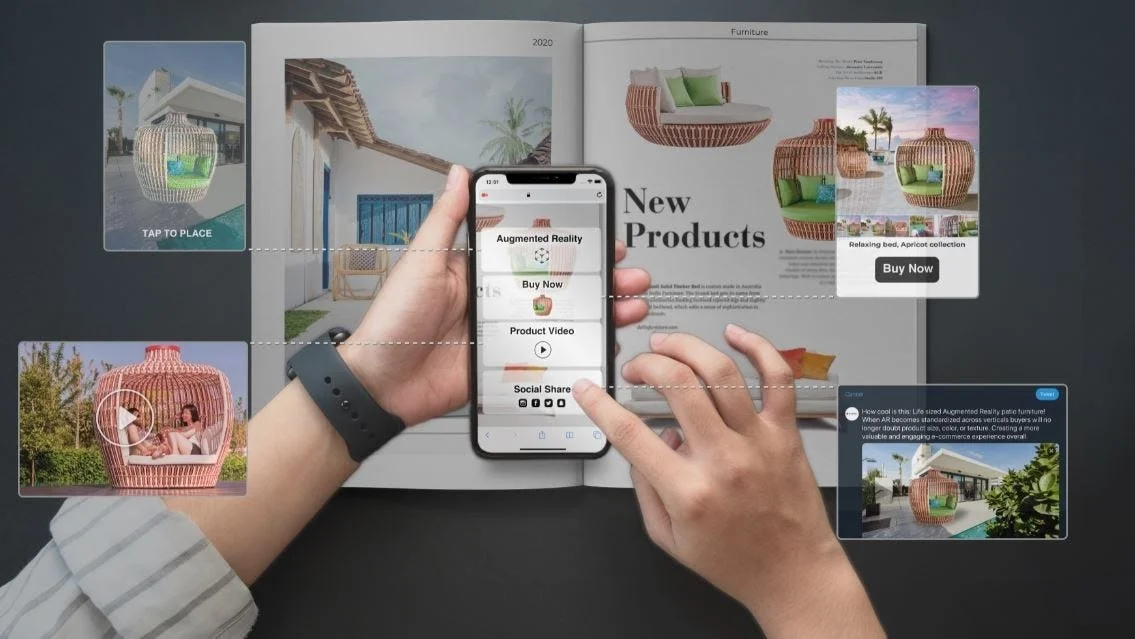
WebAR in App and Website Development As we look ahead to 2025, AR and VR are set to revolutionize app and website development in exciting ways. We're moving beyond gimmicks to create truly immersive and useful experiences. One of the biggest shifts I see coming is the rise of WebAR. This technology allows users to access AR experiences directly through their web browsers, without needing to download separate apps. It's a game-changer for accessibility and adoption. Imagine being able to virtually try on clothes or visualize furniture in your home with just a few taps on a website. The integration of AI with AR and VR is another trend that fascinates me. AI will enhance these experiences by improving rendering, tracking, and object recognition. This opens up possibilities for more responsive and personalized AR/VR interactions. I'm particularly excited about how AR and VR will transform e-commerce. By 2025, I believe we'll see widespread adoption of virtual try-ons and 3D product visualizations. As a consumer, I recently used an AR feature to see how a couch would look in my living room before buying it online. It was incredibly helpful and made me feel more confident in my purchase. AR and VR are bridging the gap between digital and physical experiences, creating a new paradigm for how we interact with products and services online. The advent of 5G will also play a vital role in advancing AR and VR capabilities. With faster data speeds and lower latency, we'll be able to create more seamless and responsive experiences, especially for mobile users. However, it's important to note that these technologies will require developers to think differently about user experience and interface design. Creating intuitive interactions in 3D space presents unique challenges and opportunities. As we embrace these technologies, we must also consider the ethical implications and ensure we're creating value for users, not just implementing AR and VR for the sake of novelty. The future of app and website development is undoubtedly exciting, and I'm eager to see how these technologies will shape our digital experiences in the coming years. Ayush Trivedi, CEO, Cyber Chief

Mobile AR Features Drive Higher Conversion Rates

Mobile AR for High Conversion Rate As a founder of a tech company, I've rolled out AR/VR solutions for our retail clients, and I'm noticing a big change in how we create digital experiences. In the last three months, we added virtual try-ons to a client's furniture mobile app. The outcome was impressive. We saw 42% higher conversion rates and a 25% drop in returns. The secret wasn't just the tech—it solved a real customer problem of picturing products in their home. As an experienced tech professional, I would recommend businesses begin with mobile AR features before jumping into full VR. Remember, AR isn't just an extra anymore—it's becoming the new mobile-first. Sharat Potharaju, Co-founder & CEO, Uniqode

AR Will Increase Confidence in Online Shopping

AR in Online Shopping AR and VR were the real market disruptors before AI and while they may not be in the limelight anymore, I can tell you they will be integral to website development. By 2025, the AR market is expected to grow beyond $50 billion, showing just how quickly these technologies are being adopted. Travel platforms are already using AR to offer virtual tours of hotels and destinations. It is more than a preview; it helps people feel connected to their choices, often leading to higher booking rates because of that sense of confidence. Everyone knows how tricky online shopping can be when trying to decide if something will work in real life. AR is taking that guesswork out of the equation. Apps now let you place furniture or decor virtually in your space. You can see how a couch fits in your living room or whether a lamp matches your style, all before you buy it. This approach feels more personal and makes shopping easier, giving people a better reason to trust what they see online. And when it comes to education, VR is doing something incredible. Studies show learners retain information much better with immersive experiences. Schools and platforms are starting to use VR to take students on virtual journeys, like exploring ancient cities or diving into coral reefs. It turns lessons into adventures, leaving a lasting impression in a way textbooks never could. Alan Carr, Director, Webpop Design

AR/VR Will Redefine Interaction Beyond Screens

AR and VR for Beyond Screens I see AR and VR as more than flashy tech—they're reshaping how we approach app and website development by challenging a core assumption: screens are the ultimate interface. I believe by 2025, AR and VR will redefine interaction itself, breaking free from traditional layouts and buttons. One concept I've been experimenting with is designing for spatial navigation instead of page-based navigation. Imagine an app where users "walk" through a virtual showroom to explore products instead of clicking through a menu. A flat-screen doesn't constrain the layout but unfolds in a 3D environment, offering an immersive experience that feels intuitive and personal. This shift also changes the way we think about user feedback loops. In VR, micro-movements—like a user's gaze or hesitation before interacting—become data points for refining the experience. In one prototype we created for a virtual art gallery, we used gaze tracking to highlight artwork descriptions automatically, removing the need for clunky menus. Engagement doubled compared to the static website version. The truth is that AR and VR will mimic physical spaces and create new ways to interact that feel more human. By 2025, apps and websites will not just be viewed but experienced. That's the transformation we're gearing up for. Nicholas Robb, Design agency for startups, Design Hero

AR/VR Will Create Intuitive and Engaging Interfaces

AR VR Create Engaging Interfaces As an entrepreneur leading SuperDupr, a digital solutions company, I've seen how technology reshapes business landscapes. I believe AR and VR will play a crucial role in changing app and website development by 2025. At SuperDupr, our focus is on process optimization and innovation, and these technologies will allow developers to create more intuitive and engaging interfaces, providing users with a seamless digital experience. One example from our work is the digital magazine project, "The Unmooring," where user interactivity could be significantly improved through AR, allowing readers to explore multimedia content right off the virtual pages, creating a deeper connection with the material. This aligns with our philosophy of providing customized solutions to achieve operational efficiency and client satisfaction. Additionally, leveraging AR in projects like Goodnight Law could offer interactive legal guides that improve client understanding, providing practical information through visually engaging formats. As these projects show, AR and VR have the potential to innovate across varied sectors, creating opportunities for businesses to reimagine their offerings and user engagement strategies. Justin McKelvey, Founder, SuperDupr

AR/VR Will Reshape E-Commerce and Education

AR and VR Reshape Education Industry Looking toward 2025, AR and VR are set to reshape app and website development, offering more immersive and interactive user experiences, particularly in gaming, where VR has already begun delivering 360-degree virtual environments. In app and website development, this will extend beyond games. We'll likely see industries like e-commerce and education use VR to offer 'virtual showrooms' or classrooms where users can experience products or lessons in an interactive, fully immersive environment. Furthermore, AR will play a huge part in personalization. Envision using your phone to virtually try on clothes or preview how a sofa fits into your living space. As developers continue to explore these technologies, apps, and websites will transform into engaging, interactive platforms that blend the digital and physical realms effortlessly. As AR and VR evolve, I expect website and app design to shift towards more intuitive and engaging formats. The future is looking immersive, and businesses that adapt early will benefit the most. Marin Cristian-Ovidiu, CEO, Online Games

AR/VR Will Transform Healthcare Training

AR VR Transform Healthcare Training AR and VR have become more mainstream in recent years. I think these technologies will transform how users interact with digital platforms in 2025. The impact will be immense, particularly in the healthcare industry, where immersive experiences drive better outcomes. I think we can push beyond the conventional boundaries of two-dimensional screens and static interfaces. These technologies will improve the user experience by simplifying complex information. Through visual and interactive elements, it will make apps and websites easier to navigate. As a result of technological evolution, AR apps will display 3D images and models in the real world. Similarly, VR applications will let users enter a virtual environment where they can interact and engage with the content. For example, in the healthcare industry, physicians will be able to use VR apps to simulate medical procedures as a part of their training. Although it sounds impressive, it will bring new challenges for the developers. Tech experts will need to focus on performance optimization to prevent lag or glitches. I also anticipate some security and privacy concerns coming up in the immediate future as these technologies collect and display sensitive information. Ensuring that the apps and websites comply with privacy regulations will be essential. Of course, no significant change comes without its challenges. But I'm convinced that the benefits will far outweigh them. Technology professionals who embrace AR and VR technology early on will get a competitive edge as these tools are about to become indispensable. John Russo, VP of Healthcare Technology Solutions, OSP Labs

Conclusion

From boosting conversion rates in retail to transforming healthcare training, AR and VR promise to open up a world of new possibilities in digital experiences. As highlighted by these experts, success in this evolving landscape will require developers to think beyond screens, prioritize spatial design, and focus on creating seamless, intuitive interactions. While challenges like cost and accessibility remain, those who embrace these technologies early will gain a significant competitive advantage. Whether you're a business looking to enhance customer engagement or a developer aiming to push the boundaries of UX design, 2025 is shaping up to be a pivotal year for AR and VR.
How To Build An Augmented Reality Application For Android Devices
Android App AR/VR

How To Build An Augmented Reality Application For Android Devices?

branex-logo Team Branex
Augmented Reality is not a thing of the past, nor is it a new concept.  It has been around for many years and has, in fact, earned a competitive edge in the present digital age. Suppose you’re wondering what makes Augmented Reality a transformative solution for many present-day businesses and why it has become so adaptable for companies, including big brands such as IKEA and Target. In that case, this article is for you.  Today, we will discuss how augmented reality has redefined user experience across various sectors, including, but not limited to, online gaming, shopping, and even learning and development. Considering how rapidly augmented reality is being adopted and how it benefits the global business ecosystem, more and more startups and technopreneurs have shown a keen interest in investing in it. Suppose you're interested in how to build augmented reality app solutions and want to explore how a custom mobile application development company can help you create these innovative solutions. In that case, this article will guide you through the essential steps to get started.

Statistics On the Usage of Augmented Reality Apps for Businesses 

Yes, augmented reality is not a thing of the past.  And since the time of its inception, it has garnered a significant audience around AR-based products. What truly makes augmented reality app solutions stand a class apart?  Usage of Augmented Reality Apps for Businesses  Here are a few statistics that confirm its efficacy in the digital space: 
  • Market Growth: The AR market is expected to expand from $3.5 billion in 2021 to $198.17 billion by 2025, with a CAGR of 63.3%.
  • User Adoption: 50% of consumers are open to using AR in shopping, indicating significant potential for retail AR applications.
  • App Usage: Around 1.5 billion mobile devices will be using AR applications in 2022, projected to reach 2.5 billion by 2024.
  • Developer Interest: 68% of mobile developers plan to invest in AR and VR technologies as of 2023.
  • User Engagement: AR applications can boost user engagement by up to 40% compared to standard apps.
  • Performance Impact: 60% of users would abandon an AR app if it took longer than 3 seconds to load.
  • Development Tools: Over 70% of AR developers prefer ARCore for Android development due to its features and support.

Which Market Has the Most Tech Users Located in the AR Space? 

A few good hotspots where AR technology has become quite the trend are Saudi Arabia, UAE, and the United States. Tech Users in AR space Here’s the complete breakdown of which country has seen the use of AR technology and in what capacity: 

1. United States

The United States is home to many retail giants and has a thriving eCommerce market. The US has taken charge in almost every other industry, may it be manufacturing, hospitality, healthcare, or just about anything else.  As far as AR technology is concerned, the United States has earned a top spot, and companies like IKEA and Amazon have used AR to enhance the online shopping experience for customers, giving them the edge in visualizing products from the comforts of their homes. We have also seen the rise and adoption of AR in games such as Pokemon GO and saw massive success. All thanks to AR technology and its implementations. 

2. China

Similarly, China has also dramatically invested in AR games and applications over the years. Many local companies in China have invested in Augmented Reality applications and have helped thousands adopt robust educational tools, leading to a more interactive & engaging learning culture and environment.  A great implementation is where the Chinese museums have utilized Augmented Reality to create immersive experiences. For example, the Beijing Capital Museum and the Shanghai Museum offer AR-guided tours. During their visit, visitors can best interact with historical artifacts and view additional information about exhibits through their smartphones; in fact, they can experience reality augmentation by simply wearing AR glasses.  Chinese people can tour their favorite destinations, such as the Great Wall and the Forbidden City, which provide historical context, 3D reconstructions, and interactive storytelling to increase visitor experience. 

3. Japan

Similar to China, Japan is another market where AR technology has taken an uptrend.  For example, many retail brands exist, such as Shiseido, which use AR for virtual makeup try-ons. The global phenomenon, developed by “Pokemon GO,” first earned its popularity in Japan, where the app was initially launched. The game leverages AR technology, which allows players to catch virtual Pokemon in the real world. The game was highly influenced by Japanese culture, promoting indoor kids to engage in outdoor activities and encouraging them to go on tours and engage with local businesses.  Another great example that can be quoted here is Uniqlo, a famous Japanese clothing retailer that utilizes AR technology in its respective marketing campaigns. Uniqlo’s AR apps are built to assist customers in visualizing how certain clothing items will appear even before they physically try them on. As in the case of Uniqlo stores, customers can interact with different products by simply pointing their smartphones toward them. Eventually, a mannequin appears, optimizing the overall shopping experience for customers so it gets interactive. 

4. South Korea

While the race for AR adoption has gained significant popularity in different parts of the world, South Korea has remained active. Today, many South Korean schools incorporate AR to establish interactive learning experiences. For example, the Korean Institute of Science and Technology has developed an AR platform called “AR Education,” which integrates augmented reality into science education as a part of their curriculum.  The program is specifically designed to allow students to interact with 3D models of scientific concepts, where they engage themselves with complex topics, especially the more tangible ones that are easier to understand. In classrooms, students are encouraged to use innovative technology to scan specially designed markers and visualize 3D displays, such as models of molecules, anatomy, or any physical phenomena. In one instance, we saw how a student was successful in visualizing the entire structure of DNA and rotating the model to explore the details. 

5. United Kingdom

No wonder the land of the Kings and Queens has not taken a backseat, especially when it came to the adoption of AR technology. In London, the British Museum is found to have integrated AR technology into its exhibitions in order to increase visitor engagement and understand the historical journey & the exciting artifacts.  The museum launched an app that allowed visitors to explore selected exhibits using AR. The app allowed visitors to point their smartphones or tablets at their desired artifacts and unlock interactive experiences.  For example, businesses in the UK can see 3D reconstructions of ancient objects and view them in context with their historical background. You can see their animations and illustrate their significance & do much more.

What Are the Benefits of Augmented Reality Applications?

With so much hype in the market, you might now be wondering what are the benefits of having an augmented reality application for your business as well. Benefits of Augmented Reality Mobile Applications Here are a few practical business benefits of using AR. 

1. Competitive Advantage 

A good example of using augmented reality in corporate is how businesses use it in their marketing campaigns. Businesses often use augmented reality in their specific marketing campaigns and direct products or services to reflect a sense of market readiness, adaptability, and responsiveness towards technologies. If you’re in the product or service market seeking to create an impact, then as an early adopter with a forward-thinking approach, you can gain a competitive edge in the business world with AR. 

2. Advertising, Marketing & Sales 

As is the case with many modern-day businesses and entrepreneurs, they want to introduce something that actually helps them win their customers. Augmented Reality-based solutions can assist in following the AIDA model from theory to practical. While adopting AR in your advertising and polishing up customer support experience, here’s how businesses can best capture the audience’s attention. AR can be noteworthy in creating brand awareness, and the best part: brands such as Warby Parker, and Sephora are already nailing it. For example, Sephora gives its customers a chance to have virtual try-ons before purchasing a product. Advertisements can create unique customer experiences & allow for better visual communications internally & externally. 

3. Enhanced Customer Engagement

In today’s competitive market, businesses are on the hunt for ways to make a lasting impression on their customers. Augmented reality offers a dynamic approach to engage consumers more deeply. By integrating AR into their strategy, companies can reshape how customers interact with products. Take IKEA, for instance—they’ve developed an AR app that allows users to visualize how furniture would look in their homes before purchasing. This added interactivity helps customers feel more confident in their buying decisions and builds a stronger bond with the brand. The outcome? Enhanced customer loyalty and satisfaction, turning one-time buyers into dedicated brand advocates.

4. Streamlined Training and Development

Beyond customer engagement, augmented reality can also make a huge difference in internal operations, particularly in training and development. Companies can harness AR to build immersive training programs that provide practical experience in a low-risk setting. For example, manufacturers are using AR to simulate machine operations, giving employees hands-on practice without real-world risks. This approach not only shortens the learning curve but also drives efficiency and productivity. By investing in AR for training, businesses can develop a skilled, adaptable workforce prepared for new challenges in today’s fast-paced landscape.

How to Build an Augmented Reality Mobile Application? 

How to Build an Augmented Reality Application Since we now know which part of the world has the most AR app usage, let us explore how we can turn an augmented reality app into a reality. We understand that there’s a lot of technical stuff which goes into making an AR app and therefore, we are going to put together the perfect roadmap to build your AR-based application. 

Choosing the Type of AR App 

The first thing you need to pay attention to, especially when it comes to building an AR app, is what type of app you wish to launch for your business. There are multiple types of AR apps available in the market and finding the right one for your business can be easy. How? Well, you just have to look at the different features and decide which app works best for your particular requirements. As an augmented reality app development company, we can guide you through this process, helping you choose the AR solution that fits your requirements. Type of Augmented Reality App The different types of AR apps are: 

1. Marker-Based AR (Image Recognition)

  • Description: Marker-based AR relies on specific visual markers, like QR codes or images, to trigger virtual content. The app identifies the marker and overlays digital content on the user’s real-world view.
  • Example: IKEA Place – Uses image recognition to allow users to place virtual furniture in their space, providing a preview of how it would look in their home environment.
IKEA Using Augmented Reality

2. Markerless AR (Location-Based or GPS-Based)

  • Description: Markerless AR uses GPS, compass, and other location data to display virtual elements based on the user's location. This type is often used for mapping and location-based experiences.
  • Example: Pokémon GO – Combines GPS and camera functionality to let players find and capture Pokémon in real-world locations, blending game elements with physical surroundings.
Pokémon GO

3. Projection-Based AR

  • Description: Projection-based AR involves projecting artificial light onto real-world surfaces, creating interactive displays. This type often uses sensors to detect user interaction.
  • Example: Projection Mapping in Museums – Some museums project digital animations or reconstructions onto walls and artifacts to bring exhibits to life, enriching visitor engagement.
AR in Museum

4. Superimposition-Based AR

  • Description: Superimposition AR replaces or adds elements to the view of an object. This type of AR is commonly used in applications that allow users to try products virtually or visualize modifications.
  • Example: Sephora Virtual Artist – Allows users to see how makeup products like lipsticks or eyeshadows would look on their faces by overlaying virtual makeup on a live camera feed.
Sephora Virtual Artist

5. Outlining AR

  • Description: Outlining AR uses object recognition to detect edges and boundaries, creating digital outlines for real-world objects. This is helpful in applications requiring enhanced visual guidance.
  • Example: AR Navigation Systems – Some navigation apps use outlining AR to help drivers and pedestrians follow routes by highlighting lanes or pathways, improving real-time navigation.
AR Navigation Systems

6. Overlay AR

  • Description: Overlay AR involves enhancing real-world objects by overlaying additional digital information or modifications, often used in technical fields.
  • Example: AR for Surgery (AccuVein) – AccuVein is an overlay AR app used by healthcare providers to visualize veins on a patient’s skin, aiding in precise vein location for injections.
AR for Surgery Based on whether you’re a tech startup or a full-fledged enterprise, you can invest in an AR app that best suits your business needs. Businesses mostly invest in app solutions to often fill a market gap by adding it as an added support. AR integrations most likely give a different yet new edge to your business by boosting its marketing & sales efforts. Altogether, futuristic technology adds a unique layer to your business to best engage marketers. 

Features - The Ones You Need to Add 

The feature set is mostly dependent on the functionality you wish to offer within your AR app. Augmented Reality Application Features Here are the top 5 features which are necessary in modern augmented reality digital solutions that add greater value: 

1. GPS Detection and Map Integration

  • Enables the app to recognize the user’s location and display relevant AR content on a map. This feature is commonly used in location-based AR apps, where virtual objects or experiences appear based on the user's physical location.

2. Built-In Camera Feature

  • Utilizes the device’s camera to capture or scan real-world environments, which serves as the foundation for overlaying virtual content onto the physical world. This feature is essential for displaying AR visuals in real time.

3. Marker Recognition

  • Allows the app to detect specific images, icons, or QR codes (known as markers) and trigger associated AR content. This feature is ideal for AR experiences that need to respond to certain physical cues, enhancing user interactivity.

4. Library of 3D Visuals and Text Elements

  • Provides a collection of 3D models, animations, and text elements that can be displayed within the AR environment. This library serves as a resource for developers and users to create rich, visually engaging AR experiences.

5. Guest Sign-Up and Social Media Sharing

  • Allows users to access the app without full registration and share their AR experiences on social media. This feature helps increase user engagement and allows for easy sharing, broadening the app’s reach and appeal.

Choose a Tech Stack, Create a Development Strategy

Once you have identified what features you want to add to your app, the next step is to choose the right tools and technologies to put together a robust architecture. AR development requires specific frameworks & software development toolkits - and a good number of them aren’t open-source and free.  Type of Technology Stack Therefore, when you choose a tech stack, here are 4 things you need to consider: 
  • What is the size of your AR app and how big is your target audience? 
  • What type of features and core functionality will you prefer within your app?
  • What is your plan? Whether you want to scale your AR product or business in the future? 
  • What is your estimated budget for AR app development? 

A Suitable Technology Stack for Augmented Reality Apps 

Now you might be wondering what type of technology stack is required to build an AR app? AR Development Tools All of these frameworks and software development toolkits come at a certain cost. Also Read: How Much Does Augmented Reality App Development Cost? Here’s a suitable technology stack that is well-suited for building just about any augmented reality app, your way. 

1. AR Development Frameworks

  • ARCore (Android): Google’s AR platform for Android, providing tools for motion tracking, environmental understanding, and light estimation.
  • ARKit (iOS): Apple’s AR framework for iOS devices, supports face tracking, object recognition, and scene reconstruction.
  • Unity with AR Foundation: Supports cross-platform AR development by integrating ARCore and ARKit, allowing you to build a single app for both Android and iOS.
  • Vuforia: A versatile AR SDK compatible with both Android and iOS that offers features like image and object recognition, model targeting, and ground plane detection.

2. Programming Languages

  • Swift (iOS): Primarily used for developing iOS-specific AR applications with ARKit.
  • Kotlin (Android): Ideal for developing AR apps for Android with ARCore.
  • C# (Unity): Used when building cross-platform apps in Unity, especially with the AR Foundation framework.

3. 3D Modeling and Animation Tools

  • Blender: An open-source 3D modeling tool for creating and animating models used in AR experiences.
  • Maya or 3ds Max: Industry-standard tools for more complex modeling and rendering.
  • Sketchfab or TurboSquid: Libraries that provide 3D models, which can be imported into the app if custom model creation isn’t required.

4. Backend Infrastructure

  • Firebase: Provides real-time database, user authentication, and analytics. Ideal for handling user data, media storage, and login functionalities.
  • Amazon Web Services (AWS) or Google Cloud Platform (GCP): For managing large datasets, high-resolution 3D content, and any AI processing needs.

5. Cloud Anchoring and Content Delivery

  • Google Cloud Anchor API (for ARCore) or Apple's ARKit Cloud Anchors: These allow persistent and shared AR experiences across devices by saving object positions and allowing other devices to recognize them.
  • Content Delivery Networks (CDNs) like Cloudflare or AWS CloudFront: These are used to efficiently deliver high-resolution content, 3D assets, and images to users.

6. Additional Tools and Libraries

  • OpenCV: A powerful library for image recognition and processing, enhancing marker detection and tracking accuracy.
  • Mapbox: Integrates AR with GPS-based maps for location-based experiences, especially useful in outdoor navigation AR apps.
  • Social Media SDKs (Facebook, Instagram, etc.): For social sharing and guest logins, enhancing user engagement and content sharing.

How do you Hire an AR App Developer for an AR App? 

Hire Augmented Reality App Developer The right developer can make or break your AR app game. Assuming you already have a technical background, understanding concepts like app coding, AR integrations, and AI programming will gradually become easier. You’ll also need to decide on the size of your team, whether small or large and consider if you want someone with a business background to ensure they understand your end goal. If you’re opting for a larger team, having a project manager can help reduce programming roadblocks. The human resources you onboard are crucial, as this will affect both your costs and the expertise you bring to your AR app. Here are a few things we recommend considering:
  • Hiring an in-house team can be expensive since it requires full-time wages. Instead, consider options like staff augmentation or remote teams to develop your AR mobile app.
  • Hiring a development team on an hourly basis—such as through staff augmentation or remote staffing—adds flexibility and gives you better control over project timelines.
  • Another option is to outsource the entire project to a third-party AR app development company. In this case, you’ll have less control over the monitoring, testing, and launching phases of your AR app.
Just as cost and team structure are essential, so is the location of your AR developer. Here are some quick tips when hiring a professional:
  • For a higher budget, consider hiring from the USA; cities like Miami, Houston, and New York offer skilled AR developers at relatively economical rates compared to Europe.
  • Hiring experts from the UAE and Saudi Arabia is also cost-effective. Just make sure to thoroughly review their development portfolio before finalizing any contracts.

Everything Looks Good - Time to Test & Launch

The last step is to send your app live so it can be downloaded by your target audience.  Testing the app in the beta phase is an integral part of your app launch. During this phase, the app will be checked for multiple aspects such as user experience, performance glitches, and errors in coding.  Test and Launch AR App AR app developers normally follow three different standards for testing the app.  They check the app on technical performance - App developers work in tandem with quality assurance experts to check whether the app is bug-free, virus-free, and doesn’t crash while running on different platforms & screen sizes.  They check the app on navigation & user experience - App testers continuously check the app’s user journey and see if the app is intuitive enough and has a decent load time, sign up, sign in, and other important features.  They check the app for data accuracy and security - App security specialists ensure they run penetration tests to prevent ethical hacking and make sure they don’t fall prey to data breaches and don't leak sensitive user information. 

Concluding Thoughts 

Building an augmented reality application for Android devices can be a strategic move for businesses aiming to innovate and engage customers effectively. At the forefront of custom Android app development, we understand the market landscape like no other. By leveraging the right AR technologies, and by focusing on taking a user-centric approach, Branex can create compelling AR experiences, one that increase brand loyalty and drive your business growth. The future of AR is bright, and not just that, but this technology has set a stone in today's competitive market. If you haven’t invested in AR technology for your business, now might be the perfect time. 
Augmented Reality in eCommerce
AR/VR eCommerce

How Augmented Reality (AR) in eCommerce Boosts Online Shopping Experience? 

branex-logo Team Branex
Augmented Reality (AR) in e-commerce has emerged as one of the most effective tools for enhancing sales and user experience. Recently, I've been particularly fascinated by the expansion of eCommerce within the traditional retail space.  According to the U.S. Census Bureau, online retail sales in the United States have seen significant growth, increasing by 15% in the past year alone and reaching a total of $136 billion in Q2 of 2024.  This surge reflects a substantial shift in consumer behavior, with more people turning to online shopping for its convenience, price comparison, and access to a wider range of products. Customer Interest and Usage Insights:
  • 61% of consumers prefer shopping at stores that offer AR experiences.
  • 35% of consumers would shop online more if they could virtually try on products.
  • By 2022, 83.1 million people in the US were using AR monthly, a number projected to continue growing.
  • AR experiences lead to a 94% higher conversion rate compared to products without AR features.
  • 70% of shoppers stated they would be more loyal to brands incorporating AR into their shopping experience.
These statistics clearly demonstrate the transformative impact of Augmented Reality on the retail industry. Let’s go a bit deeper into how AR in eCommerce can optimize your online shopping experience and revolutionize the way you engage with online product purchases and eCommerce brands accordingly.

Core Benefits of Augmented Reality in eCommerce

Benefits of Augmented Reality in eCommerce Let’s discuss Augmented Reality and how it benefits online shoppers & e-commerce business owners.

1. How Does it Benefit Online Shoppers? 

  • Virtual Try-Ons

One of the leading benefits of augmented reality in eCommerce is that it allows customers to virtually try on clothing, accessories, or makeup before making a purchasing decision. It ultimately increases their overall confidence within an industry where setting an appearance is everything. This feature is quite beneficial within the fashion industry.
  • Product Visualization

Another astounding benefit of having augmented reality in eCommerce is that you can visualize furniture, home decor, and other products before deciding to purchase. With AR’s product visualization feature, you apparently reduce the likelihood of returns and eventually increase customer satisfaction.
  • Increase Engagement

Beyond just advertising and virtual try-ons, augmented reality allows businesses to create entertaining shopping experiences for customers. It offers informative and engaging brand interactions, giving customers a chance to have a more enjoyable and memorable experience. Increased engagement leads to higher customer retention and word-of-mouth marketing.  For example, IKEA’s AR app allows users to see furniture in real-time in their homes just before they decide to purchase it, helping customers to make more informed decisions. Speaking of IKEA’s AR app, want to learn how much an AR app is going to cost you? 

2. How Does It Benefit eCommerce Businesses? 

  • Reduce Product Returns

Since AR allows customers to check a product in real-time, testing it virtually in a real-world scenario reduces its chance for returns. It also offers customers a chance to check and feel the product in real-time.
  • Helps You Stand Out From Competitors

Augmented reality automatically portrays your enterprise as one of the rare one percentiles in the market.  Imagine how many projects are out there overselling themselves as brands with better class and quality. Only a few of them truly stand out from competitors, making them a worthwhile option for purchase.  As a business, it’s your innate desire to beat the competition, and this can only be achieved if you’re giving your customer an experience that no other brand is offering.  Augmented reality checks for your brand, offering you a chance to become among the 1%.

What Are the Technical Challenges Associated with Augmented Reality (AR)?

Challenges with Augmented Reality Although implementing Augmented Reality in eCommerce comes with its fair share of technical challenges, here are a few key considerations that you need to address when we talk about online shopping.

1. Device Compatibility:

When it comes to AR technology, a primary concern with AR experience is whether the AR design is compatible with a wide range of devices such as smartphones, tablets, and computers. Based on the different hardware capabilities and pre-designed operating systems, it often becomes a roadblock to build solutions on augmented reality unless it's completely responsive or not. This often requires extensive testing and optimization to deliver a consistent experience for all users.

2. Internet Speed and Stability:

AR technologies often rely on stable and fast internet connections to function smoothly. It can become a challenge for users with slower internet speeds or those in remote areas with limited connectivity. Businesses need to consider ways to optimize their AR experiences to minimize data usage and make sure they can still be accessed and enjoyed by a broad audience.

3. Performance Optimization:

AR applications, especially those with complex 3D models and animations, can be demanding on device resources. It eventually creates performance issues such as lag, slow loading times, or even crashes. Optimizing AR content to run across different devices is significant for providing a positive user experience.

4. Hardware Limitations:

Creating immersive AR experiences requires processing power, advanced cameras, and sometimes additional sensors. While high-end devices may have these capabilities, older or more basic models might struggle. This can limit the availability and accessibility of AR features for users with less sophisticated hardware.

5. Software Development:

Developing AR applications demands specialized software development services with skills and resources. Businesses may face challenges in acquiring or developing in-house expertise to create and maintain AR content. It includes all the know-how and basic knowledge of 3D modeling, animation & Augmented Reality programming frameworks.

Success Stories - How Augmented Reality (AR) Propelled Brands Forward?

1. Disney’s AR Character Meet and Greets

Disney Augmented Reality Character Disney Park introduced an augmented reality experience allowing visitors to interact with their favorite Disney characters remarkably. The Disneyland app allows users to point their devices at unique markers around the park. As a result, the park brings characters like Mickey Mouse and Elsa to life, so you and your children can have a more entertaining and interactive experience. This digital interaction is especially appealing to young visitors and adds an extra layer of magic to the Disney experience. The AR meet and greet creates an unforgettable moment for people visiting Disneyland. This perfect blend of physical and digital creates an impressive immersive experience.

2. Gatorade’s Bolt Breaker

Gatorade Bolt Breaker Gatorade introduced the “Bolt Breaker” game, offering an immersive AR experience where users had the chance to experience record-breaking sprints of Usain Bolt. Not only did Gatorade’s Bolt Breaker game become an engaging digital experience for users, but it also became a powerful marketing tool allowing individuals to step into their favorite shoes. As a result, athletes were able to test their abilities on a virtual track. However, the Bolt Breaker Game unexpectedly met its demise when the State of California filed a suit against the firm. They went under the bus for publishing misleading statements within the game. For instance, in the game, users would see Bolt drinking Gatorade instead of water to increase his performance, whereas they showed that drinking normal water slowed him down.  Although the complaint was settled later on, the game was no longer available to the public.

3. Burger King’s "Burn That Ad" Campaign

Burger King Ad Campaign Burger King Brazil deployed an AR feature that encouraged users to “burn” competitors’ ads in exchange for a free Whopper. All that an individual had to do was point their smartphone camera at any fast-food advertisement, and the app would automatically allow people to virtually set the ad on fire. By completing the task, the user would eventually get a coupon for a free burger. This innovative campaign took Burger King to a whole new level, maximizing app downloads and acquiring more engaged customers by giving them a memorable experience. The “Burn That Ad” campaign leveraged AR to create the necessary buzz and engagement which Burger King was missing out on. They turned their entire traditional advertising on its head and used experiential marketing to win more customers in Brazil.

4. Coca Cola Zero Sugar #TakeATasteNow

Coca Cola Ad Campaign Coca Cola’s Zero Sugar campaign rolled out across 13 major locations in the UK, including London, Glasgow, Manchester, Cardiff, Bristol, Lakeside, and Bluewater Shopping Centres. The first digital-out-of-home (DOOH) campaign by Coca Cola offered an average smartphone user the chance to scan a QR code, which awarded them a digital bottle of Coke Zero on their phone and a voucher. This voucher allowed app users to claim the real thing from a nearby Tesco. The AR campaign made a memorable experience; a free product sample on the street was all it took! Coca Cola further promoted the campaign through Instagram.

5. Christian Dior Parfums’ AR Beauty Try-On

Christian Dior Parfums During the Eid of 2023, Christian Dior Parfums launched an interactive campaign to advertise its Dior Addict Lipstick. It was during this season that Google’s data revealed that searches for beauty products increased by 35%. Christian Dior Parfums took advantage of the situation and introduced AR technology to its Video Action Campaign ads on YouTube and Google’s partner websites. The ad allowed users to try different shades of lipstick on different models with different skin tones. In fact, ladies were able to experience the “Beauty Try-On” campaign using their selfie cameras. The campaign gained popularity in some of the major Muslim countries like Saudi Arabia, the United Arab Emirates, Kuwait, and Qatar, reaching more than 4 million people over 21 days. 41% of consumers interacted with the Beauty Try-On panel before making a purchase decision.

6. Warner Bros & SnapChat’s Barbie AR Activation

Warner Bros and SnapChat Barbie AR Character During the summer of 2023, the Barbie movie was released and appeared in international cinemas. However, before it was launched, it was backed by a very well-executed marketing campaign.  This campaign was carried out in collaboration with Snapchat.  Back in June, a few days ahead of Barbie's official release, Warner Bros. Pictures launched a Wardrobe AR lens which allowed Snapchat users to visualize themselves as the famous Barbie character. They tried on different outfits to experience how they would appear as Barbie.  In fact, Snapchat went a step ahead, allowing users to scan global landmarks such as the Eiffel Tower, the Sydney Harbour Bridge, Berlin’s Brandenburg Gate, the Statue of Liberty, and London’s Tower Bridge to create bright pink and other pastel-colored versions.

The Future of AR Technology in eCommerce

Future of Augmented Reality in eCommerce As we look at the latest advancements in augmented reality and virtual reality, it’s clear that augmented reality (AR) is here to stay and is poised to grow exponentially. But what does the future hold for eCommerce? Let’s have a look at how augmented reality services are going to transform the future of eCommerce for the better.

1. Spatial Computing in eCommerce

Spatial computing in AR represents a revolutionary shift in how we interact with digital content.  Imagine browsing through an online store not by scrolling on a screen but by interacting with 3D visual objects in real-time, much like Tony Stark from Iron Man working on his spatial screens.  This technology is transforming eCommerce by offering immersive shopping experiences where customers can virtually try on clothes, visualize furniture in their homes, or even walk through virtual showrooms. Leading platforms like Magic Leap, HoloLens, Google ARCore, and others are pioneering these innovations. For instance, IKEA’s AR app allows users to place true-to-scale 3D models of furniture in their own homes using their smartphones. This not only increases the shopping experience but also reduces the likelihood of returns.

2. The Merge of AI and AR in eCommerce

The past decade has seen significant advancements in both AI and AR technologies, and their integration is set to revolutionize eCommerce.  AI, with its capabilities in algorithms and data processing, enables machines to simulate human intelligence and perform routine tasks. When combined with AR, this results in more interactive and personalized shopping experiences. One compelling example is the use of AI-powered AR for facial and spatial recognition, which enables better face and gesture mapping. This technology can be used in virtual try-on solutions for makeup or eyewear, allowing customers to see how products will look on them before making a purchase.  Moreover, AI can analyze customer preferences and behaviors to provide personalized product recommendations in AR environments, making the shopping experience more intuitive and engaging.

3. Adoption of AR and 3D Imagery in eCommerce 

Did you know that businesses have seen a massive growth of up to 94% in conversion rates when integrating 3D imagery and AR-led content on their websites? It’s a testament to how powerful augmented reality (AR) and 3D imagery can be in enhancing the overall online shopping experience. One prominent advantage of combining AR with 3D imagery is the ability to showcase products from every angle, allowing users to thoroughly examine them. It’s an immersive approach that helps convey the full experience of a product to customers, beyond what traditional images & descriptions can achieve. With AR and 3D imagery, customers view products from multiple angles and zoom in to see intricate details. They can also place virtual models of products within the real-world environment, all thanks to AR.  This feature is beneficial for items like furniture, home decor, and fashion.  For example, IKEA lets buyers virtually integrate items of furniture into images uploaded by the users. It gives people a chance to see how the furniture appears in their home before they purchase it.

Bottomline 

Augmented Reality (AR) is revolutionizing eCommerce by introducing how consumers shop online.  With virtual try-ons, immersive product visualizations, and carrying out engaging interactions, AR leads to higher customer satisfaction and brings more loyalty to the customers.  Today, businesses benefit from reduced product returns and increased engagement. It’s the only way they stand out in the ever-growing competitive eCommerce landscape.  Now, there are challenges with AR as well such as device compatibility issues and performance optimization problems; however, overcoming these hurdles is not much of a problem. With the integration of AR with AI and 3D imagery, there’s much to promise, even more personalized & interactive shopping experiences as shown by innovative campaigns from brands such as Disney and Coca-Cola.  If there’s one thing for sure, AR is here to stay! Branex is a mobile app development company and AR development service where we believe the future is now. We build powerful AR solutions, that are bound to deliver remarkable results. 
Augmented Reality Trends
AR/VR Infographics

Top AR Trends in 2025 You Shouldn’t Miss

branex-logo Team Branex
Augmented Reality combines computer-generated sensory inputs such as sound, graphics, and videos, and layers them with real-world surroundings.  Augmented Reality (AR) differs from other digital experiences like Artificial Intelligence (AI) and Virtual Reality (VR) by creating an interactive experience that enhances information sharing.  Almost two-thirds of shoppers believe AR helps them make better buying decisions. In fact, retailers who have introduced AR features see an increase in customer satisfaction. Augmented Reality gained significance in 2010 with the release of smart devices such as Google Glass, Microsoft HoloLens, and smartphones equipped with sensors to track position.  These advancements allowed animated characters to interact with real-life individuals. Today, the AR market is on its way to reaching an impressive $50 billion by the end of 2024.  This is quite an impressive jump for this particular technology. With major tech companies such as Google and Apple heavily invested in AR development, it’s clear that AR has become an integral part of our lives, blurring the line between the physical and digital.  What trends are leading the way in the world of AR? Here’s a fascinating infographic that shows the growing key trends in Augmented Reality. Trends to Watch in Augmented Reality AR in 2024 Did you find our infographic interesting? Branex offers a complete suite of AR/VR development services. Learn more about our AR/VR development by getting on a call with our certified professionals.
Augmented Reality App Development Cost
AR/VR Mobile App Development

Augmented Reality App Development Cost 2024 – [Complete Breakdown]

branex-logo Team Branex
Augmented Reality (AR) apps are transforming the way we experience the world around us, and with the massive growth of AR users in the USA (expected to reach over 1.7 billion by 2024), it's no wonder businesses are jumping on board. Imagine trying on that new shade of lipstick virtually before you buy it, or seeing how those sleek new couches would look right there in your living room – all from your phone! But here's the real question - how much does it ACTUALLY cost to create an augmented reality (AR) app?  Well, you don’t have to worry about future AR innovators.  In this article, we are going to break down the costs, complexities, and cool features that go into building your very own piece of AR magic, helping you estimate the best budget. 

What is an AR App and Why Should You Care?

Augmented Reality App Forget everything you think you know about interactive experiences –  Augmented Reality (AR) apps are here to revolutionize the way you do business.  Just think for a moment, a potential customer walks into your store, holds up their phone, and sees a 3D model of your latest product displayed right there on the shelf.   They can change the color, and size, or even see how it would look in their own home, all without ever leaving the store. That's how powerful AR apps can become eventually. AR apps are software programs that use your phone's camera to overlay digital content in the real world.  It creates an interactive experience that allows users to engage with your brand in a whole new way. Why do we believe it’s necessary to invest your budget in an AR app?  Here are just a few reasons why you should consider Augmented Reality (AR) apps for your business in the USA. 
  • Boost Sales and Conversions: AR apps let customers visualize products before they buy, leading to more informed purchasing decisions and increased sales.
  • Enhance Customer Experience: AR apps create a fun and interactive way for customers to learn about your products, leading to greater brand loyalty.
  • Stand Out from the Competition: Be an early adopter of AR technology and wow your customers with a cutting-edge shopping experience.
  • Improve Training and Efficiency: Use AR apps to train employees on complex procedures or visualize maintenance tasks, leading to increased productivity and reduced costs.
AR apps are no longer a futuristic fantasy – they're a powerful marketing and sales tool within your reach. So let’s dive in and explore the associated cost of building such AR apps.  

What is the Average Cost of Developing an AR App? 

Augmented Reality App Development So, how much does this AR app magic cost?  That's a fantastic question, and the truth is it depends. Just like building a house, the final price tag depends on the size, features, and all the fancy features you want to include. Here's the general range to set your expectations - developing an AR app in the USA can cost anywhere from $10,000 to $200,000. Don’t worry! We will break down this range into sections.  For now, just remember the cooler the features, the more complex the app will be, and the better the price tags will be accordingly. So without further ado, let’s read all that we know. 

1. The Cost of AR App Development Based on Complexity 

The cost of an AR app will depend largely on its complexity. An AR app development project is pretty much similar to building stuff with Legos. A simple design takes less time to snap together than a complex spaceship.  Similarly, a basic AR app with a single overlay might take a few hours to develop, while a feature-rich game with custom characters and interactions will require months. More complex apps mean more developer hours, which translates to higher costs. Here's a breakdown of Augmented Reality app development costs based on complexity levels:
AR App Complexity Estimated Cost Range (USD) Features
Simple $10,000 - $50,000 * Single core function * Pre-built AR tools & templates
Intermediate $50,000 - $200,000 * Multiple features * Object recognition * 3D animations * User interaction
Complex $250,000 - $800,000+ * Groundbreaking features * Custom algorithms * Cutting-edge technology * Extensive development

2. The Cost of AR App Development Based on Region 

The cost of an AR app also differs based on which region you reside in. The average hourly rate for AR developers varies greatly across the globe. Regions with a high cost of living often have higher developer rates. For example, hiring an Augmented Reality developer in North America or Western Europe will likely cost more compared to someone in Southeast Asia or Eastern Europe. Here's a ballpark range of how much the price varies on the region for hiring AR developers:
  • North America: $150 per hour and upwards 
  • Western Europe: $70 - $100 per hour 
  • Eastern Europe: $25 - $30 per hour
  • Southeast Asia (including India): $15 - $30 per hour
As we can see, there’s a potential difference of $120 or more per hour between North America and Southeast Asia. Here’s a breakdown of the cost based on the region level: 
Region Average Hourly Rate (USD) Estimated Total Project Cost (USD) Factors Affecting Cost
North America $150+ $100,000 - $500,000+ High developer rates, complex projects common
Western Europe $70 - $100 $50,000 - $300,000 High developer rates, a mix of project complexity
Eastern Europe $25 - $50 $25,000 - $150,000 Lower developer rates, potential communication challenges
Southeast Asia (including India) $15 - $30 $15,000 - $100,000 Lowest developer rates, project complexity may be limited
South America $65 - $150 $40,000 - $200,000 Varied developer rates, project complexity mix
Australia & New Zealand $60 - $100 $40,000 - $250,000 High living cost, skilled developer pool
Central Asia $30 - $60 $20,000 - $100,000 Emerging AR development market, potential talent limitations

3. The Cost of AR App Development Based on Category 

Just as much as the location and the complexity of the app play a role in cost estimation, so does the fact of what you want to achieve with your augmented reality app solution.  To develop an augmented reality app, you will need to consider the goals you want to achieve with your application. Here's a breakdown of estimated costs for different Augmented Reality (AR) app categories:
Category Description Estimated Cost Range (USD) Key Cost Drivers
Simple AR Filters Fun and basic filters for social media or entertainment (e.g., animal ears, silly hats) $5,000 - $20,000 Limited development time, basic 3D models/textures
Product Visualization Allows users to virtually place furniture, clothes, or other products in their environment $20,000 - $50,000 Object scanning/modeling, integration with e-commerce platforms
Educational Apps Interactive learning experiences with AR elements (e.g., exploring the solar system, or dissecting a frog) $30,000 - $100,000 Educational content creation, potentially complex AR interactions
AR Games Simple to moderately complex AR games with basic characters and environments $50,000 - $200,000 Game design, character animation, potential multiplayer functionality
Complex AR Games Highly immersive AR games with intricate characters, environments, and advanced features (e.g., location-based experiences) $200,000+ Extensive development time, high-quality 3D assets, potentially using real-time data integration
AR Business/Industrial Apps Apps for maintenance, training, or data visualization in professional settings $50,000 - $500,000+ Specialized features, potential integration with existing enterprise systems

Augmented Reality (AR) App Development Cost Formula 

While there's no single perfect formula to pinpoint the exact cost of your AR app. Here's a comprehensive breakdown to help you estimate the development cost:
Total Cost = (Development Time * Hourly Rate) + Additional Costs

Here's a Breakdown of Each Variable:

  1. Development Time: This refers to the total number of hours required to develop your AR app. It encompasses various stages like:
    • Planning & Design: User interface (UI) / User experience (UX) design, storyboarding, and feature planning.
    • Development: Coding the app functionalities, integrating AR frameworks and SDKs, 3D modeling, and animation (if applicable).
    • Testing & Refinement: Bug testing, performance optimization, ensuring AR functionality works seamlessly.
  2. Hourly Rate: This depends on the region and experience level of your development team. You can use the ranges provided in the previous section (AR Developer Hourly Rates and Project Costs by Region) as a reference.
  3. Additional Costs: These can include:
    • Project Management: Costs associated with coordinating the development process, especially for outsourced projects.
    • Content Creation: Development of high-quality 3D models, textures, animations, or any other visual elements.
    • Backend Development: If your app requires server-side functionality or data storage, factor in backend development costs.
    • API Integrations: Costs associated with integrating with third-party APIs for features like social media sharing or location services.
    • Quality Assurance (QA) Testing: Thorough testing across various devices and scenarios for a smooth user experience.
    • App Store Fees: Submission fees for publishing your app on the Apple App Store or Google Play Store.

Here's an Example of How to Use the Formula:

Imagine you're building a simple AR product visualization app in North America. You estimate the development time to be 300 hours, and based on the region, you target an average hourly rate of $175. Development Cost = (300 hours * $175/hour) = $52,500 Additional Costs (estimated):
  • Project Management: $5,000
  • Content Creation (3D models): $10,000
Total Estimated Cost:    $52,500 (Development Cost) + $5,000 (Project Management) + $10,000 (Content Creation) = $67,500.  Now, this is just a ballpark figure, and the actual app development cost can swing depending on how fancy your app gets. To get a more solid estimate, chat with some experienced AR app developers in the planning stage. They can eyeball your project and give you a better idea of how much time and people you'll need. Always remember, stuff happens! Factor in some extra cash for unexpected bumps in the road or if you decide to add some cool new features along the way.

How Long Does it Take to Build an AR App? 

How Long to Build an AR App The time required to build an AR app totally depends on two factors; how complex the AR app is and what is your team’s expertise. Each AR app differs from one another based on two factors, the complexity of the app and the required team expertise.  Here’s a price breakdown
  • Simple AR Apps (2-3 months): Imagine a basic filter app that adds silly hats or lets you virtually place furniture in your room. These can be built relatively quickly by a small team using pre-built tools and templates.
  • Moderately Complex AR Apps (4-6 months): These apps have more features and functionality, like educational experiences with 3D object interaction or basic AR games. Development time increases as features become more intricate.
  • Complex AR Apps (6 months+): These are highly immersive games with intricate characters, environments, and real-time data integration. Think location-based games or industrial training apps. Expect a longer development timeline due to the advanced features and potential custom app development required.

Factors Associated with How Long It Takes to Build an AR App 

Factors to Build an AR App  When it comes to how long it takes to create an AR app, here are a few important factors that need to be addressed. Since each app is unique, it requires its own specific time to cook up and add those extra special ingredients.  Let’s explore some of the relevant factors that affect the design time of your AR app development. 

1. App’s Complexity

While complexity is definitely a key factor in AR app development timelines, let's not get discouraged! There's a whole spectrum of AR experiences you can create, and some can be built surprisingly fast. Imagine wanting a fun filter app that lets users virtually try on sunglasses or add fantastical creatures to their living room. These "light" experiences, with simpler features and pre-built elements, can be whipped up in as little as 4-6 weeks by a skilled team.  

2. Technical Expertise & Skillset 

The technical expertise and skillset of your chosen dedicated development team significantly influence the timeline for your AR app. Having a team with a proven track record in AR development possesses the knowledge and problem-solving skills to navigate complex technical challenges efficiently.  They've likely encountered similar hurdles before, allowing them to implement solutions quickly and avoid delays. Experienced teams have established development processes optimized for AR projects. It includes familiarity with relevant tools, frameworks, and best practices, leading to a smoother and more efficient development workflow.

3. UI/UX Design and Assets

Think of your app's design as the bridge between the real world and the AR experience. Crafting a user-friendly interface (UI) and intuitive user experience (UX) is of significance. But it also takes time. Developing high-quality 3D models, animations, and other visual assets all contribute to the overall development time. For instance, an app with a simple user interface & pre-made assets is relatively easier and quicker to build compared to an app with a custom UI/UX design, unique animations, and complex 3D models.

4. Features & Functionalities

The more features you pack into your AR app, the more time it takes to build. Simple features like basic object placement might be quick. However, complex features like real-time data processing, intricate interactions, or location-based experiences require significantly more development hours. Let’s say, if you’re aiming to have more complex features such as real-time data processing (such as real-time AR game live updates), intricate interactions with virtual objects in complex ways, or location-based experiences to interact with the user’s physical location, it requires more development hours to implement complex codes & important functionalities. 

5. Testing and Quality Assurance (QA)

You wouldn't want your users to encounter glitches in the AR world, would you? Similarly, a simple app may require rather less time for quality assurance, compared to a more complex app project, especially one that’s bug-free and offers a smoother user experience. The more complex your testing needs become, the longer this stage can take so it somewhat depends on the app development team sequentially.  

Key Takeaways:

  • The cost of developing an AR app can vary depending on the complexity of the app, the region where the app is being developed, and the category of the app.
  • Simple AR apps can cost anywhere from $10,000 to $50,000, while complex AR apps can cost upwards of $800,000.
  • The time it takes to develop an AR app can also vary depending on the complexity of the app. Simple AR apps can be developed in a few months, while complex AR apps can take a year or more to develop.

Why Choose Branex for Your Next Augmented Reality App? 

Branex is your one-stop brand solution for pioneering the next generation of user experiences with Augmented Reality App Development Services. We transform your vision into reality, by seamlessly blending the physical and digital worlds. Our team of AR specialists leverages cutting-edge technology to craft customized solutions that overlay rich digital information onto your real environment. Branex empowers you to unlock the true potential of AR, enhancing everything from training procedures to product visualization. 

Choose Branex to bridge the physical and digital divide and bring your augmented reality vision to life.

AR and VR Technology Supporting Businesses
AR/VR Business Tips

How AR & VR Are Powering the Future of Business in 2024

branex-logo Team Branex

Virtual Reality (VR) and Augmented Reality (AR) are undeniably at the forefront of technological innovation, and their impact on businesses across various sectors cannot be overstated. These transformative technologies are reshaping the way companies operate, connect with their customers, and achieve their objectives. While still in their developmental stages, it's projected that both AR and VR will exceed 100 million users worldwide by 2027, indicating their significant potential.

Although the full extent of their capabilities remains largely uncharted, the statistics are a clear indicator that organizations embracing AR/VR services to create immersive experiences for their users are poised for success in the future.

From healthcare to travel and hospitality, AR and VR are becoming pivotal players in nearly every major industry, introducing groundbreaking applications that redefine the way we interact with technology. Whether you're a business owner, an entrepreneur, a marketer, or simply someone intrigued by the future of AR VR development services, this guide aims to provide insights into how these technologies are currently supporting businesses.

In this blog, we will delve deeper into the world of AR and VR technology to uncover their roles in today's business landscape. So, without further ado, let's embark on this exploration!

What is AR and VR?

ar-vr-technology

Augmented Reality (AR) and Virtual Reality (VR) are two distinct yet interconnected technologies that seek to enhance the way users perceive and interact with the digital world. AR vs. VR technologies differ in terms of the devices used and the nature of the experience they offer.

AR (Augmented Reality):

AR overlays digital information such as images, videos, and 3D models onto the real-world environment. It typically relies on devices like smartphones, tablets, or specialized AR glasses to display digital content in real-time. AR enriches the user's perception of the physical world by adding virtual elements to it, allowing users to interact with digital objects while remaining aware of their surroundings. AR has a wide range of applications across industries such as gaming, education, retail, healthcare, and more.

VR (Virtual Reality):

VR immerses users in a fully simulated digital environment that can be entirely distinct from the physical world. Users wear VR headsets that transport them to a virtual world where they can interact with their surroundings. VR aims to create a sense of presence and immersion, making users feel like they are inside the virtual environment. This technology has diverse applications, including gaming, training simulations, architectural visualization, and therapeutic experiences.  

Overview of AR and VR Technology:

Both AR and VR are encompassed within the world of immersive technology, often referred to as XR or Extended Reality. XR includes various degrees of blending the digital and physical worlds, with AR and VR representing two ends of the spectrum.

In addition to AR and VR, there's also Mixed Reality (MR), which combines elements of both AR and VR. MR bridges the gap between the physical and digital realms, enabling physical and digital objects to coexist and interact in real-time. MR experiences are characterized by the seamless integration of virtual and real-world elements.

These immersive technologies, whether AR, VR, or MR, offer unique capabilities that hold immense potential for businesses across industries. They are reshaping the way companies engage with customers, train employees, design products, and deliver services, opening up exciting possibilities for innovation and growth. A software development company adapted by customizing AR and VR applications to meet specific industry needs, developing sophisticated simulations and intuitive interfaces.

How AR and VR Technologies Are Supporting Businesses?

Augmented Reality (AR) and Virtual Reality (VR) technologies are offering substantial support to businesses in various ways. One of the notable ways is by enabling interactive and informative data visualizations. These technologies provide a unique platform for businesses to unlock meaningful insights from complex data by presenting it in an immersive and engaging environment.

By using AR and VR for data visualization, businesses are not only making their data more accessible but also elevating their capacity for data-driven insights and decision-making. As these technologies continue to advance, their role in supporting businesses and beyond is likely to expand even further across diverse industries.

AR and VR tools facilitate the transformation of static charts and spreadsheets into dynamic, 3D representations. Users can interact with data points, explore trends, and gain a deeper understanding of information that might be challenging to grasp through traditional methods. This capability is particularly valuable in industries such as finance, analytics, and research, where data-driven decision-making is paramount.

Here are some ways AR and VR data visualization are currently supporting businesses:

1.      Enhanced Data Exploration

AR and VR allow users to immerse themselves in data environments, making it easier to explore datasets from different angles and perspectives. This promotes a more intuitive and insightful understanding of complex data structures.

2.     Collaborative Analysis

Teams can collaborate within shared virtual spaces, making data analysis a collaborative and interactive process. Multiple users can simultaneously manipulate data visualizations, fostering teamwork and real-time decision-making.

3.     Training and Education

Businesses can leverage AR and VR for data-related training and education. Employees can interact with data simulations, improving their data literacy and analytical skills.

4.    Customer Engagement

AR and VR data visualizations can be used in presentations and marketing materials to engage customers and stakeholders more effectively. Interactive visualizations can help compellingly convey complex information.

5.     Risk Assessment

In industries like finance and insurance, AR and VR can simulate various scenarios based on data inputs, aiding in risk assessment and decision-making.

6.    Product Development

AR and VR enable product designers and engineers to visualize data related to prototypes and designs in a virtual environment, facilitating real-time collaboration and iteration.

7.     Healthcare

Medical professionals can use AR and VR to visualize patient data, such as 3D scans, in a more immersive manner, improving diagnostics and treatment planning.

AR and VR Emerging Trends that are Reshaping Businesses

ar-vr-reshaping-business

As AR and VR continue to evolve, their impact on businesses across industries becomes increasingly profound. Embracing these trends can lead to enhanced training, marketing, customer service, and innovation, ultimately providing a competitive edge in the rapidly changing business landscape. If you're considering implementing AR and VR technology in your business operations, collaborating with experts in AR/VR development services can help bring your ideas to life.

1. Immersive Experiences:

VR technology allows users to be transported to entirely new virtual worlds, enabling them to interact with virtual objects as if they were physically present. This immersive capability is no longer limited to gaming and is now revolutionizing various business operations.

2. Tailored Training:

AR and VR are ushering in a new era of personalized training experiences. Businesses can provide tailored training to employees, simulating real-world scenarios and offering hands-on experiences in a safe and controlled virtual environment. This is particularly valuable in industries such as machinery, healthcare, and aviation.

3. Remote Teamwork:

Physical proximity is no longer a necessity for effective teamwork. AR and VR technologies enable geographically dispersed teams to collaborate in shared virtual environments. This facilitates virtual project meetings, brainstorming sessions, and training workshops, enhancing collaboration across the globe.

4. Virtual Events:

AR and VR are transforming how businesses host events. Virtual spaces are now used to organize immersive and memorable events, allowing attendees to participate from the comfort of their homes. Virtual events eliminate the need for travel, accommodations, and venue capacity concerns.

5. Product Design:

Traditional methods of product design often rely on 2D renderings and sketches. AR and VR technology provide businesses with a better understanding of their products by allowing for interactive 3D modeling and design in a virtual environment. Designers, engineers, and stakeholders can collaborate in real-time within a shared digital space.

6. Marketing Transformation:

AR and VR are revolutionizing marketing strategies by offering interactive and immersive campaigns. Businesses can engage customers with 3D virtual showrooms and interactive marketing materials, turning passive observers into active participants.

7. Enhanced Customer Service:

AR and VR extend the boundaries of customer service beyond traditional methods. Virtual assistants can guide users through complex processes, demonstrate product features, and troubleshoot issues in real-time, enhancing the customer experience.

8. Data Visualization:

Traditional data visualization methods can be static and less engaging. AR and VR technologies are elevating data visualization by creating interactive and immersive data environments. Users can dive deep into complex datasets, making it easier to understand and analyze information.

9. Accessibility:

AR and VR are breaking down physical barriers, making business experiences more inclusive. These technologies offer solutions for people with disabilities, providing immersive experiences and accessible virtual environments. Gestures and voice commands make content interaction more intuitive.

10. Manufacturing Innovation:

AR and VR have the potential to revolutionize manufacturing processes. Businesses can visualize, simulate, and optimize product designs with precision before physical production begins. Virtual prototyping and testing in various scenarios help identify flaws and refine designs, reducing errors and costs.

Conclusion:

Both Augmented Reality (AR) and Virtual Reality (VR) technologies are transforming the way businesses operate, offering innovative solutions that improve customer experiences, streamline operations, and drive growth. These technologies are creating new opportunities for innovation and competitive advantage in addition to increasing productivity and reducing expenses.

Power of Augmented Reality in Modern Education Systems
AR/VR

The Power of Augmented Reality in Modern Day Education Systems

branex-logo Team Branex
Augmented Reality laid its initial siege back in the year 2016. History was revolutionized when “Pokémon Go,” first made it to the forefront of the mobile app market. Who would’ve thought that the world would find itself magnanimously engaged with swiping poke balls around the state map all day to capture some of their favorite Pokémon characters? Those were the days when AR was only used for a single purpose; Entertainment. However, the Cupertino giant company in 2017 revealed a completely different view of AR technology at its official release of the great iPhone X. As AR started becoming a more recognized concept in other professional categories as well, a place where it made considerable progress was in the world of education. We often wonder how AR can benefit the education system and what are some of its best instances. It’s exactly what I am going to discuss with you all tonight.

6 Powerful Reasons How Augmented Reality Plays in the Modern-Day Education System

1. Create Mind-Stimulating Presentations

Research shows that an expected $660 million is projected to be invested towards manufacturing AR applications in the year 2018. Indubitably, some part of this great investment is going to be channeled towards the educational app market. One of the best ways through which educationists can fully leverage the prowess of augmented reality is by incorporating the AR concept in their daily or weekly presentations. Also Read: Key Trends to Watch in Augmented Reality Teachers investing their time and budget in optimizing their presentations by involving the concept of AR have elucidated how such practices make presentations more engaging, attention-grabbing, and interactive for students. In further claims, they have outlined that a true moment is one where a student lends their undivided attention to a teacher, and with AR-based presentations, they have significantly achieved that mark. For instance, a surgeon performing a complete surgical procedure of a heart dissection using 3D models in an AR environment can help students comprehend the surgery better. Proximie is an AR application that provides remote surgical experiences, so surgeons can learn from around the world.

2. Conduct Interactive Lessons

One way of setting up an interactive environment for easy learning is where teachers can capitalize on the power of AR to teach students. But have you ever wondered how lavish it will be if the audience can equally participate using Augmented Reality applications? Students can better participate in lessons if they have the opportunity to experience 3D moveable and rotatable elements for easy viewing across their mobile devices. augmented reality environment for touch surgery Now just imagine if students are capable of learning some of their important lessons in an augmented reality environment by viewing augmented models on a mobile app. Touch Surgery is an augmented-reality mobile application that allows students to perform virtual surgeries on real-life subjects. It is not only an interesting concept, but it helps make your learning process much more engaging, interactive, and fun. The concepts are more solidified and reinforced once the student is completely briefed on them.

3. Best Alternative for Portable Prototypes

Maintaining prototypes is a bit of a hassle and creating them physically can become a really daunting task. When it comes to modeling solutions, we often find ourselves engaged in implementing detailed illustrations, creating posters, fabricating physical models, and much more. Creating such prototypes and subsidiaries can shave off a good amount of time and finance. Google AR prototype is one AR app which fulfills the purpose proficiently. augmented reality applications for portable prototypes If you have access to augmented reality applications, you will never again have to wonder about investing your time and effort in utilizing physical materials to educate students. Students will have the complete liberty to access any prototype model through their smart devices. Irrespective of where they are, whether at home or inside a classroom, they will have the liberty to easily interact with the course material and perform surgery at any point in time.

4. Learn & Discover More Expansively

History is a favorite subject for many graduate students. They often have to visit a museum to experience what the world has previously experienced in the past. Roaming around the corridors, experiencing how things must’ve been back in the day. But our imaginations can only assist us up to a considerable extent! If only students could have a more interactive way of bringing history back to life. ClassVR is one such Augmented Reality (AR) application which allows students to explore historical artifacts in a whole new and exciting way. What’s more; It can bring these historical elements to life and create a life-like experience in a virtual environment which is highly interactive. It not only adds an experience of detailed learning but also gives a more in-depth insight and tons of most up-to-the-minute information on every matter.

5. AR Can Assist Students in Exhibiting Achievements

There comes a time when a student requires an abrupt need to display and reveal what they are capable of. One of the best ways for a student to flaunt their proficiencies is through their resumes. Students at the Manchester Metropolitan University in the UK entertained a pilot project where recent graduates of the program created AR postcards with the help of the Aurasma app. The app gave students an extra edge on “Open Day”, hosted by the university. According to German research, it has been analyzed that implementation of AR in education considerably boosts student motivation, concentration, attention, and confidence. Furthermore, it enhances student collaboration and participation while they perform group tasks. It also triggers areas of the mind that render individuals highly creative and productive. Graduates at the Royal Melbourne Institute of Technology have designed applications such as Historium to create engaging experiences which offer interactive education for younger students.

6. Use Holographic Instructional Materials

Whether you are teaching students in a classroom, workplace, or laboratory, making use of animated and immersive techniques to educate the wide masses sounds like an incredible option. Modern-day educationists are now heavily skilled at creating holographic instructional materials with the help of apps such as WorkLink and HoloLens. Moreover, more apps are emerging into the market, which provides students the liberty to create their own respective curricula. They manifest their own curated collection of AR apps which are occasionally shared by educational institutions on their official websites, up for downloads. One practical example is an app named, Augment. It is an ultimate AR-powered educational app which provides a high-impact scannable handout.

The Final Wrap Up

The world is always changing all around us. It is giving rise to augmented reality in different areas of professionalism. However, the rise of AR technology in teaching/studying is giving birth to many great concepts and is opening new doors to learning. One of the greatest struggles for most educationists in these modern times is creating the right motivation level for students and retaining them for the long run. With AR apps, teachers can easily grab the attention of students and keep them motivated so they can visualize their subjects while learning. There is so much more than technology is giving birth to right now, and who knows how the future will shape AR technology in the days to come? But one thing that we are sure about is that AR is here, and it is here to stay!
Pokémon Go Augmented Reality App Cost
AR/VR Mobile App

What Did Pokémon Go Cost? The Secrets that Go into Creating an Augmented Reality App

branex-logo Team Branex
After the initial waves of shock passed, it dawned on me that the apparently dropping floor wasn’t real. But thanks to the proliferation of augmented reality. It was virtually created to give a real effect. Pretty amusing and surprising to me at the same time. So I turned towards Google and some of my tech-savvier friends to learn more about it! The holiday season was in full swing and during the jolliest days. I happened to barge in a shopping mall in my vicinity, that was resplendent with ostentatious lights, festooned with Christmas adornments, and radiantly gleaming with beauty. And I was obliviously taking in the merriment and trying to keep out of the pushing and shoving throngs when amid my wildest imagination. I saw the floor drop before me suddenly. Bamboozled at what was conspiring, I clung to the nearby bench for dear life, which was probably placed there for elderly shoppers who needed to catch their breath. To my horror, the passersby erupted in mirth of laughter at my predicament!

What is Augmented Reality?

Augmented reality is what we end up with when we incorporate graphics, sounds, or touch feedback into our natural world through an external technique, which is in most cases technology and programming. This is how we create a virtual reality that looks real. This altered reality is known as augmented reality and is used to foster enhanced user experiences. One of the most recent examples of augmented reality, and one which clawed deeply into the brains of Generation Z, is the popular mobile game app, Pokémon Go! Pokémon Go is an augmented reality game that turned into a global sensation in the midst of 2016-17. Since the game app was made available for both iOS and Android lovers. The barrage of its avid aficionados reached anyone who had access to a smartphone and could walk. The game simply created virtual monsters with the help of AI and involved the players to look for them and hunt them down. It went viral like a forest fire because it showed these monsters on your mobile screen as if they were standing right in front of you when looking through your phone’s camera. Pokémon Go is vastly different from other games since it doesn’t keep gamers locked up behind closed doors. The game operates on a heads-up display, or augmented reality HUD, of the real world. This unique characteristic of the game induced the players to go out of their hidden holes and run around to find a Pokémon and capture it. Not only this, players’ avatars team up to defend their territories, battle other users at “gyms”, collect rewards from “Pokestops”, and explore the world as they catch Pokémon. I also see it as a great way to induce people to take long walks, on their own. With the release of Pokémon Go, mobile game development triggered the influx of games that involve augmented reality, and can provide a larger-than-life game-playing experience to keen players.

Why Should Businesses Focus On Creating More Game Apps Like Pokémon Go?

There are numerous reasons to engage in creating game apps that are based on augmented reality. First off, it’s the new industry norm and people love indulging in them. By increasing the user’s engagement through the introduction of characters or visuals that are based on virtual reality. You can augment the overall user experience of the app. Not only does this provide a clear motive to download and use the app. But also plays a great role in establishing a stellar rapport between the mobile app development agency among business sectors. virtual reality glasses It’s a great time for businesses to delve into app development that capitalizes on the AR technology to lure in customers and boost their overall revenues, says the chairman of a leading app development service, Branex, at the Stevie Awards ceremony in New York, USA. The development of mobile game apps using AR technology is escalating. Here are some probable points that could help business owners in deciding why they should glean a mobile app based on AR and what are the costs involved.

Features Of A Game App Based On Augmented Reality

Before you embark on a journey to create a game similar to Pokémon Go. Here is a walk-through of the techniques and technologies that are used in creating it, So that you have an idea of what needs to be followed to create something as remarkable as Pokémon Go itself.

Augmented Reality Game App

1. Unity 3D Game Development Engine

There are multiple game development engines for apps that leverage AR technology. The most prominent and widely used among them is the Unity 3D game development engine, which is also the backbone of the famous Pokémon Go. Although the price of using Unity 3D for your AR game development lies on the pricier end of the spectrum than other contenders in the industry. Unity 3D provides the best possible ratio of quality to mobile hardware used. This essentially distills down to the fact that the same code that is created can be used on various mobile app platforms, such as Android, iOS, and Windows to name a few, with minimal to no modifications entailed.

2. Use of Novel Technology

Pokémon Go also used a relatively new fangled technology which is still in its infancy. The “Novel” technology has been used rather sparsely in the past but after its marked association with Pokémon Go. The novel has gained a prominent marketplace in the mobile app development industry. And all those willing to create game apps leveraging artificial intelligence are ready to use Novel to let their users become a part of the game; like literally! The novel helps you integrate local landmarks in your game, allowing your users to not only recognize them as they play but also track and capture a character that is similar to the famous Pokémon.

3. You will need a global positioning system (GPS)

It goes without saying that in order to track areas within a city or within your vicinity, you will require state-of-the-art GPS technology integrated into your game app. So that the user, irrespective of their geographical location, can track geographical pointers of the areas that are in their proximity. Without an in-app GPS system, chances are that the game will still keep showing locations where it was developed, instead of the expanse it is used in.

4. Don’t forget to include in-app purchases

As a part of your revenue generation plan, don’t forget to include certain additional features that your app users can purchase. In the case of Pokémon Go. They are bonus Pokémons with unique capabilities, which can be anything from a weapon to a new location to a time traveler piece in the case of your new app. The choices are literally innumerable when it comes to developing a game app that is based on AR. When a user unlocks the bonus features of your app, you will receive revenue in the form of in-app purchases.

5. The Cost of Creating a Game App Similar to Pokémon Go?

And this brings us down to the main question that spreads anarchy in a business owner’s mind. How much cost accompanies such an extensive app development? Augmented Reality Cost You see, there is no one-formula-fits-all when it comes to the cost of an app that uses AR as its base functionality, and the rule extends to every app that is developed on this planet. The cost of every app varies greatly, depending on the mobile application's size, the platforms it is developed for, and the features it boasts. The more extensive and feature-intensive the app is, the more it will cost. However, a professional mobile app development agency in the USA is the right window that you need to knock on if you have an app idea in mind that is similar to Pokémon Go. So why wait?

Just get in touch with one and see what doors it can open for your business.

Virtual Reality into Your Content Marketing Strategy
AR/VR Digital Marketing

Are You Ready To Incorporating Virtual Reality Into Your Content Marketing Strategy?

branex-logo Team Branex
You’ve probably noticed that the use of virtual reality (VR) has nearly tripled in just one year. Everyone wants to incorporate it into their business strategy. Virtual reality is the new must-have piece of content that is now considered a sustainable content solution. And while every brand is rushing to reveal its VR experience, some are investing their time and efforts in creating solid strategies that will ensure a better return on investment. Despite what others think about virtual reality, it’s important to carefully figure out if your visual content strategy really needs VR in the first place. According to Content Marketing Institute, 71% of consumers think a brand that uses VR is forward-thinking. One thing is for sure, these forward-thinking brands stand out and gain more customer attention. Creating a content marketing strategy for virtual reality requires a deeper understanding of engagement through interactivity.

6 Must-Haves for Creating Content Marketing Strategy for VR

      1. Consider Your Existing Audience First

How do your ideal customers consume your content? Determine the medium – webinar, Q&A, live videos, or vlogs. Regardless of the type of medium or the content schedule you have created. You can continue with that strategy by implementing VR technology. If you focus on video marketing, you can start creating VR content on Facebook Spaces. Mobile app companies can infuse virtual reality content for use with an iPhone, Samsung, or Google VR headset. Let’s take the example of Stubhub, they allow their customers to see a 360-degree VR view from their actual seats, on every ticket purchase. Stubhub 360-degree VR View By incorporating VR, Stubhub.com is now able to offer a great customer experience and help customers better navigate to a purchase. The brand is intelligently solving your customers' problems by tweaking their existing content to enable VR abilities.

      2. Create a Unique Experience

Let’s accept it, virtual reality is not about the content, it’s all about offering the best user experience. Your content marketing strategy should be devised in a way that gives customers an in-depth view of your product offerings.   Take Shopify – the ecommerce giant, as an example. The ecommerce platform is about to release its latest thread studio, which is basically a VR app that will take customers into a virtual studio to view products. Once the customer has chosen his favorite color and design, he sent to Shopify’s print-on-demand provider. From here, customers can bring their virtual vision to life. In the future, brick-and-mortar stores will be replaced by virtual stores that allow consumers to walk through and browse without being physically present at the store.

      3. Keep Long Distance Customers in Mind

VR will make it simpler to craft content for long distance buyer pool. As VR will transform the home buying process, it will also help realtors take their widely located potential buyers through a completely virtual tour of their property. Now customers from all around the world can see a home inside and out just like they are visiting physically. Virtual Reality Experience Real estate businesses will be able to allow their clients the ability to make custom changes to the home by using the VR app, offering a more interactive user experience and giving clients an immersive view of what it would be like to live in the home.

      4. Give Customers an Immersive View of Products

Showing consumers a visual of what household items, furniture, and other products will look like is an important way to encourage them to make a purchase decision. Take home improvement giant Lowe’s Innovation Labs as an example. The brand has already added a VR element that is truly based on the concept of home customization. The home improvement design and visualization VR tool Holoroom takes homeowners through a model home and provides a look at what the home would look like with home improvement products. They provide their customers with an immersive, intuitive experience in the home of their dreams.

      5. Offer an Emotional Journey

You can take your customers on an emotional journey through your virtual reality content. Here, emotional refers to, what your target customers are most passionate about and craft content that meets those areas. For instance, if you are writing a travel blog, probably your main goal is to promote the vacation packages you have mentioned in the blog. You can provide customers a one-of-a-kind experience by taking them to the beaches of Rio de Janeiro, or atop the Eye of London through the impressiveness of virtual reality. Honor Everywhere offers a virtual reality experience to military veterans and allows them to visit the war memorials and enjoy the experience using VR headsets.

      6. Encourage User-Generated Content

User-generated content (UGC) is gradually becoming a staple in content marketing. The main objective of content marketing is to create communities, user-generated VR content is a new concept that will drive further development in VR hardware. In the future, consumers will be able to equip themselves with 360-degree cameras to create their own finest VR experiences. Tools like Facebook Spaces, YouTube, Periscope, and Insta360 allow people to shoot advanced content via their phones. And brands can easily integrate user-generated VR videos onto their website. Periscope and Insta360 Digital marketing agencies looking to make VR a significant part of their digital marketing efforts should prepare themselves. It’s never too early to come up with a compelling UGC campaign idea, as in the coming years, the demand for user-generated VR content will continue to grow.

Okay! What’s Next?

Should your 2018 content strategy include virtual reality? For many brands, the answer is a big NO. 2017 is the year when businesses at least start acknowledging its presence and start implementing it in their businesses. In addition, the innovation of VR marketing strategies proves it is going to be a major player in the future of content marketing. Content creators should start A/B testing with virtual reality technology. You can start with individual posts or landing pages, and gauge the user response. And create your 2018 content marketing strategy accordingly. Trust me, there is no ideal time than present to start thinking of innovative ways to make VR beneficial for your brand.
VR Videos Are Reshaping Brands and Transforming Digital Ad Industry
AR/VR Digital Marketing

Immersive Videos Are Reshaping Brands and Transforming Digital Ad Industry

branex-logo Team Branex
The digital advertising world is murky and it is gradually becoming very clear that users don’t bother to see every single ad appear in their newsfeed. Thanks to ad-blocking technology, it is possible. And even when they do see ads, approximately 60% of users say that those ads are annoying and intrusive. Users have been shifting to mobile as a primary media consumption device for the last few years. In reality, the digital ad industry is more reactive than proactive. But video through augmented and virtual reality has totally changed the game. Many brands are turning to immersive video, particularly 360-degree video for providing attention-grabbing and unique experiences to their consumers.   Brands across many industries are getting the most out of 360-degree, VR, and Live videos. Let’s take the example of Hong Kong Airlines, which has created a 360-degree ad that was 35x more effective than any other traditional 2D ad.   Google, YouTube, and Facebook continue to dominate the digital ad world as brands use these mediums to share their 360-degree videos, virtual reality, and augmented reality experiences across different industries. 360 Degree Videos Google officials stated, “We created a 360-degree video on YouTube by allowing our viewers to see the video from every angle simply by moving the phone or tablet around.” More and more brands are investing in this rising trend of immersive videos and live videos to bring consumers into the fold.

Immersive Video is a Growing Market

A research report for Business Insider analyzing how augmented reality, virtual reality, and immersive videos are shaping the future of content creation suggests that the global VR market is predicted to grow at approximately 81% CAGR from 2016 to 2024. This prediction is one that most of the digital marketers agree with. Marketing Tech also revealed that advertising would change as the digital marketing space is going to see a significant rise in 360-degree video ads and even ads that integrate the mobile device itself, touch, and vibration. This smart integration of mobile devices into 360-degree content creation is now easily available through action cameras, such as the Kodak Pixpro camera model SP360 has the potential to use a complimentary Remote View App for Android and iOS devices. So, it’s a great news for camera lovers to see exactly what they are actually recording through their smart devices. Viewers can then upload their 360 photos and videos to social media accounts.

Immersive Video is the Future of Digital Advertising

Watching More Digital Videos It’s interesting that more and more consumers are watching more digital videos these days compared to the previous year. Therefore, advertisers and publishers must be better prepared to invest more to greatly increase engagement with some new formats and technology to amaze your audience. Many brands are paving the way for providing truly amazing immersive video experiences that reach customers. To create better user engagement, advertisers and publishers should come up with some strategies and formats that are well-suited for their platforms. They must create personalized content and tell brand stories to customers by framing them in the best way possible. Ad publishers including, mobile app development companies, web development agencies, fashion brands, ecommerce stores, and other technology industries should clearly understand their audience, and test and learn with the new content streams by utilizing emerging technologies. If truth be told, they can bring the digital ad industry to new heights by sharing insights and helping brands transform their content in this amazing new world of immersive videos. Brands need to stay ahead in this increasingly saturated internet world by creating memorable experiences for consumers and incorporating immersive formats such as VR, Live, and 360-degree videos.

Drive More Emotional Engagement

Watching VR Videos VR content has great potential to elicit more emotional engagement than traditional 2D videos. Let’s take an example of IMAX that has generated impressive revenue from its VR Centers. In the first quarter of 2017, IMAX got more than 25,000 admissions and generated revenue of $15,000 per week from its single VR Center. With nearly 1000 centers, IMAX predicts it would make approximately $25 million in revenue per year. Due to the rising demand for 360-degree cameras and the great impact of VR on the digital world, Kodak Pixpro will soon launch the virtual reality camera 4KVR360. This camera can capture 360-degree interactive photos and videos that can easily be shared on social media. Immersive video and virtual reality will continue to grow rapidly and will become prevalent in marketing technology and other business industries over the coming years. If truth be told the digital video revolution is amazing. Modern consumers have remarkable amounts of data, news, and content at their fingertips. The rising technology is continually reshaping and transforming the ways businesses operate and foster relationships with their customers. Immersive video formats such as VR and 360-degree blend the physical and digital worlds to create a seamless, memorable storytelling medium.

In Closing

So, brands are advised to engage their consumers better and bring them along on the user journey that will take them to a whole new world, time, and level. This type of engagement is what most digital marketing businesses need to tap into to better engage with their customers.
whatsapp