Blogs

Add the best talent on the market, an agile skilled management & seamless involvement.

Blog Main Image
AI Assistants Transform Daily Lives
Artificial Intelligence Technology

9 Ways AI Assistants Will Transform Our Daily Lives in 2025

branex-logo Team Branex
As artificial intelligence continues to advance at an unprecedented pace, AI assistants are poised to revolutionize our daily lives. From streamlining content creation to providing personalized recommendations, these intelligent companions are rapidly becoming indispensable tools. In this expert roundup, we delve into the importance of generative AI and explore 9 ways generative AI can enhance our routines, transforming how we work, learn, and interact with the world around us. Join us as we discuss the best generative AI tools available. Discover how generative AI in content creation is reshaping the way we communicate and consume information.

1. Minimizing Risk in UI/UX Designing

Minimize Risk in UI UX Design Artificial Intelligence plays a key role in enhancing and automating tasks most effectively. And improving the user experience by delivering more picture-perfect digital products. It remarkably fulfills the need for human creativity and brings more robust AI-driven insights to the table, which increase user satisfaction and contribute to overall engagement while speeding up innovation. And it does all that by minimizing risk to a considerable extent. In my company, Branex, we have achieved this amazing feat by introducing Generative AI-based solutions within in-house teams. So they feel more geared up to bring more robust solutions that cause minimal disruption. Our staff is exceptional in designing amazing UI/UX designs and setting the development bar high for a number of different industry verticals. It’s no secret how AI is transforming our very lives, and introducing it within our everyday technology is just something we are running shy of. Raheel Najmi, CEO – Branex

2. Seamless AI Integration Across Devices

AI Assistants Integrate Devices There is a good chance that all new smartphones will be equipped with integrated AI assistants in the near future. We already have voice assistants, and the next iPhone is going to have Apple Intelligence, which will significantly expand the capabilities of Siri. But, likely, it will eventually be taken a step further where smartphones automatically have AI assistants. And those assistants will probably also be integrated with our other connected personal devices like our laptops and smartwatches. Edward Tian, CEO – GPTZero

3. Revolutionizing Personalized Learning

Personalized Learning with AI Assistants As the founder of StudyX, I think it's obvious that I believe AI assistants will become an essential part of education, especially for self-study and homework in our daily lives. It can be found that there are already a lot of AI tools designed to help students study from preschool to higher education. The biggest advantage of AI assistants is that they can provide personalized assistance to students anytime, anywhere. It can offer targeted learning content and suggestions based on students' learning progress and interests, helping students comprehend knowledge more efficiently. This is also one of the reasons why we created StudyX. Many students now cannot receive timely learning advice and assistance due to factors such as personality, teacher-student relationships, and learning environment. Simply using search engines or looking up books may waste plenty of time and make it difficult for them to understand. But an AI learning assistant, taking our StudyX as an example, can provide step-by-step answers to students' questions during homework or learning processes. And generate personalized exercises based on students' weak areas to help them consolidate their knowledge. At the same time, AI's chat ability can help students engage in deep learning, enabling them to fully utilize fragmented learning time and improve learning efficiency. In addition, parents can also use AI assistants to better follow their children's learning progress even though they do not have professional knowledge. However, AI assistants in education may also bring some hidden troubles. For example, if students rely on AI too much, they will lack the ability to think independently and critically. In addition, as AI gradually replaces some of the functions of teachers, interpersonal interactions in learning may decrease. Therefore, the application of AI in education needs to be carefully balanced to ensure that it becomes an assistant tool for students' learning, rather than a dominant force. Alex Muz, Founder - StudyX

4. Personal Research Analysts

Research Analyst As the founder of Merlin AI, an online productivity and research tool, I believe one way AI assistants will become an essential part of our daily lives is by transforming the way we interact with information and enhancing efficiency. In the future, AI assistants will not only manage our schedules and respond to voice commands but will also act as personal research analysts, curating and synthesizing data tailored to our specific goals. Imagine waking up each morning to a briefing prepared by your AI assistant, summarizing the latest developments in your field, and offering actionable insights on how to apply them to your work projects. The integration of AI assistants into daily life will significantly impact how we approach work, education, and personal development, by providing real-time data analysis and recommendations that are aligned with individual preferences and aspirations. By seamlessly integrating with digital platforms, these assistants can automate mundane tasks, allowing us to focus on more creative and strategic activities. Furthermore, AI assistants can facilitate a more balanced lifestyle by suggesting optimal times for work, rest, and leisure, personalized to our unique rhythms and requirements. Advanced AI assistants will be capable of helping us make more informed decisions, whether it's managing personal finances or understanding global events. They will become trusted companions in navigating the complexities of everyday life, with the capability to adapt to changing priorities and unforeseen challenges. By fostering a more intuitive and interactive relationship with information, AI assistants will empower us to achieve more while enhancing our quality of life, proving to be indispensable partners in our daily routines. Pratyush Rai, CEO – Merlin AI

5. Personalized Experiences in Self-Driving Cars

Self-Driving Car AI assistants are becoming important in various aspects of our lives, and one area where I see this happening is in the area of self-driving cars. We’re already witnessing self-driving taxis navigating the streets of San Francisco, controlled entirely by AI. As these technologies advance, our interactions with them will increasingly be driven by AI assistants. Imagine getting into a self-driving car and being greeted by an AI that asks about your preferred temperature, music choices, or even the type of experience you want during your ride. These personalized interactions that are driven by AI, will soon become a routine part of our daily lives, improving convenience and comfort in ways we’re only beginning to explore. George Burgess, Founder & CEO – Modern Day Talent

6. Personalized Health Monitoring for Well-Being

AI Assistant Health Monitoring One way AI assistants will become an essential part of our daily lives is through their ability to act as personalized health monitors. We often think of AI as just a tool for setting reminders or managing our schedules. However, its potential in health management is enormous and largely untapped by most people. Imagine an AI assistant that analyzes your daily habits—what you eat, how much you exercise, and your sleep patterns—and then provides real-time feedback and suggestions for improvement. It could remind you to take a break if you’ve been sitting too long, suggest meal plans based on your dietary needs, or even detect anomalies in your speech patterns or typing speed that might indicate stress or the onset of illness. What’s even more impressive is the ability of these AI systems to learn and adapt over time. They could offer increasingly accurate health insights tailored specifically to your body and lifestyle. This kind of proactive health management can prevent small issues from turning into bigger problems and promote overall well-being. Lissa Poirot, Head of Content – Joy Wallet

7. Manage Relationships with AI Reminders

Manage Relationships with AI Imagine having an assistant that not only remembers your anniversary but also suggests the perfect gift and even drafts a heartfelt message. AI will soon make this a reality by analyzing our communication patterns. This means it can keep track of how often you connect with friends or family and notify you when it's been a while since you checked in with someone important. To make the most of this technology, consider integrating an AI-based app with your calendar and contacts. This will allow the AI to set reminders for birthdays, anniversaries, and other key events. It can also suggest personalized gestures, like sending a favorite book to a friend who enjoys reading or planning a video call with your grandmother who loves to chat. This practical approach ensures your relationships stay strong, even in a busy world. Casey Meraz, CEO, Juris Digital

8. Revolutionize Travel Planning and Experiences

Travel Planning with AI Assistants AI assistants are on the verge of reshaping our travel planning and trip experiences. They will not only handle routine tasks like booking flights but also create customized itineraries tailored to our preferences and budgets. These assistants will seamlessly adjust plans in response to unexpected changes, such as weather conditions or flight delays while suggesting unique destinations and recommending dining and activities based on real-time data. Leveraging such technology can transform travel from a stressful task into a smooth adventure. Matt Gehring, Chief Marketing Officer, Dutch

9. Reduce Cyber Security Costs

AI in Cyber Security AI assistants will play a crucial role in our daily lives by delivering significant cost savings, particularly in cyber security. Since 2023, more organizations have deployed AI in their security operations and are seeing substantial reductions in breach-related expenses. Companies that extensively use AI for prevention tasks—such as attack surface management, red teaming, and posture management—reported saving an average of $2.2 million compared to those without AI in their prevention workflows. This reflects the growing importance of AI in enhancing security and reducing the financial burden of cyber-attacks. As businesses continue to embrace AI in these workflows, both in terms of improved prevention and cost-efficiency. AI assistants will likely become integral to managing risks and protecting assets in everyday operations. Mia Naumoska, CMO, Internxt

The Bottom-line

Artificial Intelligence is set on its path to create digital solutions, especially the ones geared to offer us well-rounded and satisfying experiences. It’s an impending reality that promises to revolutionize how we interact with technology and navigate our routines. From enhancing personalized learning and revolutionizing travel experiences to managing our health and fostering deeper relationships. AI assistants are set to become indispensable companions in our lives. The journey towards a new era of intelligent assistance is rapidly taking charge.
Role of Generative AI in Content Creation.
Artificial Intelligence Technology

Role of Generative AI in Content Creation in 2024

branex-logo Team Branex
Generative AI has taken the Internet by storm, with numerous platforms contributing to its explosive growth.   ChatGPT, Midjourney, and Stable Diffusion are just a few examples of the many platforms that have emerged, showcasing the ever-evolving nature of this technology.   Artificial Intelligence has come a long way; it has evolved from the realms of science fiction and theoretical concepts to becoming an integral part of our daily lives.   The accessibility of AI technology is now widespread, available on desktop computers, laptops, and even smartphones.   As technology advances, so does our approach to content creation & consumption.  While Generative Artificial Intelligence (AI) may have once been considered a passing fad. It has rapidly evolved into a groundbreaking tool with vast applications.   From drafting academic papers and social media posts to creating landing page content and newsletters. Generative AI showcases its versatility and potential in content development. 

How Can Generative AI Assist with Content Creation?  

Generative AI for content creation Generative AI, a transformative technology trained on large datasets, relies on patterns and structures within the data to produce new and more relevant outputs. These outputs can range from texts to images and even other media types. Today, almost two out of every three organizations in the Asia Pacific region are researching Generative AI technology. They find it increasingly useful in almost all domains, including content development. Gen AI provides access to a large repository of information, making it an ideal choice for creating highly customized, search-optimized AI-generated marketing content.  The importance of generative AI and its application in content moderation and creation goes beyond traditional boundaries as it assists with: 
  • Brainstorming & Ideation - Generative AI models effectively assist in brainstorming sessions. They offer more creative suggestions and introduce alternative perspectives. ChatGPT, for example, can provide marketers with innovative ideas and concepts, sparking unique content strategies. Maybe there’s a good thing that came to your attention, but you may have skipped it. Tools like ChatGPT can bring them together in one place.  
  • Producing Unique and Personalized Content - Gen AI tools such as OpenAI’s ChatGPT, Anthropic’s Claude, and Microsoft Copilot utilize natural language processing (NLP) and natural language generation (NLG) techniques to learn from existing data and produce more effective content that matches user preferences more effectively. For instance, you can create blog posts that meet readers’ interests or social media captions that closely resonate with different demographics. 
  • Enabling Faster Content Development - Generative AI can easily help overcome mundane tasks such as writing product descriptions, summarizing long documents, and even repurposing content. It frees human content creators' time, allowing them to focus effectively on high-value tasks such as strategy, ideation, and editing. Not only does it improve productivity, but it also speeds up the content generation process for different formats like blog posts, video scripts, or social media snippets. 
  • Multiformat Content Production - Another way Generative AI is extending the traditional boundaries is that it is not only limited to text-based content. Generative AI also helps with creating images, making videos, creating audio, and making simulations that provide marketers with a range of content formats. For example, you create a good piece of blog but now you want to promote it. Our Generative AI services can help you create different content formats to reach the audience. 

AI Content Creation Tools – Which Ones Are Worth the Attention 

Artificial Intelligence is massively adaptive, but it can only become a worthwhile experience when you have the best AI content-creation tools at your expense. Most AI tools are trained in Large Language Models. Most of the tools appear free in the digital world, such as Microsoft Copilot, Open AI’s ChatGPT, or Google's Gemini AI model. It often becomes challenging to find the one that’s exceptionally going to benefit you.   Generative AI Tools However, to name a few:  
  • ChatGPT: Developed by OpenAI, ChatGPT is a conversational AI model that can assist with brainstorming, idea development, and Q&A content. It has a user-friendly interface and is excellent for creating text-based content. 
  • Jasper (formerly Jarvis): Jasper offers a 5-day free trial and a limited free forever plan. It is a versatile AI content generator with features such as pre-set templates, SEO optimization, plagiarism detection, and brand voice adherence. Jasper is particularly useful for generating marketing and SEO content. 
  • Rytr: Rytr is a user-friendly AI writing assistant with a forever-free plan. It offers a range of use cases, including content generation, translation, and rewriting, and supports over 30 languages. Rytr is known for its ease of use and ability to create content for blogs, social media, and advertising. 
  • Copysmith: While primarily a paid service, Copysmith offers a limited free plan. It helps with generating marketing and advertising copy, and it has features like tone adjustment and multilingual support. Copysmith is particularly useful for creating short-form content. 
  • Midjourney: Midjourney is a prominent AI image generation tool that creates high-quality, realistic images. It is particularly useful for creating marketing content, social media posts, and blog thumbnails. Midjourney offers a 7-day free trial, after which users can choose from several paid plans. 
  • Cohere: Cohere provides a large language model like ChatGPT. It offers a range of paid plans tailored to individuals, startups, and enterprises, focusing on generating text-based content and providing API access for custom applications. 
  • Deepmind's DeepDream: This tool allows users to create surreal and psychedelic images by identifying and altering patterns in images. While it may not be directly aimed at content creation, it showcases the creative possibilities of AI-generated images. 
  • Lexica Art: Lexica Art is another powerful AI image generator that creates highly realistic images. It is commonly used to generate marketing content and blog thumbnail images. Lexica Art provides different prompts to ensure that the generated images align with brand guidelines. 

How Can Generative AI Help with Content Strategy?  

Generative AI content strategy Coming up with a content strategy is no easy feat and requires a lot of brainstorming. But in the modern age, finding the right strategy can often be challenging. When there are so many competitors around the world who are doing the same thing, how exactly will you put up something that sets you apart? Well, here’s how generative AI is currently helping brands develop a powerful content strategy, one that assists them effectively.   Automated Content Generation – A good thing about introducing AI in your content marketing is how it helps you with various types of content such as content for social media, web pages, articles ad copy, and more. Not only does automating the content production process save precious time, but it also provides you with enough room to brainstorm new ideas to maintain a consistent online presence. Altogether, such activities help you achieve greater scalability and develop consistency in content generation.   Personalization – Another benefit of having AI as a part of your content strategy is that it allows you to leverage data and utilize AI’s creative abilities to achieve high levels of personalization within content. Such practices not only allow you to establish trust with the target audience but also allow you to achieve brand recognition. Taking a step towards personalization in today’s competitive landscape is essential because most businesses nowadays want their customers to feel special, and personalization offers you just that.   Efficiency – At the same time, Generative AI also speeds up the content creation process. It allows marketers to revise and test different copy variations. Doing so helps them achieve better results in a matter of minutes. Instead of going through pages for hours checking the inefficiency in content flows, generative AI tools can help overcome the gap by multi-checking the pages and assuring that your content is up to par. This quick iteration process usually helps marketers put the most effective content in front of the target audience. Multilingual Support – Today, AI holds the capability to translate content into more than 140 different languages from around the world. In fact, there’s no language on planet Earth where artificially intelligent tools of today is unable to decipher. It can translate content & adapt to different cultural contexts, yet at the same time, eliminate the need for costly translation services. So, if you’re a brand looking to reach a global audience, AI can really make an impact on your business by offering language localization services.   Human AI – With AI working the bulk of your content creation, it creates a remarkable opportunity for marketing enthusiasts. Taking the load off their shoulders of spending hours researching and coming up with relevant information. Marketers effectively work on strategic storytelling, developing compelling narratives, and coming up with a strong & consistent brand voice which they can push across all channels.   Idea Generation – The AI algorithm is capable of more than just performing research; it can easily analyze trends, perform deeper competitor analysis, and come up with relevant content topics as well. In certain situations, it literally works as a catalyst for creativity. Not only does it help you with coming up with an idea, but you can also create an outline & organize key points to ensure your content is well-suited for your valued audience.   Visual Content – AI algorithms can appeal to a wide range of customers by promoting effective visual content. Now, digital marketers don’t have to go through extensive visual content libraries to come up with designs for personalized ads featuring their products in different contexts. Instead, with effective generative AI tools such as Midjourney and others, marketers can easily create appealing visual content that brings a range of customers solutions that meet their respective needs & preferences. 

Data Dependencies – Limitations of Generative AI for Content Creation 

Limitations of Generative AI for Content Creation The statement that AI would eventually surpass human intelligence is largely unfounded. There are just so many factors which contribute to this statement.   One factor that can be brought to attention is the current algorithm’s deep reliance on vast amounts of data to learn and function effectively. This dependence of the algorithm on large datasets becomes a major bottleneck in the scaling of the AI system. Unlike humans, AI systems are dependent on millions of data points to perform even basic tasks.   Another factor that impacts the performance of Generative AI is directly tied to the inconsistencies present within the data sets. Many marketers fail to realize that having access to inadequate, biased, or incomplete data can often lead to unreliable outputs. With AI models, securing high-quality datasets can often become a challenge. It may incur high costs, create roadblocks in AI’s efficiency & reduce the model’s capability.  The third limiting factor is how Generative AI sometimes becomes ineffective in providing factually correct information. For example, if you want AI to provide you with some data-backed information, it often gives incomplete answers. Also, the potential misuse of Generative AI can go a long way as it may create fake news, impersonate individuals, or even generate offensive content which leads to harmful outcomes.   As a result, the idea that AI systems will spontaneously evolve to outsmart humans is highly improbable, given the current limitations and data dependencies of this technology. 

Key Takeaways 

  • Generative AI is revolutionizing content creation, with its ability to assist in brainstorming, producing unique and personalized content, and enabling faster development. 
  • It offers a range of tools that can create text, images, videos, and audio, providing marketers with a versatile content creation kit. 
  • AI helps develop powerful content strategies through automation, personalization, efficiency, multilingual support, and effective idea generation. 
  • Limitations of Generative AI include its deep reliance on vast data sets. The potential for unreliable outputs due to inconsistent or biased data, and challenges in providing factually correct information. 
  • Despite its limitations, Generative AI is an invaluable asset for marketers, offering enhanced creativity, productivity, and scalability in content development. 

Conclusion 

Generative AI is changing the game for content creators and marketers.   It offers a lot of helpful tools and benefits that make creating content easier and more interesting.   Marketers can now develop content that is personalized and engaging, and they can do it quickly & more efficiently.   Technology is also great for brainstorming & coming up with unique ideas.   Branex is a digital product development agency where we have invested a great deal of our time in creating the perfect digital strategy for businesses. Our team of skilled professionals has mastered the art of utilizing Generative AI to revolutionize content development.  Take the next step in transforming your digital presence by hiring our expert Generative AI engineers today. Learn how Branex is digitally savvy & can take a brand to new heights.  
Gemini vs ChatGPT
Artificial Intelligence Technology

Google Gemini Advanced vs OpenAI ChatGPT Plus – Which AI Chatbot Wins in 2024?

branex-logo Team Branex
The world of artificial intelligence is buzzing with excitement, and at the forefront of this revolution are Large Language Models, or LLMs as they're known in the industry.  Today, we're shining the spotlight on two standout players in this field - Google's Gemini Advanced and OpenAI's ChatGPT Plus. Think of these cutting-edge technologies as your dynamic duo, ready to transform the way we interact with language and information. The impact of these LLMs is undeniable. They have the power to revolutionize how we communicate, create, and innovate. From crafting persuasive text to understanding complex coding languages, these tools are here to enhance our productivity and creativity.  And the best part? They continue to evolve, adapting to the dynamic nature of language and our ever-changing needs. In this comparison, we aim to uncover the unique strengths and nuances of these leading LLMs. By pitting Gemini Advanced against ChatGPT Plus, we'll explore their text generation capabilities, coding assistance, image creation, and more. It's a friendly competition to determine which LLM excels in specific areas, providing valuable insights for individuals and businesses alike. Gemini Advanced, backed by Google's expertise, offers seamless integration and a comprehensive feature set. On the other hand, ChatGPT Plus brings creativity and versatility to the table.  But which one will reign supreme in this battle of the bots? Which LLM will best serve your unique requirements, whether it's crafting compelling emails or developing cutting-edge applications? Let’s find out. 

Large Language Models - What Are They & What Are Their Core Functionalities?

large language model with Gemini Large Language Models, or LLMs, are advanced artificial intelligence systems designed to understand and generate human language. These models are like super-powered tools that can assist us with several language-related tasks and may abundantly help in promoting the future of Artificial Intelligence.

Core Functionalities

LLMs have several tricks up their sleeves:
  1. Text Generation: They can create human-like text, from writing emails to crafting creative stories.
  2. Translation: LLMs can translate between languages, helping us communicate with people worldwide.
  3. Code Completion: These models assist programmers by suggesting code, making development faster and easier.
  4. Summarization: LLMs can condense lengthy texts into concise summaries, saving us time and effort.
  5. Question Answering: They can answer questions, acting like a smart assistant that always has the right facts at hand.

How do LLMs Work?

LLM work LLMs are like sponges, soaking up vast amounts of text from the internet, books, and other sources. This process is called training, and it teaches them patterns in language. They use something called transformers, a special type of neural network, to understand and generate language.  By analyzing massive datasets, LLMs learn to predict the next word in a sentence based on the context, enabling them to generate coherent and relevant responses.

Benefits and Drawbacks

Benefits:

Efficiency: LLMs can automate tasks, saving time and increasing productivity. Creativity: These models can inspire us with fresh ideas and unique perspectives. Assistance: They can aid professionals, from writers to programmers, making complex tasks simpler.

Potential Drawbacks:

Bias: LLMs may reflect biases present in their training data, leading to unfair or discriminatory outputs. Factual Accuracy: While they aim for accuracy, LLMs can sometimes provide incorrect information. Creativity Trade-off: As LLMs generate text based on patterns, their outputs may lack true creativity and originality. LLMs are powerful tools that can assist us in numerous language-related tasks, but it's important to be aware of their limitations and potential pitfalls to ensure their responsible use.

What is Google’s Gemini Advanced? 

Google Gemini Advanced Google Gemini Advanced is a paid tier of the larger Google Gemini project, which focuses on advanced Large Language Models (LLMs).  Compared to the free version, Gemini Advanced packs multiple interesting features.  Here are the core embedded capabilities of Google’s Gemini Advanced which makes it stand apart. 

Embedded Capabilities: 

  • Advanced Text Generation: It excels in various writing styles, offering improved creativity, factual accuracy, and the ability to answer open-ended questions.
  • Coding Assistance: Gemini Advanced provides stronger support for code generation, debugging, and task completion in various programming languages.
  • Data Analysis (Future Update): It's expected to gain data analysis capabilities, allowing users to create visualizations and charts from uploaded data.

Gemini is a More Powerful AI Model of the Gemini Series

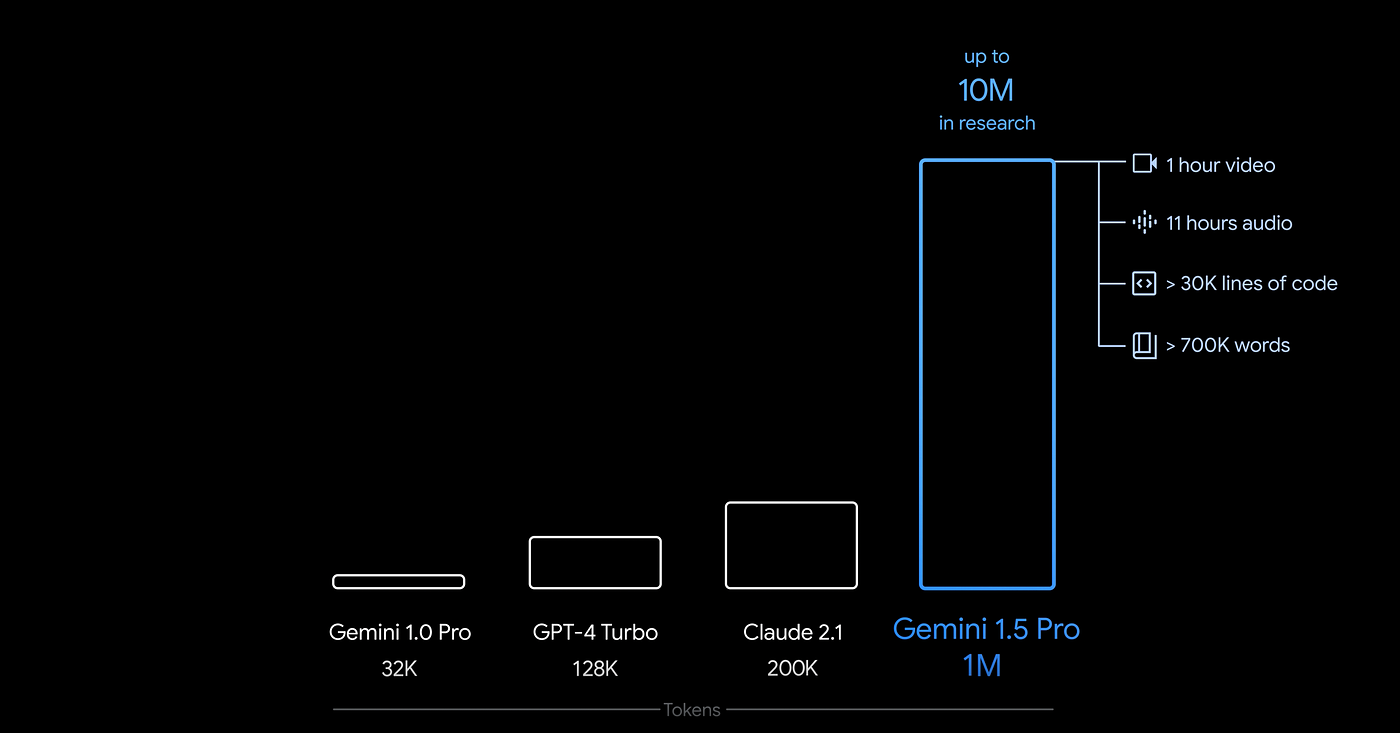
[embed]https://www.youtube.com/watch?v=MzHCWZB5ZpE[/embed] It’s one of Google’s most capable LLM and is currently called Gemini 1.5 Pro. The all-new Gemini 1.5 Pro offers better performance and carries out longer conversations. Google explains how the Gemini 1.5 Pro will be capable of adapting to users’ speech patterns and creating more effective conversational responses contrary to what it currently generates. This feature will offer 10 voice options and will have the capability to use smartphone cameras yet, see & interpret real-time videos. The context window for the new Gemini 1.5 Pro model can work with 1 million tokens allowing Gemini Advanced to remember & reference a larger conversational history. It produces more coherent and insightful responses.  In recent events, it was announced that Google’s Gemini AI assistant is getting the new voice chat capabilities for Gemini Advanced subscribers this year. The feature is known as Gemini Live, it will enable two-way conversation between the chatbot and the user, allowing the assistant to better utilize its assistant capabilities & vision features - similar to what OpenAI is working on ChatGPT. Another amazing thing about Gemini Advanced is that you can easily configure it with various apps in the Google Workspace apps such as Gmail, Docs, Sheets, Slides, and Drive. This deeper Google Workspace integration offers much better and more insightful features to perform mundane tasks effectively.  Here are a few ways how Google’s Gemini AI Model Advanced can assist users; 

1. Smart Email Assistant in Gmail

Gemini Advanced offers a range of features to streamline your email communication. For instance, when replying to a lengthy email thread, its contextual summarization feature can provide a concise summary of the key points discussed, saving you time and keeping the conversation focused.  After a Google Meet call, Gemini Advanced can scan your meeting notes and automatically suggest personalized follow-up emails with action items for attendees, ensuring nothing slips through the cracks. The Automated Email Drafts feature takes it a step further by drafting personalized greetings and introductions for new meetings, making your email composition effortless.

2. Enhanced Document Creation in Docs and Slides

The intelligent research assistant feature within Docs is a game-changer. As you research, it scans relevant web pages and highlights key points or statistics directly within your document, making the process of gathering and organizing information a breeze. When working with data in Sheets, Gemini Advanced simplifies chart creation by automatically generating charts and graphs based on your information.  It also suggests optimal visualizations for presenting your data effectively in Slides. Beyond basic grammar checks, the AI can analyze the tone and style of your document to ensure it aligns with your intended message and target audience, elevating the quality of your writing. 

3. Streamlined Workflow Management

Gemini Advanced helps you stay on top of tasks and meetings. It analyzes your calendar and emails to identify upcoming deadlines and creates a prioritized task list in Google Tasks, keeping you organized and efficient. Before meetings, it suggests relevant agenda items based on previous communication and then takes smart notes during the meeting, highlighting key decisions and action items. For recurring data entry tasks in Google Forms, Gemini Advanced simplifies the process by pre-populating fields based on user information or previous submissions, saving you valuable time and effort.

What’s Open AI ChatGPT Plus?  

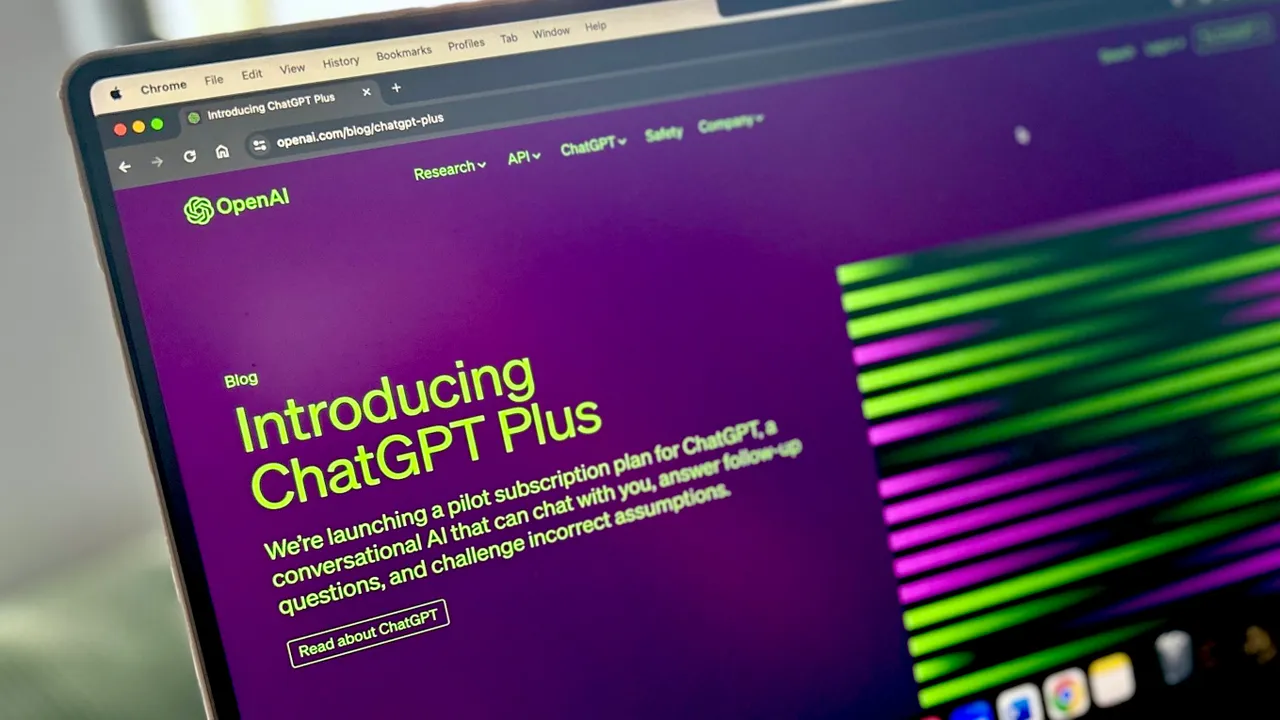
ChatGPT Plus ChatGPT Plus is a paid subscription plan for OpenAI’s ChatGPT tool. While the free version is good enough with its GPT-3.5 model, the paid subscription of ChatGPT integrates the GPT-4 model. GPT-4 is capable of providing better outputs and understanding your input more effectively, parsing the information across millions of tokens. One of the best features of OpenAI's ChatGPT Plus subscription is how it offers faster response times & also provides priority access to new features. Moreover, it supports features such as DALL-E, which functions as an effective AI image generator. In comparison to ChatGPT 3.5, the ChatGPT Plus version also gives better access to coders so they can code projects more efficiently. It enables them to quickly create, analyze, and upload code more efficiently. In fact, ChatGPT Plus offers additional capabilities that allow users to easily build custom ChatGPT versions for themselves as well.  Recently, Open AI has introduced the GPT-4o technology where (“o” stands for “Omni”). The all-new GPT-4o technology is capable of accepting input in any combination of text, audio, image, and video and generates results similarly. It is also capable of responding to audio inputs and requires a fraction of time approximately 232 milliseconds, the same as an average human would take to respond back during a conversation.  The 4o not only matches the GPT-4 turbo performance in text & code writing capabilities but performs better overall at vision & audio understanding to existing models. 

Strength 1 - Text Generation & Communication

1. Gemini Advanced:

Gemini Advanced excels at generating text in various styles, from informative to creative and conversational. It can adapt its writing style to suit the context and audience. When it comes to answering open-ended questions, Gemini Advanced provides thoughtful and relatively accurate responses, although it may occasionally struggle with complex or abstract topics. Summarization is another strong suit, effectively condensing lengthy texts while capturing key points. In terms of factual accuracy, Gemini Advanced performs well, but like any LLM, it may occasionally perpetuate biases or inaccuracies present in its training data.

2. ChatGPT Plus:

ChatGPT Plus is known for its impressive text-generation capabilities and conversational tone. It can create engaging narratives and adapt its style to various genres. ChatGPT Plus provides thorough responses to open-ended questions and excels at creative writing tasks. However, it may sometimes provide factually inaccurate information, and its responses can be influenced by the training data biases. In terms of summarization, ChatGPT Plus performs adequately but may include non-essential details, requiring some editing.

Verdict:

Both LLMs are powerful text generators, but ChatGPT Plus edges out with its highly creative and conversational responses, making it a preferred choice for narrative writing.  Gemini Advanced takes the lead in factual accuracy and concise summarization, making it more suitable for critical tasks like news reporting or academic writing.

Strength 2 - Coding Assistance

1. Gemini Advanced:

Coding assistance is one of Gemini Advanced's strong suits. It assists with code generation, offering suggestions, and auto-completing code snippets. Debugging is made easier with step-by-step explanations and error identification. The LLM understands various programming languages, including Python, JavaScript, and Java. However, it may struggle with complex debugging tasks or understanding certain advanced language features.

2. ChatGPT Plus:

ChatGPT Plus is also capable of aiding programmers. It can generate code, debug existing code, and suggest improvements. It understands a wide range of programming languages, including Python, C++, and even custom web development services like HTML and CSS. ChatGPT Plus can provide explanations for its suggested code, making it easier to understand its logic. However, it may have limitations in handling extremely complex code or understanding certain niche programming languages.

Verdict:

Both LLMs offer significant coding assistance benefits. Gemini Advanced shines with its detailed explanations and error identification, making it a strong tool for programmers.  ChatGPT Plus stands out with its versatility in understanding various programming languages, making it a versatile assistant for diverse coding projects.

Strength 3 - Image Generation

1. Gemini Advanced:

At the moment, Gemini Advanced does not offer built-in image generation capabilities, focusing primarily on language processing tasks.

2. ChatGPT Plus:

ChatGPT Plus includes an image generation feature, allowing users to create visual outputs based on text prompts. The generated images are often creative and adhere well to the provided prompts. ChatGPT Plus can produce a variety of image types, including charts, diagrams, and even artistic renderings. However, the image quality can vary, and it may struggle with highly complex or detailed requests.

Verdict:

ChatGPT Plus takes the lead in this category with its image generation capabilities, offering users a versatile and creative tool for visual communication.

Strength 4 - User Experience & Additional Features

1. Gemini Advanced:

Gemini Advanced offers a sleek and intuitive user interface, making it easy for users to access its various features. It integrates seamlessly with Google Workspace, enhancing the user experience with familiar tools. Additional features include data analysis capabilities, spreadsheet formula suggestions, and priority task management, making it a well-rounded productivity suite. However, some users may desire more extensive customization options to tailor the interface to their specific needs.

2. ChatGPT Plus:

ChatGPT Plus provides a user-friendly interface that is straightforward and accessible. It offers a conversational format that feels natural and intuitive. Beyond text generation, ChatGPT Plus provides basic data analysis and can assist with spreadsheet formulas.  The platform also includes a "Surprise Me" feature that offers unexpected and creative responses, adding an element of fun to the user experience. However, ChatGPT Plus may have limitations in terms of advanced data visualization or complex spreadsheet formula generation.

Verdict:

Both platforms offer a smooth and user-friendly experience, but Gemini Advanced takes the lead with its seamless integration with Google Workspace and robust additional features.  ChatGPT Plus stands out with its conversational interface and creative surprises, appealing to users seeking a more playful and interactive experience. This head-to-head comparison highlights the unique strengths and features of each LLM, allowing users to make an informed decision based on their specific needs and preferences.

Conclusion 

In the end, it is our understanding that the comparison between Gemini Advanced & ChatGPT Plus showcases that both Large Language Models have their specific strengths and weaknesses.  Both LLMs are powerful enough to increase productivity and add more creativity in their specific ways. We can’t say for sure who is a clear winner because they are both good in their distinct areas. Gemini Advanced is an incredibly worthwhile tool & offers better integration within the Google ecosystem, making it quite the comprehensive productivity suite available.  Its strength lies in coding, data analysis, and concise summarization.  On the other hand, ChatGPT Plus offers remarkable creativity and brings conversational text generation. It offers versatility in coding language understanding and impressive image generation capability.  As far as making the right choice is concerned, it all comes down to the specific needs and preferences of the user. Ultimately, the "winner" is the LLM that aligns best with your specific requirements and enhances your daily tasks and projects. 

Unlock AI Potential with Branex 

At Branex, we understand the power of AI and how it can transform your world.  Our team of AI experts is here to help you unlock your AI potential and harness these cutting-edge technologies for your benefit. Whether you're a writer seeking creative inspiration, a developer needing coding assistance, or a business owner wanting to streamline operations, we can help you leverage the right LLM for your unique needs.  Hire generative AI engineers to enhance your productivity, ignite your creativity, and make informed decisions. Don't let the complexities of AI overwhelm you.  Let Branex be your guide in this exciting AI landscape. Contact us today!
Cost to Make AI Writing Tool Like Jasper
Artificial Intelligence Technology

How Much Does It Cost to Make an AI Writing Tool Like Jasper AI?

branex-logo Team Branex
The world of AI tools is exciting! It promises to revolutionize content creation. However, only a select few truly deliver on their promises, and Jasper AI is undoubtedly a leader among them.  It’s a great writing tool and is capable of delivering credible results.  While it may not be a comprehensive writing tool, Jasper AI is amazing at filling gaps in pre-written content, crafting engaging headlines and subheaders, and enhancing short-form content. With AI taking center stage, many entrepreneurs are looking to make due investments in apps like Jasper AI.  In this article, we are going to break down how much it costs to make an app like Jasper AI so you, as an entrepreneur, have a better insight.  So without further ado, let’s get into the details.

About Jasper AI 

Jasper AI Jasper AI is undoubtedly the frontrunner in the competitive landscape of AI writing tools, and its market presence and funding statistics certainly reinforce this leadership position. According to a recent Crunchbase report, Jasper AI has secured an impressive total funding of $131 million since its launch in 2021.  And its success story doesn't end there.  As of February 2024, Jasper AI boasts a remarkable customer base of over 100,000 businesses, including notable names such as Amplitude and HubSpot.  With such rapid growth and adoption, it's no wonder that Jasper AI is projected to hit an astonishing ARR (Annual Run Rate) of $250 million by the close of 2024.  These figures alone showcase the tool's widespread appeal and the confidence businesses have in its capabilities. With such information, we believe it’s safe to say that Jasper AI is not just a passing fad but a key player in the AI landscape. Fun Fact: Do you know that the AI content creation tools market size stands at a valuation of $840.3 million in 2024, and is estimated to reach $3007.6 million by 2034? 

How Much Does it Cost to Make an AI Writing App Like Jasper AI? 

Cost to Make AI Writing App Like Jasper The average cost to develop an AI writing app such as Jasper AI depends on several factors. Based on a general estimate, an AI writing app can cost anywhere from $40,000 to $250,000 to develop, especially if it is designed to meet the same standards as Jasper AI. 

Breakdown of the Jasper AI App 

Platform 

  • Desktop 

User Authentication and Profile:

  • Email and password sign-up/login
  • Social login (Apple, Google)
  • User profile with basic information and preferences
  • Security features (two-factor authentication, data encryption)

AI Writing Assistant:

  • Natural language processing for text generation
  • Ability to create and edit various types of content, including articles, blog posts, social media copy, and marketing materials
  • Suggestion engine for writing improvement and tone adjustment
  • Plagiarism checker

User Interface and Experience:

  • Intuitive and user-friendly design
  • Seamless navigation and content organization
  • Customizable themes and color schemes
  • Offline mode for accessing previously generated content

Content Templates and Frameworks:

  • Pre-built content templates for common content types
  • Ability to create custom content frameworks
  • Option to collaborate and share content frameworks with other users

Integration with Other Apps:

  • Integration with popular productivity and content creation apps (e.g., Google Workspace, Microsoft Office, Dropbox)
  • Sharing capabilities to social media platforms and content management systems

Data Synchronization:

  • Real-time synchronization of user data across devices
  • Cloud backup and data recovery options

Admin and Management:

  • Robust content and user management system for admins
  • Analytics and reporting dashboard to track user behavior and app performance
  • Content moderation tools for user-generated content

Technology Stack:

  • Backend: Python (Django or Flask), AWS Lambda (for serverless functions)
  • Database: PostgreSQL or MySQL for relational data, MongoDB for unstructured data
  • AI Model: Transformers (Hugging Face) or similar NLP library
  • Cloud Services: AWS or Google Cloud for hosting, storage, and machine learning
  • Version Control: Git

Factors That Affect the Cost of Making an App Like Jasper AI 

Factors That Affect Cost of Making App Like Jasper

1. Feature Set & Complexity

Apps like Jasper AI rely on sophisticated features such as natural language processing, machine learning models, and content generation.  Implementing these features requires specialized skills and can be more costly compared to simpler apps on the market. The range of platforms you plan to support also impacts costs.  Do you want a desktop-only app or a mobile version as well? We asked a React native app development company and they suggested that developing native apps for multiple platforms can be more expensive than using cross-platform frameworks. The size and location of the development team matter too. Rates vary across countries, with developers from North America or Western Europe typically charging higher rates than those from Asia or Eastern Europe. Moreover, more complex apps may require a larger team with specialized roles, influencing overall costs.

2. App Design & UI/UX

A polished and intuitive user interface is crucial for your app's success.  Custom design elements, animations, and complex UI patterns can increase development expenses. Achieving a unique and appealing design often involves creating custom icons, illustrations, and animations, requiring skilled UI/UX designers and potentially increasing costs compared to using off-the-shelf components. Crafting a user experience includes designing effective information architecture, smooth navigation flows, and intuitive user interactions. This demands expertise in UX design and can contribute to overall expenses.

3. Integration with Third-Party Services

Writing assistant apps often enhance functionality and user experience by integrating third-party services. Common integrations include social media logins, cloud storage for user data, payment gateways for in-app purchases, analytics tools, and marketing automation platforms. Each integration brings its costs and challenges, which can vary depending on usage volume and request frequency. Apps handling sensitive user data, such as payment information or personal details, must prioritize robust security features to ensure compliance with data privacy regulations like GDPR and CCPA, further contributing to overall costs.

4. Server Infrastructure & Backend Development

The backend infrastructure and server costs are often overlooked but are an important aspect of the overall expense. Writing assistant apps require robust backend systems to handle data processing, user requests, and storage. It includes database management, server maintenance, and ensuring scalability to accommodate varying user demands. The choice of cloud service provider and their pricing plans can significantly impact expenses. Furthermore, the complexity of the backend architecture, the number of servers, and the usage of containerization or microservices can all influence costs.

5. Data Storage & Security 

Writing assistant apps process and store significant amounts of user data, including generated content, user preferences, and potentially sensitive information.  Ensuring secure and compliant data storage can be costly, especially when adhering to data privacy regulations like GDPR or industry-specific standards like HIPAA. The choice of data storage solutions, such as cloud storage providers or on-premises servers, impacts costs. Encryption, data redundancy, and backup strategies also add to the overall expenses, ensuring data security and reliability.

6. Ongoing Maintenance & Updates

Apps require ongoing maintenance and updates to remain functional and secure. It involves bug fixes, compatibility updates for new operating system versions, and addressing user feedback. Regular updates help maintain user satisfaction and app store rankings. The frequency of updates depends on various factors, including user feedback, the introduction of new features, and addressing security vulnerabilities. Each update incurs development, testing, and deployment costs, contributing to the overall expenses.

7. AI Model Development & Training 

When considering the development and training of AI models for the backend of such apps, it is important to take into account several key factors. These AI models can be intricate and often resource-intensive, resulting in varying implementation costs.  Task complexity, encompassing text generation, language translation, or sentiment analysis tasks, significantly influences model architecture and the requisite training resources.  More complex tasks typically necessitate larger datasets, more advanced algorithms, and greater computational power, all of which contribute to increased costs. The effectiveness of AI models is highly dependent on the quality of the data they are trained on. Acquiring or creating a substantial, diverse, and accurately labeled dataset can be an expensive undertaking.  Ensuring data quality and its relevance to the task at hand is of utmost importance and often involves data cleaning, preprocessing, & annotation processes, each contributing to the overall costs.  Moreover, the choice of machine learning framework (such as TensorFlow or PyTorch) can impact complexity and scalability, with more robust frameworks often requiring more extensive computational resources. Training large models on powerful hardware, including GPUs or TPUs, can expedite the training process but also lead to higher costs. Training AI models is an iterative process that involves multiple training runs and hyperparameter tuning sessions to optimize performance. This iterative nature consumes significant computational resources and time, driving up costs.  Furthermore, deploying the trained model for real-time inference may require seamless integration with the app's backend system or the utilization of cloud-based inference services, both of which have associated costs. These factors collectively contribute to ongoing operational expenses.

8. Testing & Quality Assurance

Entrepreneurs should also be mindful of the costs associated with testing and quality assurance when investing in a writing app. Rigorous testing conducted by engineers is imperative for ensuring the app's stability and reliability. Comprehensive test coverage includes addressing diverse devices, operating systems, and device configurations, each of which incurs corresponding expenses. By ensuring broad test coverage, the app's compatibility and performance across multiple platforms can be enhanced, thereby delivering a satisfying user experience.

9. App Maintenance & Support

When investing in an AI writing tool app, it is important to allocate resources for ongoing maintenance and support. All apps are susceptible to bugs, and once launched, they may require regular maintenance and updates to address user-reported issues. The frequency of updates depends on factors such as new releases, the growth of the user base, and the complexity of the app's features. Moreover, if the dedicated development team introduces new features, ongoing improvements are necessary to maintain the app's competitiveness in the market. However, implementing these improvements comes at a cost. In terms of support, expenses may arise from creating and maintaining FAQs, user guides, and other relevant documentation. Support staff or outsourcing teams may also need to be factored into the overall support costs. Furthermore, maintaining the app's backend infrastructure, including servers, databases, and any relevant cloud services, incurs ongoing expenses to ensure smooth operations. Investing in an AI writing tool app requires careful consideration of different factors, including AI model development and training costs, testing and quality assurance expenses, as well as ongoing app maintenance and support costs.  By thoroughly evaluating these aspects, entrepreneurs can make well-informed decisions and allocate resources effectively to ensure the success of their AI writing tool app ventures.

The Process of Building an App Like Jasper 

Process of Building an App Like Jasper Building an app like Jasper AI demands a structured approach, giving customers an effective user experience.  Here's a step-by-step breakdown to guide businesses and entrepreneurs through the process of developing a user-friendly AI writing assistant tool. 

Step 1: Ideation and Research

Initiate the process with a clear vision. Conduct brainstorming sessions to explore and define your unique selling propositions (USPs). Perform comprehensive market research to identify existing competitors and understand customer requirements. By grasping your target audience's needs, you can strategically streamline the development process, ensuring your app aligns with their expectations.

Step 2: Planning and Designing

With a clear vision in mind, proceed to define the app's concept and create an initial wireframe. This wireframe serves as a blueprint, outlining the app's structure and functionality. Develop prototypes to experience the app's basic functionalities firsthand. Then, focus on crafting a user-centric design by carefully planning the user experience (UX) and user interface (UI) elements. It ensures your app is not only functional but also intuitive and easy to navigate.

Step 3: Development and Coding

In this phase, your vision comes to life. Assemble a skilled team of app developers, in-house or offshore, to code the app, implement features, and introduce the functionalities outlined during the planning stage. The project manager plays a pivotal role in coordinating the development process, and ensuring the use of appropriate programming languages and requested frameworks. This stage also involves estimating the costs based on the app's complexity and the expertise required.

Step 4: Testing

Place significant emphasis on the testing phase to guarantee the app's performance and reliability. Conduct thorough quality assurance (QA) tests to identify and address any bugs or usability issues. This critical step ensures your app delivers a seamless user experience across various devices and platforms. It also showcases the app's reliability and efficient customer support, reinforcing its overall quality.

Step 5: App Launch & Continuous Improvement

The final step is the launch where the app is sent online for public use. The work doesn’t stop there as it must evolve to meet the changing user requirements and the growing technological advancements. There are several other aspects which are included in the cost of developing a tool like Jasper AI.  It includes aspects like post-launch updates & maintenance. When it comes to developing an app such as Jasper AI, requires several investments such as time, resources & expertise. From ideation to continuous improvement, a successful AI-powered writing assistant only becomes a success if the app stays competitive and relevant in the market. 

Key Takeaways 

  • The cost of developing an AI writing app like Jasper AI can range from $40,000 to $250,000, depending on various factors.
  • The features, complexity, and range of platforms supported influence the cost, with native apps for multiple platforms being more expensive.
  • App design, UI/UX, and custom elements can increase expenses, while integration with third-party services adds to the overall cost.
  • Server infrastructure, backend development, data storage, and security are crucial cost components, especially with sensitive user data involved.
  • Ongoing maintenance, updates, and bug fixes are necessary to keep the app functional and secure, contributing to the overall expenses.
  • AI model development and training costs vary based on task complexity, dataset quality, and the choice of machine learning framework.
  • Testing and quality assurance are imperative for app stability and reliability, and they incur corresponding expenses.
  • App maintenance and support, including backend infrastructure maintenance and user support, are ongoing costs that need to be factored in.

Conclusion 

Developing an AI writing app like Jasper AI is an exciting yet intricate endeavor. The cost of creating such an app can vary depending on various factors, including feature complexity, design elements, third-party integrations, server infrastructure, and ongoing maintenance.  It is important for entrepreneurs to carefully consider these aspects & allocate resources effectively. By investing in a comprehensive development process that includes ideation, research, planning, designing, development, testing, & continuous improvement, businesses can create a user-friendly and successful AI writing assistant tool.  Are you an entrepreneur with a vision for the next big AI writing tool? Branex is here to help turn your vision into reality. Get in touch with Branex today to hire generative AI engineers and let's create something extraordinary together!
Importance of Generative AI
Artificial Intelligence Technology

What is Generative AI and Why is It Important in the Modern Era?

branex-logo Team Branex
Imagine, you're craving a coffee and ask a chatbot for recommendations. It goes beyond just listing cafes, it becomes your personalized coffee concierge. It tells you which shop is closest, who roasts the most delicious beans, and which cafe offers the perfect ambiance to match your mood.  This is the power of generative AI It unlocks a transformative era where powerful algorithms analyze your data and create helpful, personalized experiences. But it doesn't stop there.  Generative AI also reimagines information by analyzing existing data and generating new content: text, images, audio, video, and more.  From ChatGPT to DALL-E, Google Gemini, Microsoft Copilot, and many other latest classes of generative AI applications. We now have multiple generative AI models, where each of these models is trained to read across vast amounts of data such as text, images, audio & more which are fed into the system in advance.  These complex generative AI models then assemble solutions that answer the end user queries in the best possible way. Almost all of today’s generative AI foundation models are built on large language models (LLM) that add more diversity and versatility to the results. They are effectively trained to respond to natural language with added clarity.  As of the McKinsey & Company report released in June 2023, generative AI holds the potential to add a positive $6.1 to $7.9 trillion to the global economy by the year 2030. Thanks primarily to its contribution to increasing worker productivity.  However, it's important to acknowledge that generative AI offers numerous benefits in boosting working efficiency. It also presents challenges such as potential inaccuracy, privacy violations, and intellectual property exposure. To understand generative AI more comprehensively, we will delve into its inner workings. Explore its most immediate applications and use cases, and share some compelling examples. We'll also discuss best practices for its responsible and effective use.  So, without further ado, let's explore everything about generative AI.

What is Generative AI? 

Generative AI Generative AI, as the name implies, refers to algorithms capable of rapidly creating content based on text prompts.  Different AI tools are available to produce various content forms.  For instance, DALL-E, a generative AI tool, excels at creating high-quality images based on user prompts. Similarly, Jasper helps craft long-form content precisely, while Copy.ai empowers social media influencers and management teams to generate engaging social media posts.  These are just a few examples of what's possible with generative AI.  By interacting with these text-trained models conversationally. Similar to how you would talk to another person, you can unlock a wide range of content creation possibilities. 

A Brief History of Generative AI 

1. Eliza 1960: 

Eliza Model for Generative AI It all started back in the mid-1960s when the first conversational chatbot was introduced. Eliza, an entirely largely rule-based model, was first created by the Massachusetts Institute of Technology. The responses were limited to a set of predefined rules and templates. Although it lacked contextual understanding, it set the foundation for the present-day generative AI models emerging today.  Figuratively speaking, AI models are like blank brains with complex neural networks exposed to vast amounts of real-world data that have been preloaded to the system. These systems then eventually develop intelligence - which further leads to generating novel content in response to pre-defined prompts.  Fast forward to today, even the best AI expert is unable to precisely define how these complex algorithms work and how a blank brain becomes developed & fine-tuned to respond back, even the most critical of queries asked. 

2. The Inception of AI: 

Inception for Generative AI 1956 marked a pivotal moment in the history of artificial intelligence (AI) with the Dartmouth Workshop. It was there that John McCarthy first proposed the possibility of machines exhibiting intelligent behavior. This groundbreaking discussion brought together several key figures in the field, including Marvin Minsky, Nathaniel Rochester, and Claude Shannon. These "marvels of Artificial intelligence", as you aptly call them, were not just theorists; they were pioneers who actively shaped the future of artificial intelligence through their contributions.

3. The Turing Test 

Turing Test for Generative AI The idea of machines mimicking human conversation isn't new, dating back to the 1950s. However, it received a significant boost when Alan Turing, a pioneering mathematician, computer scientist, and logician – often called the "father of modern computing" and "artificial intelligence" – proposed the Turing Test. This test involves a human evaluator judging natural language conversations between a human and a machine designed to generate human-like responses. The Turing Test became a major driving force in the early development of Generative AI.

4. WABOT-1

WABOT-1 for Generative AI In 1972, Japan made a significant leap in robotics with the unveiling of WABOT-1, the world's first full-scale humanoid robot. Developed between 1970 and 1973 by Professor Ichiro Kato and his team at Waseda University. WABOT-1 represented a pioneering achievement in humanoid robotics. This remarkable robot could communicate in Japanese, a groundbreaking feature for its time. Moreover, WABOT-1 had advanced capabilities for: 
  • Measuring distances and directions: WABOT-1 used external sensors to perceive its surroundings.
  • Walking: Equipped with articulated lower limbs, it could move around its environment.
  • Gripping and carrying objects: Tactile sensors in its hands enabled it to grasp and manipulate objects.
  • Seeing: Two 525-line video cameras with a 35-degree field of view provided its "vision."

5. The AI Winter

AI Winter for Generative AI The field of artificial intelligence (AI) has experienced periods of both excitement and skepticism. One such period, known as the "AI winter", spanned from the mid-1970s to the late 1990s. During this time, research funding and public interest in AI declined significantly. Several factors contributed to the AI winter. Firstly, early AI projects often fell short of their ambitious goals, leading to disappointment and a reevaluation of AI's capabilities. Secondly, limitations in computing power at the time hindered researchers' ability to develop more sophisticated models. Finally, a lack of clear understanding about how to achieve true intelligence further dampened enthusiasm. The consequences of the AI winter were significant. Reduced research activity slowed the pace of technological advancement in the field. Moreover, public skepticism about AI's potential hindered its adoption in various industries. However, the field eventually emerged from the AI winter, fueled by advancements in computing power, new research approaches, and a renewed appreciation for AI's potential benefits.

6. The AI Re-emergence

Re-emergence for Generative AI The year 2006 marked a turning point for artificial intelligence (AI) as it began to emerge in various practical fields. The financial sector witnessed significant advancements, with AI employed for tasks like fraud detection, credit risk assessment, and algorithmic trading. In the retail sector, recommendation engines were designed to guide consumers towards informed purchasing decisions. Social media marketing transformed with the introduction of targeted marketing and effective customer segmentation, enabling businesses to reach their target audience more efficiently. AI's reach further extended to the manufacturing industry, where it optimized internal operations, performed quality control checks, and implemented predictive maintenance. The healthcare sector also embraced the potential of AI. Utilizing generative AI to enhance medical diagnosis, research new drugs, and provide personalized medicine for individual patients. Recognizing its vast potential, venture capitalists directed significant investments toward AI research and development within leading technology companies. While the practical applications of AI were gaining traction, public interest was sparked by popular media portrayals. The 2006 film "Aeon Flux" showcased a fictional city named Monica, where advanced technology played a central role. The film's depiction of automated security systems, centralized control, and AI-powered robotics provided a glimpse into how advanced technology could shape the future.

What Are Some Types of Generative AI Use Today? 

Fast forward to the present era, AI has set the center stage. It has become an effective tool in almost all walks of life. Irrespective of which industry you’re in, AI is breaking ground almost everywhere. We see countless apps and software solutions that have a fully functional API making the tools work at the backend. But what sophisticated technology is working at the backend? generative AI models   Let’s learn about the different deep-learning techniques which are included: 

1. Transformer Models:

Transformers are neural networks capable of learning context by tracking and identifying relationships in sequential data. This data can be anything such as a word, a phrase, or even a sentence. Transformer models are mostly used in tasks that are dependent on natural language processing (NLP). It underpins most foundation models of many AI tools today. 

2. Generative Adversarial Networks (GANs):

GANs work with two neural networking technologies, the generator and the discriminator. The generator is responsible for creating new content, whereas the discriminator differentiates between the real and the fake. As the generator keeps producing and the discriminator keeps separating facts from falsehood, it starts giving more fact-checked and realistic results. Although GAN models are negatively used to create deepfakes mostly, the tool can be legitimately used for many business applications. Whether it’s art, video, or any other form of content creation, GAN can be truly useful. 

3. Variational Autoencoders (VAEs):

While Transformers understand and manipulate sequences, and GANs create realistic data, Variational Autoencoders (VAEs) focus on learning the essence of a dataset. They achieve this by compressing data into a special code that captures the data's core structure. This code, unlike a standard autoencoder, allows VAEs to not just reconstruct the data, but also generate new, similar data points. This makes VAEs valuable for tasks like data compression, anomaly detection, and even creating new images or music.  By leveraging the power of these generative AI models, businesses are finding new ways to approach tasks and become more productive. One such example is that of Expedia; Expedia is one of the world’s most popular travel planning websites & apps which has integrated conversational AI assistant into its services. So now customers don’t have to spend hours searching for the perfect location for their vacations. They can simply discuss with the chatbot by sharing their preference. The app automatically creates a well-segmented list of hotels and nearby attractions so it may assist them with the planning.  Similarly, the soft drink giant Coca-Cola has formed partnerships with companies like Bain & Company who use ChatGPT to assist them with marketing. Bain & Company utilizes the application to create personalized experiences for customers by crafting personalized sales ad copy, images & messaging. SnapChat has also built a conversational AI within their product, the bot called My AI can be called up for a chat at any time to answer questions or simply for entertainment purposes. Some of the suggested uses include “advising on the perfect gift for BFFs birthday, helping plan a hiking trip, or making a suggestion for dinner.” 

Responsibilities Associated with Developing Solutions Using AI 

Developing Solutions Using AI AI has definitely created a multitude of opportunities to improve the lives of people around the world, may it be business, healthcare, or education. And with its launch, it has raised new questions in the market such as what is the best way to create a system that is solely built on fairness, privacy, safety, and interpretability. 

1. Go for a Human-Centric Approach

Imagine you're designing a brand-new app or website that uses advanced AI to make recommendations or decisions.  At the end of the day, what really matters is how actual users experience and interact with your system in the real world. First things first, you need to build in clear explanations and user controls from the get-go. People want to understand why your AI is suggesting certain things, and they want to feel empowered to make their own choices. Transparency is huge for creating a positive experience. Next, think about whether your AI should just spit out one definitive answer, or present a handful of options for the user to choose from. Nailing that single perfect answer is incredibly hard from a technical perspective. Sometimes it makes more sense to suggest a few good possibilities and let the user decide based on their unique needs and preferences. As you're developing the system, get ahead of potential downsides by modeling user reactions and doing live testing with a small group first. That way you can make adjustments before launching to the masses. Most importantly, brings a truly diverse range of user perspectives into the process from day one. The more backgrounds and use cases you account for, the more people will feel that your AI technology is working for them, not despite them. A great user experience is all about making people feel heard, understood, and empowered.

2. Examine Your Raw Data

You know the old saying - garbage in, garbage out? Well, that applies big time when it comes to machine learning. The data you use to train your AI model is going to shape how it thinks and behaves. It's kind of like parenting - the "inputs" you expose an AI to mold its worldview. So before you even get started building a model, you need to do some serious digging into the raw data you'll be using. Search it up for errors, omissions, or straight-up incorrect labels. Those data gaps could really throw your AI for a loop down the line. Next up, make sure your training data actually represents the full range of real-world scenarios and users your AI will experience. If you only train it on data from 80-year-olds, it's probably not going to generalize well to teens. Or if the data is just from summer conditions, good luck when winter rolls around. As you're developing the model, keep a hawk-eye out for any "training-serving skew" - basically, when performance in training looks great but goes sideways once deployed in the real world. Find out such gaps and rework your AI accordingly.  Oh, and one more key thing - look for any redundant or unnecessary data points that could be simplified. The simpler and leaner you can make your training data, the better your model is likely to perform.

3. Keep Testing Till You Get It Right

When it comes to building AI systems people can really trust, we could take some lessons from how software engineers ensure code quality and reliability. It starts with putting every little piece of your AI through its paces with intensive testing, just like developers test individual code modules. But AI isn't just one component - it's a complex choreography of models interacting with each other and other software. So you'd need robust integration testing to catch any unintended code blocks from how those pieces fit together. Another obstacle is what developers call "input drift" - when the data inputs start changing in unexpected ways from what the AI was originally trained on. You'd want monitoring and testing to raise a red flag anytime curveball inputs could throw your AI for a loop. As your AI matures and your user base grows, your testing has to evolve too. Maintaining a regularly updated "golden" dataset representative of the real world is key to making sure your evaluations stay legit. And there's no substitute for continually bringing in fresh user perspectives through hands-on testing cycles. Blending comprehensive testing with a constant feedback loop from the real world? That's how you develop AI systems that don't just impress on paper, but prove their trustworthiness over years of use by real people.

Key Takeaways:

  • Generative AI refers to algorithms capable of creating new content, such as text, images, audio, and video, based on existing data and user prompts.
  • Transformer models, Generative Adversarial Networks (GANs), and Variational Autoencoders (VAEs) are some of the key types of generative AI models used today.
  • Generative AI holds the potential to boost worker productivity and add trillions of dollars to the global economy, but it also presents challenges like potential inaccuracy, privacy violations, and intellectual property exposure.
  • Developing responsible and effective generative AI solutions requires a human-centric approach, with clear explanations, user controls, and consideration for diverse perspectives.
  • Examining and understanding the raw data used for training AI models is crucial, as the quality and representativeness of the data shape the model's performance and behavior.
  • Rigorous testing, including unit tests, integration tests, monitoring for input drift, and maintaining a representative "golden" test dataset, is essential for building trustworthy AI systems.

What’s the Future of Generative AI? 

Future of Generative AI In the near term, generative AI models will become significantly more capable of understanding and responding to nuanced human instructions.  Anthropic's constitutional AI research aims to instill models with stable values aligned with human interests. DeepMind is working on growing model capabilities while improving robustness and oversight. This will enable generative AI to tackle increasingly complex creative and analytical tasks - generating marketing campaigns, software prototypes, architectural designs, and more from high-level prompts. Expect to see wider enterprise adoption for content creation, coding assistance, and streamlining knowledge work. Longer-term, generative AI breakthroughs in areas like multimodal learning could lead to models that can learn from and generate all forms of data - text, images, audio, sensor data, etc. This could supercharge fields like robotics, autonomous systems, and simulation environments. However, major challenges around bias, privacy, transparency, and controlling explicit content must still be addressed through improvements to model governance, watermarking, and aligning AI goal structures. Regulation will likely increase, with the EU's upcoming AI Act expected to enforce strict guardrails around high-risk generative AI use cases. The U.S. is also developing an "AI Bill of Rights". Despite hurdles, generative AI is projected to be a pivotal general-purpose technology, reshaping content, media, design, science, and beyond in the 2030s and 2040s.  Searching to get your hands on the transformative power of Generative AI for your business?  Reach out to Branex, a professional generative AI development company offering a team of experts who can guide you through the process of integrating AI into your products & services. 

Want to learn more? Schedule a call with us.

Future of Artificial Intelligence
Artificial Intelligence Technology

Exploring the Potential of Artificial Intelligence in the Future

branex-logo Team Branex
Imagine living in a smart home. Have you ever wondered what life is like when you’re residing in a smart home? In such a setting, most home appliances are voice-controlled, and sensors adjust lighting and cooling systems according to the climate. Security systems can detect movement outside and alert residents. All appliances are interconnected and controllable via a smartphone with the help of Artificial Intelligence Technologies. They can even detect vehicles in the driveway and automatically open the garage door. Artificial intelligence (AI) is transformative. It's evolving significantly with each passing day. Thanks to concepts like machine learning, deep learning, and natural language processing, the responses of these highly computational machines are becoming increasingly intelligent. Deep learning enables machines to explore deeply, creating new neural links, while natural language processing (NLP) allows machines to interact in a more human-friendly manner. Today, artificial intelligence takes center stage in almost every technological aspect that we come across. May it be something as simple as taking out our smartphones to search for stuff on the Internet and interacting with personalized recommendations on streaming services to traversing unfamiliar roads with the help of AI-powered GPS? But where do you think the future will take us? What are the potential benefits of its implementation and what will be its impact in different sectors of the industry?  Let’s explore the history very briefly. 

A Brief History of Artificial Intelligence 

The story of artificial intelligence (AI) is more than just robots and science fiction movies. It's a captivating tale of human curiosity, technological leaps, and the constant quest to understand and even replicate intelligence. Let's embark on a journey through time to explore the fascinating evolution of AI:

1. Ancient Spark (Before 1950):

The seeds of AI were sown long before computers. In ancient Greece, philosophers like Aristotle pondered the nature of intelligence. Centuries later, in the 17th century, René Descartes famously proposed the idea of "thinking machines". These early thoughts laid the groundwork for future generations to explore the possibility of artificial minds. 

2. Birth of a Buzzword (1950s):

The 1950s witnessed the dawn of the AI revolution. In 1950, Alan Turing, a brilliant mathematician, proposed the "Turing Test" as a way to gauge a machine's ability to exhibit intelligent behavior. This test, while debated today, sparked conversation and ignited the field of AI research. The term "artificial intelligence" itself was coined by John McCarthy in 1955, marking the birth of a buzzword that would captivate the world.

3. Early Strides and Struggles (1960s - 1970s):

This period saw the development of the first AI programs, such as Arthur Samuel's checkers-playing program in 1952. However, these early attempts were met with both excitement and skepticism. By the late 1960s, limitations in computing power and the complexity of AI problems led to a period of "AI winter", where funding and enthusiasm waned. In 1969, shaky was the first general-purpose robot built. However, by today’s standard, it was very simple and would perform actions like turning on/off lights & pushing around boxes, and so on. 

4. Learning to Learn (1980s - 1990s):

The 1980s brought a resurgence of interest in AI with the rise of "machine learning", a technique where machines can learn from data without explicit programming. Expert systems, able to mimic human expertise in specific domains, also gained traction. The 1990s witnessed the invention of the "Support Vector Machine" and the birth of Deep Blue. The chess-playing computer that famously defeated Garry Kasparov in 1997. These advancements showcased the growing power of AI.

5. The Age of Deep Learning (2000s - Present):

The 21st century ushered in the era of "deep learning", where artificial neural networks, inspired by the human brain, started achieving remarkable feats. From recognizing faces in photos to generating realistic speech, deep learning algorithms powered a new wave of AI applications. Today, AI is woven into the fabric of our lives, powering everything from self-driving cars and recommendation systems to medical diagnosis and language translation.

What Are the Different Types of Present-World AI? 

1. The Purely Reactive:

It’s the simplest form of AI, reacting solely to the current situation without considering past experiences or future consequences. They function as a reflex action rather than taking into account past experiences. A basic thermostat is a good example. It simply senses the current temperature and turns the heating or cooling system on or off accordingly. It doesn't remember past readings or anticipate future needs.

2. The Limited Memory: 

The following AI has a limited memory which allows them to learn from recent experiences and apply their short-term pre-learned knowledge to current situations. They react based on short-term history making them slightly more complex than purely reactive AI. For example, a self-driving car with limited memory might use the last few seconds of data on traffic flow to adjust its speed or lane change decision. While it doesn't have a long-term memory, it can adapt based on immediate surroundings.

3. Theory of Mind: 

Theory of Mind is largely theoretical and refers to AI which can understand and predict the mental states, (beliefs, desires, intentions) of others. Its mind-reading ability allows the AI to interact with humans in more nuanced and socially intelligent ways. In its truest form, the theory of mind AI doesn’t exist yet. However, some advanced chatbot attempts have carved the path to analyzing conversations that are more user behavior-focused and respond accordingly. However, achieving a true understanding of human psychology remains a challenge.

4. The Self-Aware:

This hypothetical type of AI would possess consciousness and self-awareness. It would be aware of its own existence and its place in the world. This category remains entirely theoretical and highly debated, with ethical and philosophical implications. As of today, there are no real-life examples of self-aware AI. It's important to remember this category is purely speculative and subject to ongoing scientific and philosophical discussions. Imagine a Sci-Fi futuristic self-aware future generation of machines that are super intelligent, sentient & conscious like the Terminator, Ultron, or Vision.  

How AI Technology Will Change the Future? 

1. Personalized Learning: 

learning-for-artificial-intelligence Imagine a future classroom where your virtual tutor isn't a one-size-fits-all program. But a dynamic AI system that understands your learning style, strengths, and weaknesses. This can be achieved through AI algorithms analyzing your performance in quizzes, your interactions with educational materials, and even your facial expressions. Based on this data, the AI can personalize your learning path by suggesting relevant content, adjusting the difficulty level, and providing targeted feedback, ultimately leading to a more engaging and effective learning experience.

2. Medical Diagnosis and Treatment: 

artificial-intelligence-in-medical-industry AI is already making waves in healthcare. Imagine a doctor using AI algorithms to analyze your medical scans alongside their expertise. These algorithms, trained on vast datasets of medical images and patient records, can identify subtle patterns and anomalies that might escape the human eye. This can lead to earlier and more accurate diagnoses, allowing doctors to intervene with personalized treatment plans tailored to your specific needs and medical history. AI can also help predict potential health risks by analyzing your genetic data and lifestyle habits, enabling preventative measures to be taken proactively.

3. Scientific Discovery: 

scientific-research-for-artificial-intelligence Scientific research often involves sifting through mountains of data and searching for hidden patterns and connections. AI can act as a powerful collaborator in this process. Imagine researchers in various fields utilizing AI to analyze data from telescopes exploring distant galaxies, DNA sequencing machines unlocking genetic secrets, or environmental sensors monitoring climate change. By sifting through this data at an unprecedented rate and scale, AI can identify previously unseen correlations and patterns, potentially leading to groundbreaking scientific discoveries that would have been difficult or even impossible for humans to uncover alone.

4. Climate Change Mitigation: 

climate-change-artificial-intelligence The fight against climate change requires a multifaceted approach, and AI is emerging as a valuable tool. Imagine AI systems analyzing data from weather stations, satellite imagery, and environmental sensors around the globe. This data can be used to predict extreme weather events, track deforestation patterns, and assess the effectiveness of various climate mitigation strategies. By providing real-time insights and long-term forecasts, AI can help scientists, policymakers, and individuals make informed decisions to combat the effects of climate change and work towards a more sustainable future.

5. Robotics and Automation: 

robotics-automation-in-artificial-intelligence From assembly lines in factories to operating rooms in hospitals, robots are increasingly present in various aspects of our lives. Imagine AI-powered robots that are not just programmed with predefined tasks but can actually learn and adapt to their environments. These robots can continuously improve their performance, make real-time decisions, and collaborate with humans more effectively. This can lead to increased efficiency and productivity in various industries, while also enabling robots to perform tasks that are dangerous or physically demanding for humans, improving safety and well-being in various fields.

6. Smart Cities and Infrastructure Management: 

smart-cities-artificial-intelligence Visualize a city where traffic lights adapt to real-time traffic flow, waste collection is optimized based on predictive analytics, and energy consumption is minimized through intelligent grid management. AI can analyze sensor data from various sources in real-time, allowing cities to optimize infrastructure usage, reduce energy waste, and improve overall efficiency, leading to a more sustainable and livable urban environment.

7. Search and Rescue Operations: 

rescue-operation-artificial-intelligence Think AI-powered drones and robots assisting in search and rescue missions in disaster zones or remote areas. These AI systems can navigate complex terrains, identify survivors trapped under debris, and even provide medical assistance in dangerous situations. By combining AI with advanced robotics, search and rescue operations can become faster, more efficient, and potentially save more lives.

8. Agriculture and Food Production: 

artificial-intelligence-in-agriculture Percept AI systems analyzing soil conditions, crop health, and weather patterns to optimize farming practices. These systems can suggest the most suitable crops for specific regions, predict potential yield based on real-time data, and even control irrigation systems for efficient water usage. By utilizing AI in agriculture, we can potentially increase food production, reduce waste, and ensure food security for a growing global population.

9. Entertainment and Gaming: 

artificial-intelligence-in-gaming-industry Wonder AI-powered characters in video games that can adapt to your playing style, respond to your choices and create a more immersive and dynamic gaming experience. AI can also be used to personalize music recommendations, generate movie trailers based on your preferences, or even write scripts for interactive storytelling experiences. This opens exciting possibilities for the future of entertainment, where AI can enhance user engagement and create personalized and interactive experiences.

Decoding the Benefits of Artificial Intelligence 

1. Eradicating Human Error:

AI excels at performing tasks with high precision and accuracy, minimizing errors that can occur due to human fatigue, distraction, or limited information processing capabilities. This is crucial in fields like surgery, aviation, and financial transactions.

2. 24/7 Availability:

Unlike humans, AI systems don't need breaks or sleep. They can operate continuously, offering round-the-clock services and support. This is beneficial in areas like customer service, network security monitoring, and remote patient monitoring.

3. Cost Reduction:

Automating tasks with AI can lead to significant cost savings in the long run. This includes reducing human labor costs, minimizing resource waste, and optimizing operational efficiency across various industries.

4. Embodied AI in Action:

When AI is integrated into physical robots, it creates embodied AI. These robots can perform tasks in the real world, often in dangerous or difficult environments. Examples include bomb disposal robots, search and rescue robots, and industrial robots in manufacturing.

5. Automating Repetitive Tasks:

AI excels at automating repetitive tasks that are often mundane, tedious, and prone to errors for humans. This frees up human time and resources for more strategic and creative work, leading to increased productivity.

6. AI-powered Customer Service:

AI chatbots and virtual assistants can provide 24/7 customer support, answer frequently asked questions, and resolve simple issues, freeing up human agents for more complex inquiries.

7. Streamlined Workflows:

AI can analyze data and processes to identify inefficiencies and bottlenecks in workflows. This allows for optimization and improvement, leading to smoother and more efficient operations.

8. Time-saving Efficiency:

AI can automate tasks that would take humans much longer to complete, significantly reducing processing time and allowing for faster decision-making and response times.

9. Fraud Detection and Prevention:

AI algorithms can analyze financial transactions and identify patterns that might indicate fraudulent activity. This helps financial institutions and businesses detect and prevent fraud attempts, protecting consumers and organizations from financial losses.

10. Deeper Data Analysis:

AI can analyze vast amounts of data much faster and more efficiently than humans, uncovering hidden patterns, trends, and insights that traditional methods might miss. This leads to better-informed decision-making and improved outcomes across various fields.

11. Digital Assistants for Daily Life:

Virtual assistants powered by AI can help with daily tasks like scheduling appointments, setting reminders, managing calendars, and controlling smart home devices, freeing up time and simplifying daily routines.

12. Personalized Customer Experiences:

Artificial Intelligence can personalize recommendations, content delivery, and services based on individual preferences and past behavior. This enhances customer satisfaction, engagement, and loyalty in various industries.

13. Faster Decision-Making:

By analyzing data and identifying patterns, Artificial Intelligence can support faster and more informed decision-making, allowing individuals and organizations to react swiftly to changing circumstances and capitalize on opportunities.

14. Automating Repetitive Jobs:

Artificial Intelligence can automate repetitive and often physically demanding jobs and careers in AI, freeing up human workers for more creative and fulfilling tasks. This can improve worker satisfaction and well-being while enhancing overall productivity.

15. Striving for Unbiased Decisions:

While complete bias removal requires careful design and implementation, AI can be trained on diverse data sets and programmed with fairness principles to minimize the potential for bias in decision-making compared to purely human-driven processes.

16. Cost Savings Beyond Labor:

Artificial Intelligence can optimize resource allocation, identify areas of waste, and improve energy usage. These aspects, combined with reduced labor costs, contribute to significant operational cost savings for organizations.

17. AI in Risky Situations:

AI-powered robots and drones can be deployed in dangerous environments, such as nuclear power plants, firefighting, and bomb disposal, minimizing human exposure to risk.

AI Shaping the Future

AI's future holds immense potential to transform various aspects of our lives. From personalized learning and improved healthcare to efficient infrastructure management and groundbreaking scientific discoveries, AI promises to shape a future that is safer, more efficient, and holds the potential to address some of humanity's most pressing challenges. However, it is important to remember that responsible and ethical development of AI is paramount to ensuring its benefits reach all of humanity. Branex is at the forefront of this exciting journey. We offer comprehensive Generative AI development services in the United States to help businesses unlock the transformative power of Artificial Intelligence. 
Google Gemini AI Model
Artificial Intelligence Technology

Introducing Gemini – Google’s Largest and Most Capable AI Model

branex-logo Team Branex
In the platform of Google's Gemini AI, imagine visiting a shoe store and contemplating the purchase of your favorite pair for mountain hiking. However, uncertainty looms about which one would best suit your requirements. You pull out your Google Pixel 8 Pro smartphone, open Google Search, and enter your search query, “list down the best brands for mountain hiking shoes” and voila! Your phone gives you an accurate list of information. It’s not something as generic as CHAT GPT’s response explaining to you how it has limited data exposure from 2021. But, it shows you the actual list of shoes that you’re looking for, all thanks to a simple Gemini API key. Introducing Gemini AI Model Over the past couple of years, numerous organizations, including OpenAI, Microsoft, and Google, have been engaged in fierce competition, constantly unveiling new and potent AI generative models. Stepping into the limelight, Google recently launched Gemini on Wednesday, December 6, 2023. This incredibly powerful AI technology can extract vast datasets, providing accurate and refined information. According to top software development companies in the USA, Gemini’s Ultra performance on the MMMU benchmark has also outperformed the GPT-4V in the following results Art and Design (74.2), Business (62.7), Health and Medicine (71.3), Humanities and Social Science (78.3), and Technology and Engineering (53.00). In this article, we are going to explore what Gemini AI is, how to set up the Gemini AI environment & its respective advantages. So without further ado, let’s delve into the details & learn everything about it. 

What is Gemini - Google’s Largest Capable AI Model Yet? 

Gemini is an artificial intelligence model developed by Google AI, which works as a multimodal generative AI.  Gemini Multimodal AI As a multimodal model, Gemini excels in understanding and processing information from a diverse array of sources, including text, code, audio, video, and images. Its versatility sets it apart from previous AI models launched by Google, which were constrained by their ability to comprehend only a single type of information at a given instance. The core concept behind Gemini is to usher in a new era of AI models inspired by the nuanced way people understand and communicate through AI-powered tools. The ultimate goal is to create an expert helper or assistant that surpasses the limitations of its predecessors. In the ever-expanding landscape of AI, Google emerges as a frontrunner with Gemini, offering a solution that stands out amidst the competition. Here are more details on the workings of Google's largest and most capable AI model as of yet.  During its launch, Google's CEO Sundar Pichai heralded Gemini as one of the most advanced AI models developed by the company. The aim was to create a revolutionary AI model which makes groundbreaking discoveries in AI.  As Sundar Pichai puts it,  “We’re taking the next step on our journey (as an AI-first company) with Gemini, our most capable and general model yet, with state-of-the-art performance across many leading benchmarks,"  He further added,  "Our first version, Gemini 1.0, is optimized for different sizes: Ultra, Pro, and Nano. These are the first models of the Gemini era and the first realization of the vision we had when we formed Google DeepMind earlier this year."

Gemini Is Not One Model, Its Many AIs Combined 

The only way to create such an elegant model was to combine different AI models to create one efficient multimodal AI. It is capable of combining several machine learning models such as audio processing, coding & programming, large language models, computer vision, and 3D models bringing them all to work in complete synergy. The idea was to create a single AI model that empowers all other AI models enabling developers to create new ones. 

Understanding Gemini AI 

Google's DeepMind has been dedicated to pursuing artificial intelligence with the overarching goal of creating a model that delivers collective benefits to humanity.  Gemini Google Deep Mind Today, the Gemini AI has achieved groundbreaking advancements in developing a generative AI model known for its high flexibility and ability to handle a diverse range of information. Its versatility allows the multimodal to function across different systems, from powerful data center servers to mobile devices.  The expansive language model Gemini comprises three distinct variations: Gemini Ultra, positioned as one of the largest and most capable categories; Gemini Pro, which scales up to handle a broad spectrum of tasks; and Gemini Nano, designed for specific tasks and optimized for mobile devices. Notably, Google's Gemini Ultra outshines the competition, surpassing even the GPT-4 technology across different criteria. It stands as one of the pioneering models to exceed human experts in multitasking, showcasing problem-solving abilities across 57 subject areas. This significant achievement highlights Gemini Ultra's superior comprehension and problem-solving capabilities. Here’s a brief Google Gemini Statistics by AI versions comparison performed by merca20.com to give you a more detailed insight into their respective features.  Google Gemini Statistics

The Software Architecture of the Gemini AI Model 

As far as the software architecture of the Gemini model is concerned. All three Gemini models work on the same software architecture. They are decoder-only transformers with significant modifications to train TPUs.  Each transformer comes with a context length of 32,768 tokens capable of accepting multiple forms of input. Since Gemini is multimodal, it can combine different modes such as text, images, and videos.  Images may appear in different resolutions. Videos can appear in the sequence of images. And Audio samples at 16 kHz. All input data is finally converted into a sequence of tokens under the Universal Speech Model

How to Setup the Gemini AI Environment for Yourself? 

To start using the API, obtain the API key from the Google AI for Developers Gemini API Now click on the “Get an API key” button and it will lead you to Google AI Studio. From here, you can generate your own API key.  Gemini API For Google Studio AI To access the Gemini Model, you will need a Google Cloud Account and a Google Cloud Project + billing associated with it. Also, you will need to have some familiarity with the Visual Studio Code.  Start by creating a new Gemini application template in Cloud Code:  You can achieve it by visiting the Google Cloud console and logging in. Now choose “Project” and launch “Cloud Shell” and then head on to the Editor.  Cloud Shell For Gemini Model Launch the VS Code command palette as shown below:  command palette for Gemini In the command palette, type in: 
Cloud Code: New Application
It will bring up Application Templates. Search up Gemini and select the option.  Application Templates For GeminiHere you will find two application templates, available (Node.js and Python). Choose the one as per your preference.  Since we are using Python, we will opt-in for the Gemini API Python, and select the folder path within the environment. The chosen path will download the template and associated files.  The provided file list is presented below, and you should observe a comparable set of files: Gemini Python Extension To have more in-depth information, you can check the README.md file which will provide you with the necessary instructions.  Since we already have the Gemini API key, we have to follow these steps to run Gemini in the Python application.  Launch a Terminal from the Cloud Shell IDE and follow along (assuming you are in the terminal and the folder in which the main.py and requirements.txt files are present. To set up the environment variable, head on to the main.py and enter your copied API key. 
export GOOGLE_API_KEY="Your Gemini API Key"
The next step is to install Python dependencies.  Just ensure that you install the required package google-generativeai which is available in the requirements.txt file. 
pip install -r requirements.txt
Once complete, the next step is to run the application. 
python main.py
Just add your default prompt such as; 
"Please provide a list of the most influential people in the world."
And it will generate the desired result;  python prompt for Gemini

How is the Gemini AI Advantageous? 

Numerous small and medium-sized businesses (SMBs) along with enterprises leverage Gemini in impactful ways, particularly in improving customer service through chatbots. Gemini is instrumental in providing product recommendations. Its capabilities extend to identifying emerging trends, enabling advertisers to strategically use information for product promotion.  Remarkably, content developers also utilize Gemini for creating campaigns and blog content. Currently, Google Gemini Pro is integrated with Google’s chatbot Bard which helps it with advanced reasoning, planning, understanding, and other capabilities. In the near future, the tool is expected to launch “Bard Advanced” which will use Gemini Ultra as the biggest update to Bard, a more empowering chatbot mimicking CHATGPT. Gemini plays an important role in trend identification, facilitating product advertising for companies. Beyond that, it serves as a valuable asset for content development, aiding in the creation of marketing campaigns and blog materials. Developers find Gemini to be a versatile tool for code generation. Its capabilities extend to harvesting data from thousands of pages, transforming this information into visual representations, and even capturing screenshots for a comprehensive understanding. Today the Gemini Ultra, the first model is outperforming many human experts on MMLU (massive multitask language understanding) where it utilizes 57 subjects like math, physics, law, history, medicine, and ethics for amalgamating both, world knowledge as well as problem-solving capabilities. Its diverse application far outweighs the disadvantages of the previous models. 

Will Gemini AI Be Better than ChatGPT? 

Gemini AI has definitely taken the lion’s share as it has outperformed almost every academic test such as understanding text, images, videos, and even speech.  In several different topics and subjects such as math, physics, and law. The Gemini AI scored a belligerent 90% overall which is higher than the Chat GPT’s 86.4% which was impressive. 

Concluding Paragraph 

Gemini AI is taking the Internet world by storm.  It is capable of carrying out conversations the same way a human mind would. It is also equipped with the capability to perform extremely complex problems and provide you with suitable solutions. The Gemini AI can understand & process different information such as code, images, music & text.  There’s much more that one can do with Google’s largest & most capable AI model available.  It is also scalable and can also protect user’s private data. You can customize Gemini as per requirements to meet your desired needs. It can translate language, change writing tone & style, and create content that answers complex questions. It is becoming a norm for custom application development to use it for coding.  The possibility of Google’s new AI child Gemini is endless, so feel free to access it at Build with Gemini At Branex, we believe in building a technologically sound future for tomorrow.  From breathtaking UX designs to amazing mobile app experiences, our web design and development company in the USA can create remarkable experiences that make your business stand out across all digital fronts.
Cloud Service Model
Cloud Computing Technology

SaaS vs IaaS vs PaaS: Which Cloud Service Model Do You Choose And Why?

branex-logo Team Branex

Does all this seem too familiar? Yes, because most businesses have the same story when it comes to cloud adoption. What if your business could not decide which cloud service model you should choose? In this article, you will learn about the pros and cons of different cloud service models and which one you should choose for your business & why.

Cloud computing burst onto the scene and started creating ripples in the tech circles. Just like every other new technology, some businesses start looking at it suspiciously while others adopt it and become early adopters. Your company became a part of the former group and missed out on the first-mover advantage. As cloud technology continues to mature and go mainstream, most businesses have started embracing it. If your business is not amongst them, you have already missed the boat.

State of Cloud Computing

state-of-cloud-computing

According to cloud computing statistics, 90% of companies have already jumped on the cloud computing bandwagon and have transferred 60% of their workloads to cloud hosting services. The global cloud computing market will reach a whopping $623.3 billion by 2023, with a compound annual growth rate of 18%. Cloud infrastructure spending has exceeded the $80 billion mark.

Advantages of Cloud Computing

Cloud computing offers a host of advantages. Some of them are as follows:

  • Accessibility
  • Scalability
  • Affordability
  • Security
  • Collaboration

Types of Cloud Computing

There are three main types of cloud computing.

  • Public Cloud
  • Private Cloud
  • Hybrid Cloud

The public cloud delivers cloud computing through the internet and is shared across different organizations. In a private cloud environment, cloud computing services are explicitly delivered to a particular organization. As the name suggests, the hybrid cloud offers both public and private cloud functionality. The only difference between the three types of cloud computing is in service delivery and ownership.

A private cloud can either be located on-premise data centers or can be hosted by a third-party service provider. In a public cloud environment, resources like servers and storage are owned and managed by cloud service providers and delivered through the Internet. A hybrid cloud offers the best of both worlds by combining a private cloud with a public cloud. This allows businesses to reap the benefits of both types of cloud computing.

Cloud Service Models

There are many different types of cloud service models. Some of the most popular ones are:

  • Software as a Service
  • Infrastructure as a Service
  • Platform as a Service

1. Software as a Service

saas-platform

Software as a service cloud model gives you direct access to web applications. All you need is a web browser and an internet connection to access applications. Cloud vendors are responsible for managing the computing stack and charge you a subscription fee or offer a free trial. Users do not have to download and install anything to access applications.

Examples

Some of the best examples of SaaS include

  • Dropbox
  • Google Drive
  • Microsoft Office 365

Pros:

  • Cost-effective
  • Accessibility
  • Scalability
  • Easy deployment

Cons:

  • Little to no control
  • Service Level Agreement variation from vendor to vendor
  • Connectivity

Who Should Use SaaS and When?

  • Great for startups and small companies
  • An excellent choice for short-term projects
  • A good option for rarely used software
  • Ideal for mobile and web access

2. Infrastructure as a Service

Infrastructure-as-a-Service

Infrastructure as a service cloud model gives users virtualized computing resources through cloud provisioning. Users can get access to the entire range of computing infrastructure from servers to networking, hardware to support. This allows businesses to acquire computing power virtually without having to deploy hardware on-premises.

Examples

Some of the best examples of IaaS are:

  • Amazon Web Services
  • Microsoft Azure
  • Google Compute Engine
  • Cisco Metapod

Pros:

  • Flexibility
  • Scalability
  • Easy to set up, maintain, and upgrade

Cons:

  • Security and privacy concerns
  • Vendor outages

Who Should Use IaaS and When?

  • Good for growing companies
  • Right Choice when you are not sure about the application demand
  • Companies who need more control over their applications and infrastructure

3. Platform as a Service

Platform-as-a-service-paas-cloud-computing

Platform as a Service cloud model gives clients a platform to develop, run, test, and deploy business applications without having to worry about building their infrastructure. It can either be managed by your own business or a platform provider.

Examples

Pros:

  • Short development time
  • Hassle-free migration to hybrid cloud
  • Support for multiple programming languages
  • Better collaboration

Cons:

  • Poor compatibility with existing infrastructure
  • Increased reliance on vendor hardware and support

Who Should Use PaaS and When?

  • PaaS can come in handy in streamlining workflows when multiple developers are working on the same project.
  • Great for creating custom applications.
  • An ideal choice for companies which demands speed and flexibility throughout their process.
  • Facilitate rapid custom app development and deployment.

Conclusion

In conclusion, choosing the right cloud service model—SaaS, IaaS, or PaaS—depends entirely on your business needs, technical expertise, and long-term goals. No matter which cloud service model you choose, the key is to align it with your business objectives and growth strategy.

Ready to take the next step? Let’s work together to find the perfect cloud solution for your business. Visit our blog at Branex to explore more insights and get started on your cloud journey today!

Industries Where IoT and Mobile Apps Will Make a Difference in the Future
Mobile App Technology

4 Industries Where IoT and Mobile Apps Will Make a Difference in the Future

branex-logo Team Branex

Technology has dramatically changed the way humans used to interact with machines and one another. It has changed the very essence of how one machine used to interact with the other. It all started just a decade ago when we as humans abundantly shifted our communications from laptops/desktops to smartphones and mobile apps.

As we stepped into the future and observed rapid technological advancement, we experienced an era where everything went digital. Tasks that were used to perform using a laptop or a desktop easily found their way into the very palm of our hands in the form of smartphones. An entire world of possibilities is governed by a variety of mobile apps.

And as we progress forward, we see new entrants entering into the digital stratosphere every day.

Now, developers working for businesses worldwide are closely monitoring what they can or cannot control with their respective smartphones. In the present era, when apps are overtaking the market, we have seen quite the surge in IoT app development, where it is dramatically becoming a multi-million dollar industry. This brisk digital transformation leads me to wonder, how will future apps complement IoT, and how will both work hand-in-hand. Keeping the following query in mind, here are my four predictions on how IoT will complement mobile apps in the future.

1. Introducing Smart Automotive Mobile Apps

mobile-apps-for-Automotive

IoT has become quite an interest in automobile manufacturers around the world. With more automobiles hitting the market, the new generation cars are now equipped with smart technologies to deliver a more seamless and controlled driving experience to their respective users. Take, for example, Tesla, which works day and night to optimize the driving experience for its respective users. Tesla is setting quite the tone for future vehicle manufacturers by introducing cars that operate in a more connected environment. It’s just a matter of time before such mobile apps will appear that will become quite the norm for controlling vehicles and helping them drive between destinations.

One such app example that I can quote here is the WeConnect app for Volkswagen. The app is available for use on Android and Apple Stores. With apps like WeConnect, you can control different aspects of your vehicle, such as opening/closing doors & lights, calling roadside assistance in case of emergencies, activating anti-theft features, controlling audio/video controls of the vehicle, and getting updates on real-time traffic information. With the future IoT app integrations in the automotive industry, people will be able to perform various other maintenance activities, control infotainment tasks, override and control security protocols, and even perform car health diagnostics.

2. Transforming the Retail Shopping Experience

Future-of-Retail-Technology-Transforming-the-Shopping-Experience

Another industry that will be benefiting the most from IoT and app integration is none other but the online retail industry. There isn’t much of an application of the two technologies in the following niche that has made quite an impact as of yet. However, the future still looks promising for the retail industry in the IoT and app integration market. The best example that I can quote here is that of the Amazon Go.

Amazon has introduced IoT sensors, cameras, and other relevant equipment at some brick-and-mortar stores to eliminate the concept of checkout lines. Shopping at Amazon has become extremely easy with the Amazon Go app because a customer enters the store, scans the app, picks the product, and leaves. He or she doesn’t have to stand in line or wait for his turn to pay for the purchase.

Once the customer exits the store, the customer gets a receipt for the product from Amazon.

3. Industrial Apps for Production Management

app-for-manufacturing-industries

With the advent of Industry 4.0, we are now observing how manufacturing is transforming rapidly. Traditional methods are now becoming obsolete and being replaced with digital ones. We have also observed how IoT is becoming quite the technology capable of tracking both moving & non-moving assets within an industrial environment. IoT sensors are now installed on the production floors, giving management every bit of insight into how people and products are moving. 

For now, the observations through IoT sensors are conducted through the big screen. However, in the future, we can expect these movements to shift from large screens to smaller ones. Mobile apps that can transmit information from sensors to your smartphones to observe the industrial floors can be great assets for plant managers operating in a particular industry. It can help plant managers to:

  • Shift time tracking
  • Asset management
  • Employee identification
  • Real-time employee role assignments
  • Monitor production facility
  • Studying manufacturing flows
  • Tracking product parts

4. Breaking Grounds in the Wearable Industry

wearable-gadgets

Clutch survey reveals that almost 35 percent of individuals worldwide own a wearable device.

Smartwatches & fitness trackers are the two different wearable technologies that are massively used in our daily lives. And almost 90% of the individuals owning wearables use them through smart apps.

Also, Erricson performed research where it deduced that,

Almost 6 out of every 10 people using smart apps for wearables will soon move beyond wellness & health. They will start using wearables in other industries to make the best use of this technology.

Almost 74 percent of individuals have agreed that wearables will allow them to connect physically.

And a bewildering 43 percent of people believe that future wearables will replace smartphones.

Such numbers show how promising wearable technology is for the future.

It’s a Wrap

IoT and mobile apps are quite the perfect combination and display positive results for the future. Are you in the IoT business and are searching for a custom software development company that can help you create a perfectly customized IoT app for your digital products? How about you get in touch with Branex? We are a full-time web design and development company looking forward to creating digital products. What is your next big idea for IoT and mobile app integrations?

5g Impact on Mobile App Development Industry
Mobile App Development Technology

How 5G Will Impact On Mobile App Development Industry?

branex-logo Team Branex
It has been more than a decade now. However, I still remember the day I bought my first mobile app/phone. There was nothing much to be proud of. I was able to make a call, send a message, and see who called me. Using the Internet was my concern. I was happy that I was able to connect with my friends right from my bed, which was somewhat cool back then. However, today, if you ask me to use a mobile app/phone with slow internet, I might not talk to you again. I want fast-loading websites. I want information to travel at the speed of light. Not hours, minutes, but seconds. Up till now, 4G was doing a good job. However, since technology is evolving every minute, I am eager to experience the blazing speed 5G has to offer. I am sure the feeling is mutual. It is not just me; you too are longing for a 5G smartphone. If you are like my uncle who is still using a feature phone, you might not have heard of 5G. 5G will impact health, education, and businesses radically. And when you talk about businesses, mobile app development companies are one of them. The cost of mobile app development is increasing every day. The path-breaking technology will not just impact businesses, but people from all walks of life will adopt this technology fast. As per Statista, there will be 1.8 billion global subscribers with 5G-enabled smartphones in their pockets. 5g mobile app Before you go all crazy, let’s first discuss the benefits of 5G. The fifth-generation mobile network is presumably 1,000 times faster than a 4G network. The 5G mobile phones will use a high-frequency bandwidth called ‘Millimeter’ which will enable data to travel fast.

Why is Everyone Excited About Using 5G Technology?

1. Core Advantages of using 5G:

  • While 4G mobile phones transfer data at a speed of 20Mbps – a 5G smartphone will transmit data at a rate of 10-500Gbps.
  • Streaming 4k HDR movies uninterrupted.
  • 5G will promise uninterrupted connectivity across the globe.
  • 5G technology is capable of bringing together all networks on one platform.

2. How 5G Will Impact Mobile App Development Worldwide

Before developing a mobile app, there are certain things that every mobile app developer must consider — first, the mobile app development platform. A successful mobile app will operate seamlessly on every device. Rest with the 5G launch around the corner; developers are now thinking of changing their optimization strategies to take full advantage of 5G. If you are willing to develop mobile apps for 5G, here are a few things that you must consider at all costs:

3. Enhanced Mobile Broadband (eMBB)

App developers have much room to create attractive, attention-grabbing, and out-of-the-world interfaces with the help of enhanced mobile broadband. With eMBB, there is room to experiment with AR, VR, UltraHD and even 360 video streaming. These advanced technologies can aid in creating exotic mobile experiences that can entice customers and decrease the app abandonment rate.

4. Ultra-Reliable Low Latency Communication (URLLC)

One revolutionary feature of a 5G smartphone will be that data will be shared among devices in real-time. Due to ultra-low latency communication, you’ll be able to transfer data in real-time even when you’re traveling in a vehicle or doing surgery in real-time. Imagine you are driving and come across a red light. When the light goes green, logically, it’s an indication to accelerate, but just when you are about to hit the gas, you see a car running a red light on your right side. Now, the human mind can take time to decide whether to speed up or hit the brakes to avoid a collision. But if you’re traveling in a self-driven vehicle that leverages 5G, it will instantly stop by sensing the 5G signal in the other car. 5G mobile technology will give app developers the freedom to create enhanced user experiences by building features that were once a dream due to transfer rate limitations. Moreover, the best part is that 5G will decrease the download time of the app, regardless of its size.

5. Massive Machine Type Communication (mMTC)

With 5G we can have a more connected society. You know Machine Type Communication (MTC) is simply communication between one device with another without the interference of a human. 5G networks deal with Massive Machine Type Communication (mMTC) and mIoT traffic. This will have a huge impact on our individual and collective lives with the following applications.
  • 5G-enabled health bands will instant intimate health services to send an ambulance to either a patient at home or someone who’s met a life-threatening accident.
  • Farmers will be able to monitor and track their crops, machinery, and livestock via automated drones.
  • Streaming your favorite entertainment content without any stutter would be a dream come true for the masses.
  • 5G-enabled tracking bands would allow parents to keep an eye on their kids.
  • Users will be able to connect with their smart home systems, giving them the ability to optimize power usage on the go.
  • You will be able to communicate with your driverless vehicle and tell it when to arrive at your doorstep and when to hit the parking lot.
With low-power usage and high speed, there will be no lagging problem at all. By keeping the applications mentioned above in mind, app developers can develop better mobile apps that would leverage the power of 5G to create truly smart cities of tomorrow.

6. The Other Side None Talks About

 New tech always gets everyone excited. Why wouldn’t it? You get to see new opportunities unveiled that would benefit everyone. But in this excitement, no one wants to talk about the negatives that accompany the new tech. Since we all know that all the glitter isn’t gold, let’s dive into some of the drawbacks of using 5G technology.

Here are Some Eye-opening Things That You Should Be Aware of:

  • 5G won’t work on older devices.
  • You’ll have to purchase 5G-enabled devices, and they are costly.
  • The security of 5G mobile phones is still in question. Personal sharing of data is not transparent.
  • The high-frequency wavelengths used in 5G mobile phones are a severe threat to human health.
1 2
whatsapp