



Why Are Super Apps the Next Big Thing in Mobile UX?
 Team Branex
In the early days of mobile technology, apps had a single job.
A messaging app was for chatting. A shopping app was for buying. A digital wallet existed purely to pay.
It was simple, focused and unpredictable.
But as we move through 2026, that model feels somewhat outdated.
Today’s users don’t think in terms of apps. They think in terms of moments. People want to order food while chatting. Paying a bill mid-conversation. Booking a ride without switching screens.
Modern digital products are expected to move at the speed of life, and that’s where super apps step in. What started as a regional success has quickly become a global phenomenon.
Super apps are no longer an experiment; they’re a new standard. They are growing at an annual rate of 27.8% and they serve as the primary gateway for daily routine tasks.
Almost, one-third of users worldwide are leveraging super apps.
These apps help them message, shop, and perform transactions through a single ecosystem. It dilutes the friction of app fatigue. More importantly it unlocks personalized experiences.
The benefit? Stronger retention, richer data and longer user engagement.
But building a successful super app isn’t just about stacking features. With development costs ranging from $65,000 to $300,000, the challenge lies in balance and delivering powerful functionality without overwhelming the user.
Today, we will explore the design principles and core components that make super apps work and how to build experiences which feel effortless, human & genuinely useful.
What Are Super Apps?
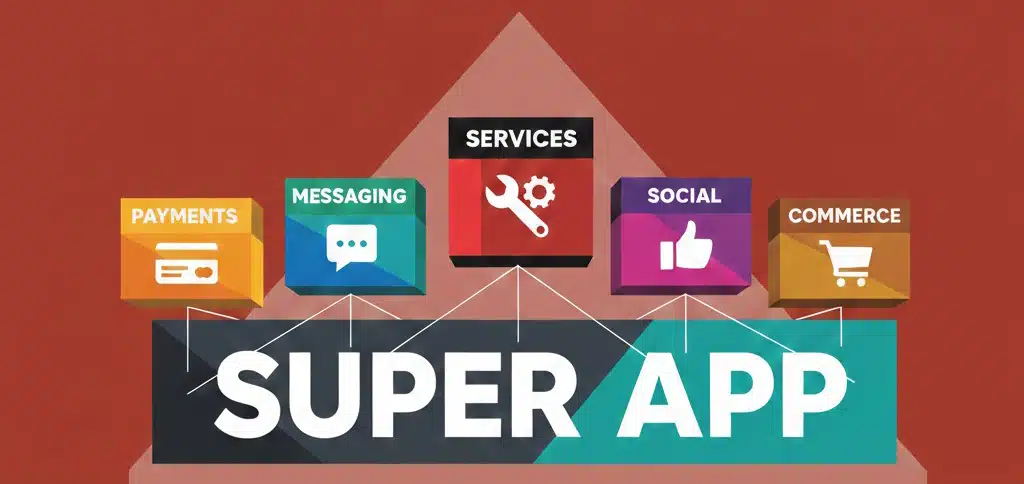
Super apps are all-in-one mobile platforms which integrate multiple services like messaging, payments, e-Commerce, ride-hailing and food delivery in one single application.
You can create an ecosystem where users don’t have to switch between different apps for daily tasks. They can perform these functions from a single app that’s like a digital mall.
It allows third-party developers to add “mini-apps” in a single ecosystem app.
The idea is to give customers a more personalized experience.
Some of the popular examples of such apps are WeChat and Grab.
How Does a Super App Work?
To understand how the Super App works, you will have to look at it as a digital foundation rather than just a single app.
While a normal app is built to do one thing (like order pizza), a super app is built to host an entire city of services.
Technically and operationally, they work through four main layers:


 This was before April 14, 1998. While everyone was busy watching movies, a startup in Scotts Valley launched a website, called Netflix.com. The aim was to eliminate the need to peruse aisles physically. In a virtual aisle, you can browse for the latest releases for a few bucks apiece, and have these DVDs delivered right to your doorstep in a red envelope. The DVDs had to be returned via the mail in the same packaging after 7 days.
This might sound a bit ironic, but at that time in a VHS-dominated world, not everyone had DVD players. Only a few people were able to avail of this new DVD rental service. Luckily, the founders had the foresight to take the leap and their vision was right: eventually, 95% of all households had a DVD player!
The company began with a humble 30 employees. Gina Keating in her fantastic book, Netflixed, sheds light on everything that goes on in the minds of the founders.
With everything going around, the company had to make that switch. Unlike Kodak, Netflix was smart enough to recognize the market gap and bridged it by offering an online streaming service. Instead of making massive changes, Netflix focused on increasing the amount of content on the website. This sharp intelligent tactic brought more subscribers.
At present, with 9.6 million subscribers added in the first quarter of 2019 – the Netflix tribe has reached 149 million worldwide subscribers.
However, the news is that there is a new kid on the block. Moreover, that kid might steal away 8.7 million subscribers from Netflix. The new kid is quite popular with kids. Say hello to Disney+.
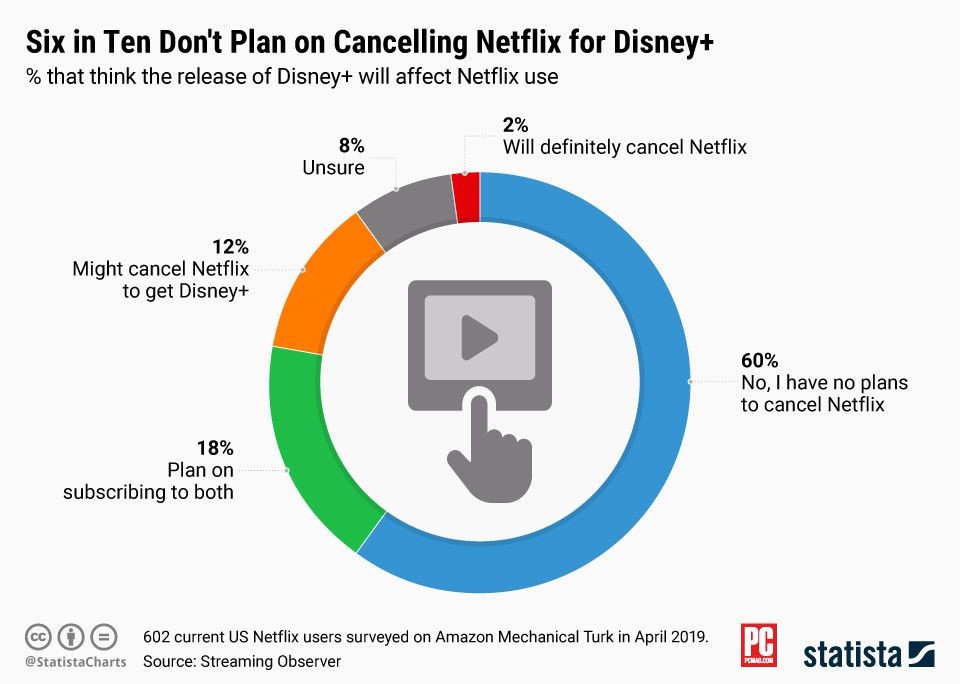
In the battle raging on between Disney+ vs. Netflix: Are you willing to make that switch? 14% of people are planning to do so and cancel Netflix. Some are even considering subscribing to both services.
This was before April 14, 1998. While everyone was busy watching movies, a startup in Scotts Valley launched a website, called Netflix.com. The aim was to eliminate the need to peruse aisles physically. In a virtual aisle, you can browse for the latest releases for a few bucks apiece, and have these DVDs delivered right to your doorstep in a red envelope. The DVDs had to be returned via the mail in the same packaging after 7 days.
This might sound a bit ironic, but at that time in a VHS-dominated world, not everyone had DVD players. Only a few people were able to avail of this new DVD rental service. Luckily, the founders had the foresight to take the leap and their vision was right: eventually, 95% of all households had a DVD player!
The company began with a humble 30 employees. Gina Keating in her fantastic book, Netflixed, sheds light on everything that goes on in the minds of the founders.
With everything going around, the company had to make that switch. Unlike Kodak, Netflix was smart enough to recognize the market gap and bridged it by offering an online streaming service. Instead of making massive changes, Netflix focused on increasing the amount of content on the website. This sharp intelligent tactic brought more subscribers.
At present, with 9.6 million subscribers added in the first quarter of 2019 – the Netflix tribe has reached 149 million worldwide subscribers.
However, the news is that there is a new kid on the block. Moreover, that kid might steal away 8.7 million subscribers from Netflix. The new kid is quite popular with kids. Say hello to Disney+.
In the battle raging on between Disney+ vs. Netflix: Are you willing to make that switch? 14% of people are planning to do so and cancel Netflix. Some are even considering subscribing to both services.


 Disney alone cannot compete with Netflix, but the possibility of combining Disney+ with Hulu and ESPN+ can surely give Netflix a run for its money, as Netflix doesn’t plan to expand in sports or live TV.
People might consider going with a service that gives TV and movies in one package. This is perfect for users who plan to see cable-style service with TV and movies.
Disney hinted at this strategy, but they haven’t revealed the price of the whole package.
I am a Netflix devotee, and I don’t plan to cancel its subscription. However, I would love to try Disney+ and its offerings.
If you have managed to read this blog until the end, here is some good stuff. If you’re an Entrepreneur or willing to sell your products online, Branex offers
Disney alone cannot compete with Netflix, but the possibility of combining Disney+ with Hulu and ESPN+ can surely give Netflix a run for its money, as Netflix doesn’t plan to expand in sports or live TV.
People might consider going with a service that gives TV and movies in one package. This is perfect for users who plan to see cable-style service with TV and movies.
Disney hinted at this strategy, but they haven’t revealed the price of the whole package.
I am a Netflix devotee, and I don’t plan to cancel its subscription. However, I would love to try Disney+ and its offerings.
If you have managed to read this blog until the end, here is some good stuff. If you’re an Entrepreneur or willing to sell your products online, Branex offers 





 Sephora observed an 11% rise in booking orders with the help of its Messenger bot called


