2026 is going to change how we interact with screens and user interfaces. According to a McKinsey survey, 71% of consumers expect personalized experiences from digital products in 2026.
It will be the era where your interface and UX design communicate with you and adjust based on your unique preferences. Gartner says by 2026, AI-driven UI adaptation will reduce user churn by up to 30% in key digital sectors.
What it means in user design is that it will no longer rely on traditional principles of creativity alone but will also incorporate a layer of algorithmic understanding.
Interfaces will evolve based on user expectations in real time and it’s backed by research from Forrester that shows real-time UX personalization increases customer satisfaction scores by up to 25%.
The shift is an important one for the global UI/UX design community, creating opportunities to build anticipatory and intuitive experiences that truly resonate with users. In fact, IDC forecasts that global spending on AI for customer experience optimization will exceed $110B by 2026.
In today’s article, we’ll explore AI-powered UI/UX trends that go beyond simply predicting user behavior and instead focus on delivering exceptional, personalized experiences.
So, without further ado, let’s begin.
What is AI-Driven UI/UX Design?
Imagine AI stepping into your app’s design layer and continuously adjusting the experience to deliver true hyper-personalization for every user. This is the very essence of AI-driven UI/UX design. It represents a shift from static interfaces to autonomous, intelligent systems that shape experiences in real time based on user behavior and context. Powered by adaptive layouts and machine learning models, these interfaces evolve dynamically, creating responsive designs that feel intuitive and deeply engaging for every visitor.
2026 AI-Driven UI/UX Design Trends to Follow
More Sentient Designs
In 2026, the concept of a “standard” user interface will vanish.
Hyper-personalization and adaptive interfaces will shift UI/UX from static designs to more “sentient” systems to evolve in real-time based on every person’s behavior, environmental context & cognitive load.
People will move away from pre-designed screens toward Generative UI. Instead of designers creating fixed layouts, they will now build modular component systems that AI assembles on the go.
- The dynamic component weight will enable buttons and menus to change size or prominence based on how often a specific user interacts with them.
- The “vibe” of an app, its color palette, typography, and density) automatically adjusts. This is called behavioral skinning which will provide a power user a chance to see a high-density, minimalist data dashboard, while a novice receives a “hand-holding” interface with simplified navigation.
- The Just-in-Time interfaces will indicate elements will appear only when the user is predicted to need them, eventually reducing visual clutter and cognitive overload.Context Aware “Liquid” UX
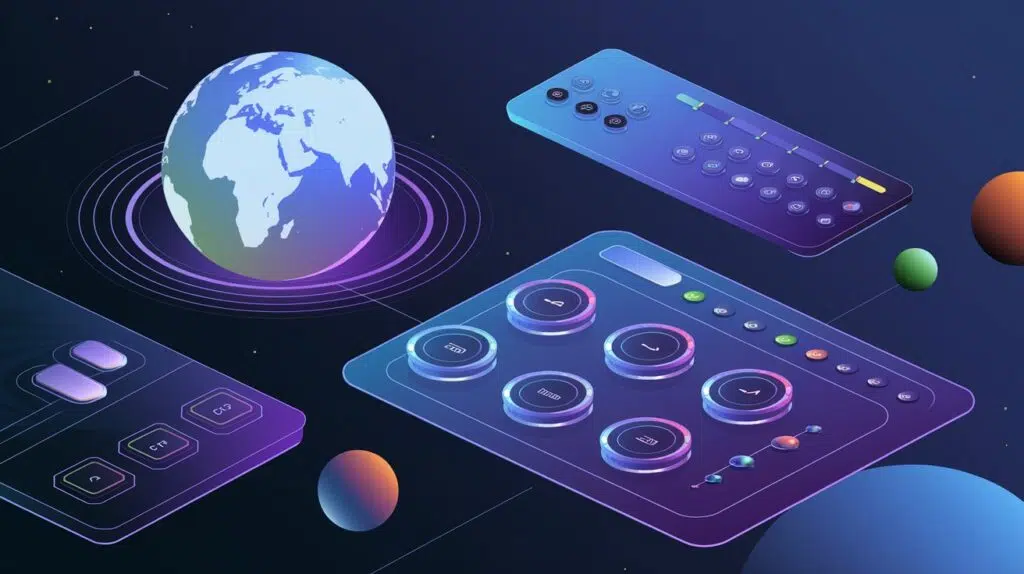
Anticipatory design will emerge as a UX strategy where it will use data to predict what a user desires before they even inquire. The goal of an anticipatory design is to achieve a zero UI state where the user doesn’t have to go to a different menu at all because the system will already perform the task for him/her. It will reduce cognitive overload and make the technology much more safer and helpful for the users. For example, if you have a meeting scheduled somewhere afar and you’ve already set the date on your calendar, your navigation app will already have the directions ready the moment you step into your vehicle. Your forms and applications can entirely fill themselves based on how you filled them earlier with a secure data sharing feature. Instead of sending out a notification for a bill going due, the app can simply ask, “How would you like me paying your pending bills on your behalf using your default card?Emotional UI
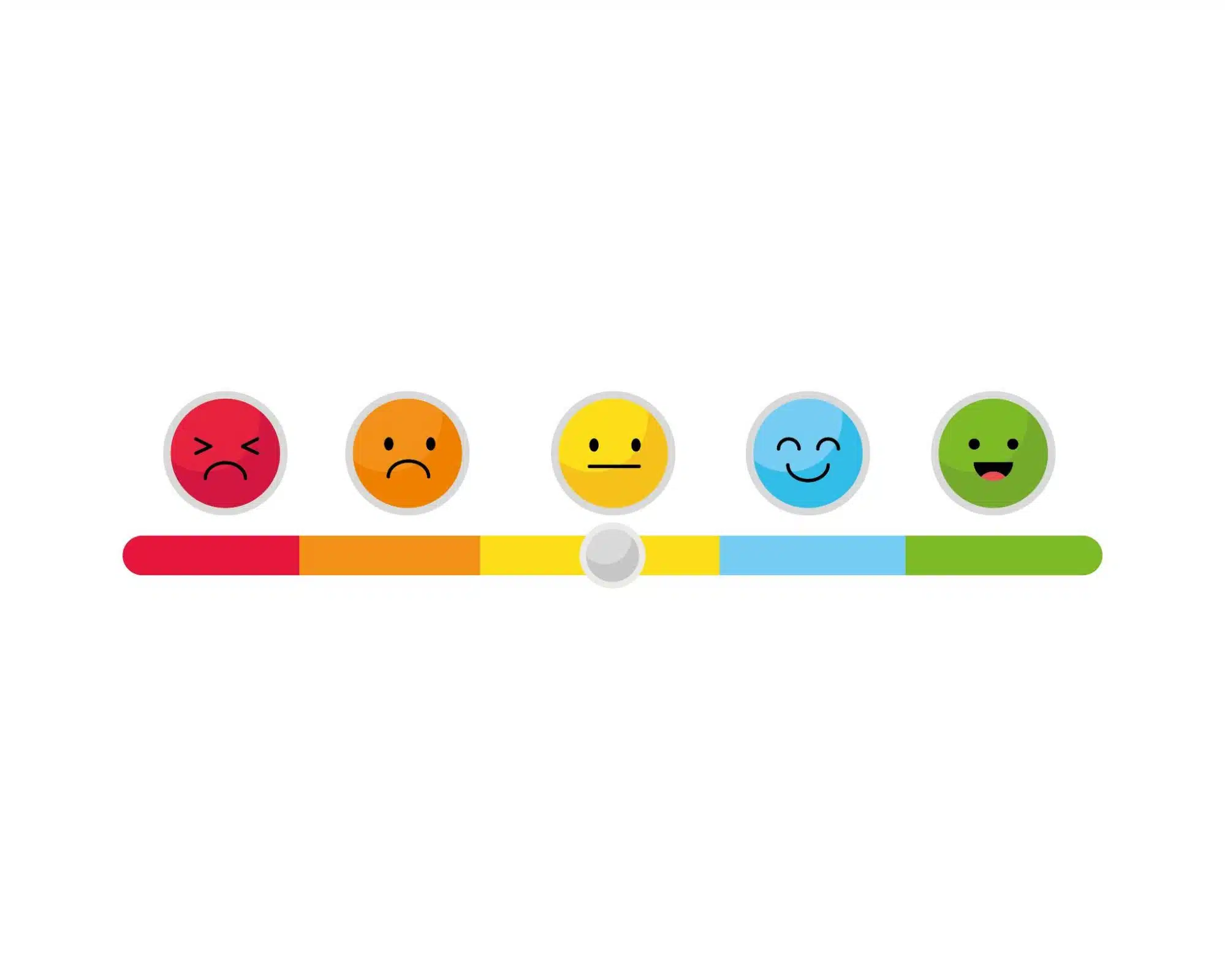 More emotional UIs are going to emerge in 2026. While most UI/UX designs focus on functionality, emotional UI will focus on giving a more deeply resonating and emotionally connecting experience to end-users. Design will no longer be limited to using pretty colors or adding animations, it will be more about understanding human psychology and building interfaces which respond to the user’s emotional state. Imagine a meditation app which detects stress through biometric data and adjusts the interface to become more calming. Or maybe an educational platform which offers encouraging feedback to a student when sensing frustration levels rising up. These are all design elements with thoughtful micro-interactions leading the brand to create a more genuine connection, increasing loyalty and overall satisfaction.
Why will emotional UIs work? People forget what your app did, they remember how it made them feel.
Generative AI as a Co-Designer
Generative AI in 2026 will no longer be a tool to chat and explore options. By creating agentic AI systems, you can expand the generative AI capabilities to become your “thinking partner,” understand intent, & reason with you on the design constraints and eventually communicate them.
Here are some of the ways how a Generative AI will assist you as a co-designer:
- They will solve the “blank canvas” problem by effectively synthesizing vast amounts of data and turning it into actionable design artifacts.
- Designers will require less time to research and can depend on AI to generate detailed user personas, empathy maps and journey maps in seconds.
- They can leverage tools like Miro Assist or FigJam AI to generate dozens of design concepts or “How Might We” statements based on a simple project brief.
- AI co designers can comb through hundreds of user interview transcripts to find recurring pain points and summarize them all into a single design requirement.
- A designer can simply prompt an AI to “to create a 3-step onboarding flow for a fintech app focusing on security” and receive a fully editable UI draft.
- Instead of searching for stock photos, the co-designer can generate unique icons, illustrations & background textures to match the project specific design system & brand voice.
- AI can critically analyze your UI/UX design and provide you with detailed insights, tips and tricks to make them more interactive and intuitive.
A Practical Use Case – AI-Powered Smart Home Dashboard Using an Adaptive Bento Grid
The “Bento Grid” is inspired by the traditional Japanese lunch box, where a single container is divided into several compartments of different sizes to hold different types of food. In UI and UX, it translates into a single screen structured into asymmetrical, well-rounded rectangles that fit together like a puzzle.
Now imagine this layout powered by AI in your smart home app in 2026.
Instead of a fixed arrangement, the Bento Grid becomes fluid and intelligent. The interface does not just display information, it prioritizes, resizes, and rearranges cards in real time based on your behavior, habits, and immediate context.
The “Hero” card, shown as the large rectangle in the top left corner, is no longer static. AI determines what deserves the most attention at that moment. In the evening, it might display a live HD feed from your front door camera when motion is detected. During the day, it could expand to show energy consumption insights if unusual usage patterns are identified.
The “Data” card in the top right adapts to your interests. If you frequently check sustainability stats, AI keeps your solar production graph front and center. If weather impacts your home energy efficiency, the card may switch to predictive insights instead.
The “Quick Action” cards in the middle remain small but smart. AI learns your routines and surfaces the controls you are most likely to need. Your Living Room Lights toggle might appear at sunset, while the Garage Lock button shows up near your usual departure time.
The “Status” card becomes a glanceable intelligence. Rather than static temperature readings, it highlights anomalies, like humidity rising above comfort levels or air quality dropping, only when your attention is actually needed.
Finally, the “Contextual” card at the bottom evolves with your environment. It might show a music player when you are home, a delivery tracker when a package is arriving, or a cleaning robot’s progress when a scheduled task is running.
In an AI-driven UI, the Bento Grid stops being just a layout and starts becoming a living interface that continuously reorganizes itself to match your life in the moment, not just the structure of an app.
Branex Insider
At Branex, we see AI driven UI/UX as less of a trend and more of a future adoption. It’s a new design paradigm where our approach is solely focused on creating high-powered design interfaces which are more emotionally attuned and connect with users on a personal level.
“When we tested adaptive layouts on our smart home dashboard prototypes, we noticed users engaging with critical controls 40% faster. It’s clear that AI doesn’t just make interfaces smarter — it changes how people interact with them in real time,” says Fahad Maqsood, Lead UX Designer at Branex.
Our approach to every project is unique, whether fintech apps or wellness platforms, but we ensure our designs are both intelligent and intuitive and not just visually appealing.
FAQs
What is AI-driven UI/UX design?
AI-driven UI/UX design uses artificial intelligence to personalize and adapt interfaces based on user behavior, preferences, and real-time data.How will AI change user experience in 2026?
AI will enable hyper-personalized, adaptive interfaces that predict user needs, reduce friction, and improve engagement through intelligent automation.What is Generative UI in modern design?
Generative UI allows AI to dynamically create and arrange interface elements instead of relying on fixed layouts, making experiences more flexible and personalized.Can AI replace UI/UX designers?
No, AI acts as a co-designer that assists with research, prototyping, and optimization, while human designers focus on strategy, creativity, and emotional experience.Concluding Thoughts
As 2026 approaches, the shift from static to sentient design is inevitable.
By integrating AI-driven adaptability and emotional resonance, UI/UX moves beyond simple utility into the realm of meaningful connection. He future belongs to interfaces that don’t just wait for input, but anticipate what users need. As AI-driven UI/UX design continues to evolve in 2026, mobile apps are becoming smarter, more responsive, and deeply personalized. This shift is especially visible in complex platforms such as a Gojek clone app, where real-time decisions, predictive flows, and seamless interactions define the user experience.
Let’s create experiences that don’t just look good, but also think, feel and perform for every individual.
 Read More Blogs